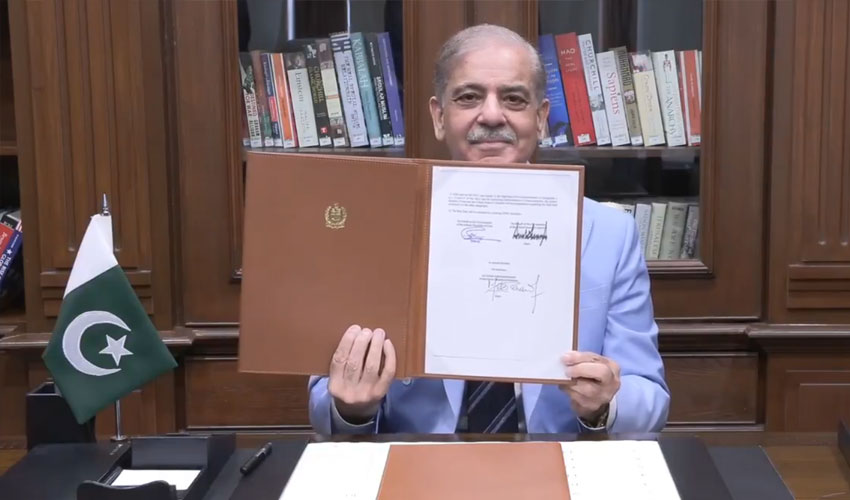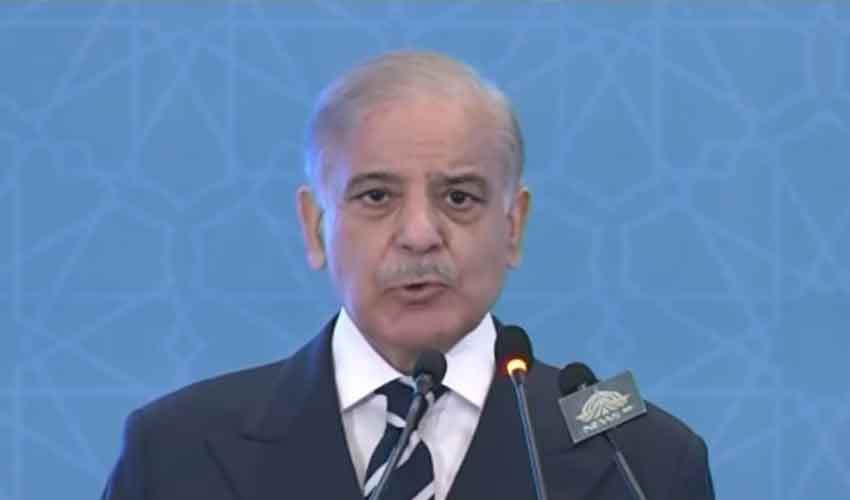
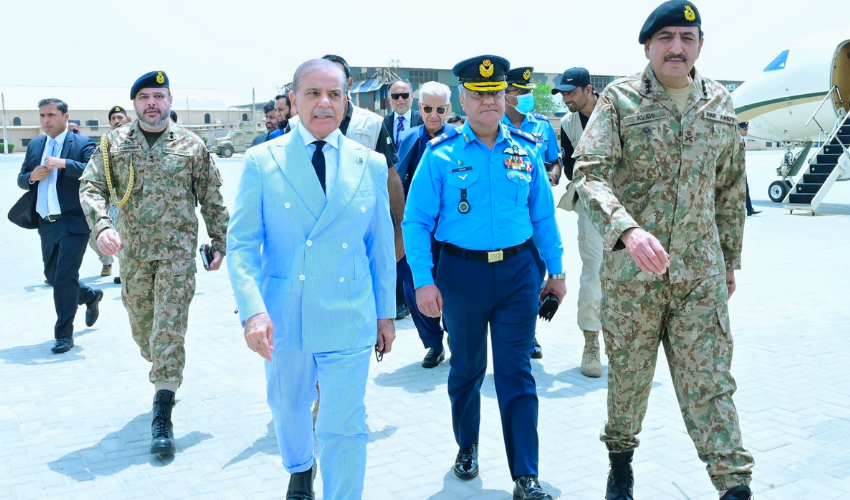
Prime Minister Shehbaz Sharif on Wednesday inaugurated the Pakistan Governance Forum 2026, calling it a crucial platform to steer the country toward sustainable development and economic revival.
Addressing the inaugural session, the prime minister, Federal Minister for Planning Ahsan Iqbal, and Deputy Prime Minister and Foreign Minister Ishaq Dar laid out an ambitious roadmap for governance reforms, economic stability, and proactive foreign policy.
Prime Minister Shehbaz Sharif said that in June 2023, Pakistan was on the verge of bankruptcy. However, he noted that the country’s overall economic situation is now encouraging compared to the past.
“With joint efforts, the country has moved towards economic improvement,” he said, adding that inflation has fallen from 38% to single digits.
He also highlighted that the policy rate has declined from 22% to 10.5%, signaling macroeconomic stabilization.
Electricity reforms, institutional restructuring
The prime minister stressed that electricity theft worth Rs200 billion must be eliminated. He said the government has reduced electricity prices by Rs7 per unit and taken key steps to keep the business wheel running.
Shehbaz added that corruption-ridden institutions have been abolished, including the Public Works Department (PWD) and utility stores, reducing the burden on the national treasury. However, he noted that several recommendations regarding the abolition of PWD were rejected after review.
“The government’s job is not to run businesses, but to provide facilities to institutions,” he said, emphasizing that direct investment is essential and that debts cannot be eliminated by “magic spells.”
Tax reforms, next budget priorities
The prime minister announced that direct taxes would be reduced in the next budget, while evasion of indirect taxes would be curbed.
He revealed that Pakistan’s tax-to-GDP ratio stands at 10.5% and acknowledged that sugar, cement, and tobacco sectors are among the top in indirect tax non-payment.
“We will take the provinces along to improve the overall economic situation,” he said, adding that meetings have been held with business leaders and institutions.
He also inaugurated the PSDP portal during the ceremony.
Ahsan Iqbal outlines trillion-dollar vision
Federal Minister for Planning Ahsan Iqbal described the Pakistan Governance Forum as a strong source of national development. He credited the prime minister for saving the country from bankruptcy and said that with hard work, Pakistan could become a trillion-dollar economy by 2035.
“Our agenda is the solution to the country’s fundamental problems,” he said, adding that individual potential must be converted into collective national success.
Iqbal warned that a neighbouring country wants to make Pakistan barren by weaponizing water, while climate change poses a serious threat to food security.
Human development, demographic challenges
Ahsan Iqbal noted that Pakistan’s 2.55% population growth is straining resources. He highlighted that 40% of children are malnourished and 25 million are out of school. He added that human resource development is essential for overall progress and said the forum would provide direction to address these challenges.
He pointed out that Pakistan’s tax-to-GDP ratio is among the lowest in the world. While nine million overseas Pakistanis send $40 billion in remittances annually, exports of $40 billion remain low for a population of 240 million.
“Team Pakistan will create a strong Pakistan through an economic long march,” he said, expressing satisfaction that all provinces were represented at the forum.
Dar on foreign policy, regional security
Deputy Prime Minister Ishaq Dar said Pakistan has taken effective steps to achieve its policy goals and strengthened its global presence through economic diplomacy.
He noted that the world is passing through a turbulent phase, with global institutions and economic interdependence being redefined amid new geopolitical alignments.
“Protecting the security, sovereignty, and territorial integrity of our people remains our top priority,” Dar said, adding that Pakistan is fully capable of defending itself against any aggression.
Kashmir, India, regional peace
Dar reiterated that the root cause of regional conflict is the Kashmir issue. He said Pakistan stands by its principled position and demands a just and peaceful solution in accordance with UN resolutions and the aspirations of the Kashmiri people.
He called on India to withdraw the unilateral measures of August 5, describing them as attempts to alter the legal and geographical status of occupied Kashmir.
Despite provocations and incidents of terrorism along the western border, Dar said Pakistan remains committed to peace and dialogue.
Palestine, Iran, global diplomacy
The deputy prime minister reaffirmed Pakistan’s commitment to a just and sustainable two-state solution for Palestine and the establishment of an independent Palestinian state.
He said Pakistan took a bold and clear stand at the United Nations on February 18, where its voice for peace was heard globally.
Dar also described Iran as an important regional country and said Pakistan is committed to playing a constructive role in reducing tensions. Diplomatic contacts are ongoing to de-escalate tensions and promote peaceful solutions.
“Economic diplomacy is the central pillar of our government’s foreign policy,” he concluded.


.jpg)