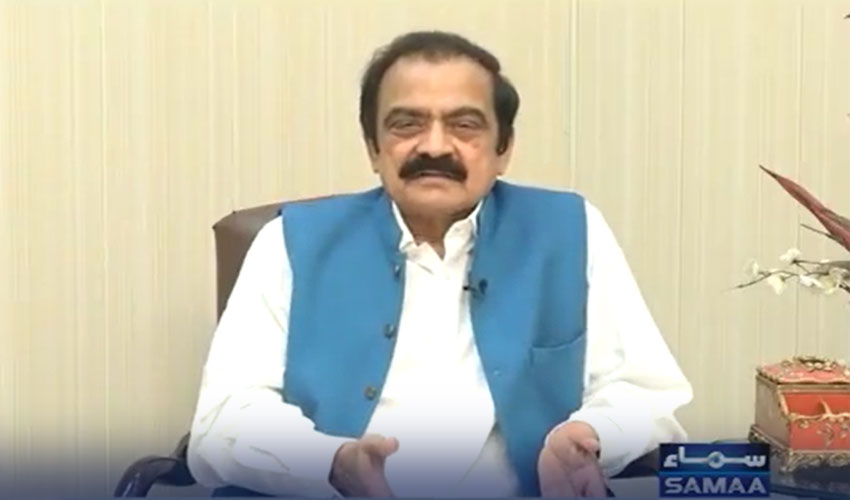
Prime Minister’s Adviser on Political and Public Affairs Rana Sanaullah on Sunday said the government is willing to sit with political rivals for dialogue.
Speaking to reporters after casting his vote in the Faisalabad by-election, he also expressed confidence that voters would support PML-N’s development agenda under CM Maryam Nawaz.
Rana Sanaullah said that no complaint had been received from any polling station throughout the constituency. He added that some opponents began alleging code-of-conduct violations “even when only 10 votes had been cast,” but the administration ensured a peaceful polling process.
The Adviser said no arrests were made during the by-election and opposition candidates “did not even get a chance to complain,” reflecting, according to him, improved electoral management.
Calls for political dialogue
Rana Sanaullah emphasized the need for stability and political reconciliation. “We are in favor of sitting at the table of politicians and negotiations from today,” he said, stressing that political confrontations must be replaced by dialogue.
He criticized the PTI founder, saying he “is not doing politics at all” and reminded that during PTI’s tenure, “they used to file cases against us even when they were in power.”
Referring to past tensions with India, Rana Sanaullah said Pakistan responded firmly “on May 10, 2025, in the fight for justice.”
He added that it was the first time the international community admitted that “the war was won.”
He said Pakistan is now ready to “move forward like 1999,” while claiming that the period of 2017–18 saw conspiracies “prepared against Pakistan.”
Praise for development agenda in Punjab
The Adviser credited CM Maryam Nawaz for initiating what he described as a new era of development in Punjab.
“The era of development has arrived in Maryam Nawaz’s form,” he said, adding that a Rs 70 billion development project is starting in Faisalabad.
Rana Sanaullah said he has contested seven elections in this constituency, winning five, and noted that by-election turnout typically ranges between 25–30 percent.
Speaking about his imprisonment, he stated: “I was in jail for six and a half months, and except for my family and two lawyers, I did not meet anyone.”
He said such experiences strengthened his resolve to continue political work and public service.



.jpg)