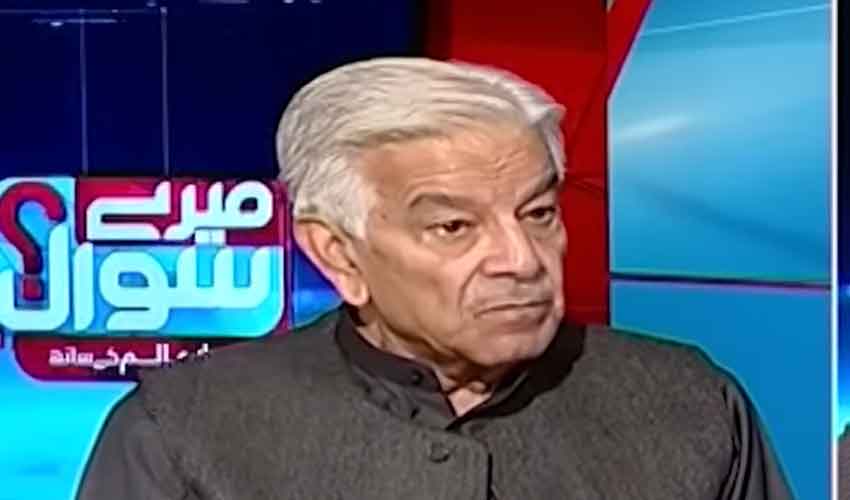
Defence Minister Khawaja Asif has said that Pakistan’s current security challenges are rooted in past decisions, particularly the practice of engaging with Afghan Taliban leaders on friendly terms, including high-profile visits to Kabul “for tea".
Speaking on Samaa TV’s program 'Meray Sawal', Asif warned that the proxy war inside Pakistan has intensified once again and that the threat of another conflict with India remains very real.
Khawaja Asif strongly criticized the policymakers who, in the past, believed they enjoyed deep alignment with the Taliban.
“Those who went to Kabul and had tea in the past are responsible for the current situation,” he said. “Those who used to drink tea and thought they were with us made a grave miscalculation.”
The defence minister said the entire Taliban leadership once lived in Pakistan, a fact he argued should prompt serious national reflection.
“We should deeply regret this,” he added.
Proxy war intensifying inside Pakistan
Asif warned that Pakistan is once again experiencing a surge in proxy conflict. He did not name specific groups but emphasized that militant networks operating across the border are becoming more active.
He linked the resurgence in terrorism to earlier strategic choices that gave the Taliban space and influence, saying these decisions have come full circle to haunt Pakistan.
Threat of war with India still alive
The defence minister also cautioned that tensions with India remain high. “The threat of war with India still remains,” he said, noting that Pakistan’s eastern neighbour continues to search for ways to exert pressure.
According to Asif, India is attempting to use Afghanistan as a channel to influence and destabilise Pakistan.
“India wants to influence us through Afghanistan to remove its shame,” he said, referring to New Delhi’s perceived desire to counterbalance past diplomatic or strategic setbacks.
‘Army harmony is stronger than ever’
Amid the regional security concerns, Khawaja Asif highlighted what he described as unprecedented institutional unity within Pakistan’s military.
“The harmony in the army has never been as much as it is now,” he said, suggesting that a unified command and improved civil–military coordination will help Pakistan navigate current challenges.




.jpg)