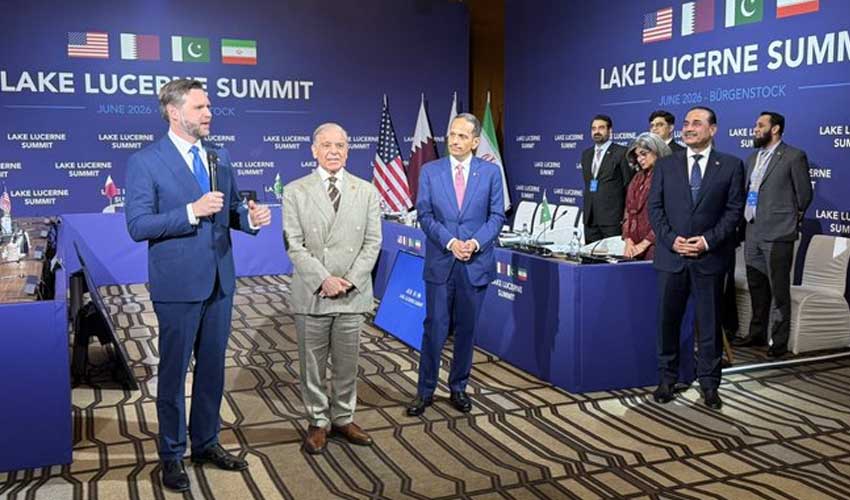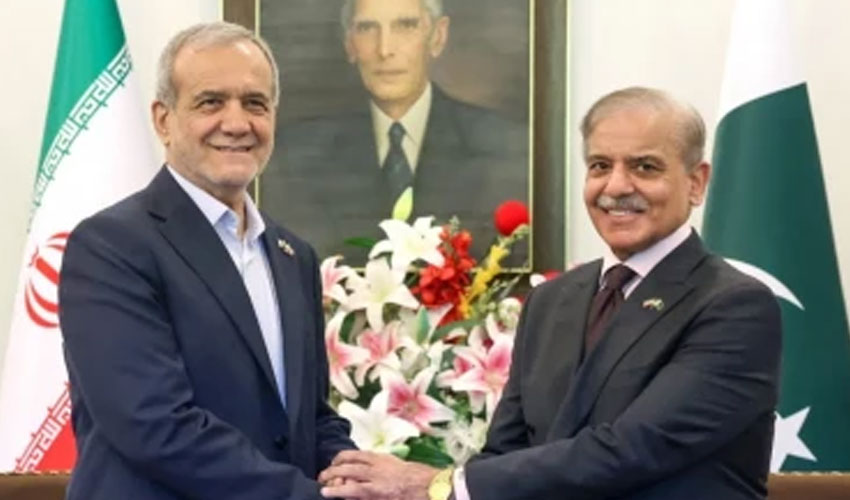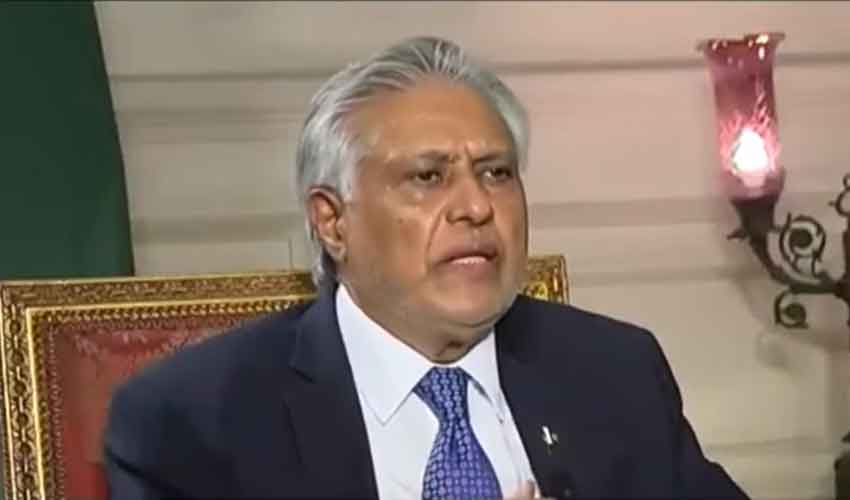
Deputy Prime Minister and Foreign Minister Ishaq Dar has said that sanctions on Iran are not being lifted immediately, as the United States and Iran move into the next phase of negotiations following the Islamabad agreement.
In an interview with Al Arabiya, Dar said Iran was ready to reduce its nuclear stockpile to a low level, while the future of sanctions would be decided by Washington and Tehran through mutual consultation.
Dar said the next phase of negotiations will focus on three major issues: sanctions, Iran’s nuclear programme and Lebanon.
He said three technical groups have been formed for the talks, with nuclear matters, economic sanctions and the issue of Lebanon included in their mandate.
"No sanctions are being IMMEDIATELY lifted."
— Al Arabiya English (@AlArabiya_Eng) June 22, 2026
Pakistan Foreign Minister Ishaq Dar explains how sanctions, Iran's nuclear program, and Lebanon will be negotiated together during the next phase of the US-Iran talks.@MIshaqDar50 pic.twitter.com/QPBgPYOboa
According to Dar, the parties have been given 30 days to complete the remaining negotiation process, while a final agreement must be reached by making extensive progress within 60 days.
"There is room for an extension of the timeline through mutual consent," he explained, rubbishing the impression that there was a secret deal behind the scenes.
"Everything agreed upon is clearly outlined in the written Islamabad agreement. Pakistan had no vested interest in the matter."
Lebanon attacks nearly sabotaged talks
The deputy prime minister said Israeli attacks on Lebanon almost sabotaged the US-Iran diplomatic process. He said the two countries were brought back to the negotiating table after hard efforts by Pakistan and other partners.
Also Read: US and Iran establish high-level committee to oversee 60-day peace talks
Dar stressed that no one should express doubts about the intentions of the parties, saying the US-Iran memorandum of understanding had been prepared with great care.
"Conflict and confrontation take you NOWHERE."
— Al Arabiya English (@AlArabiya_Eng) June 22, 2026
Pakistan Foreign Minister Ishaq Dar reflects on the efforts to bring Washington and Tehran to the negotiating table and the economic costs of continued conflict.@MIshaqDar50 pic.twitter.com/tlqZKW1HK6
MoU accepted by both sides
Dar said the US-Iran MoU was accepted by both parties and further progress is now being made on the document. He described the agreement as a carefully drafted framework that will guide the remaining negotiation process.
According to him, the talks are aimed at converting the initial understanding into a broader final agreement.
Also Read: US, Iran reach 60-day roadmap for final peace deal as Switzerland talks conclude
Dar said Pakistan condemned Israel’s attack on Iran on February 28 and then took the initiative to bring the parties to the negotiating table for regional peace. He said a ceasefire was first established between the parties due to Pakistan’s continuous diplomatic efforts.
"Iran was happy to DOWNBLEND its nuclear stockpile."
— Al Arabiya English (@AlArabiya_Eng) June 23, 2026
Pakistan Foreign Minister Ishaq Dar reflects on Iran's position during negotiations and the challenges that remain before a final agreement can be reached.@MIshaqDar50 pic.twitter.com/SG092X9BnD
According to Dar, six rounds of 21-hour marathon talks were held between the US and Iranian delegations in Islamabad. He said direct talks between the United States and Iran were held in Islamabad for the first time in 47 years.
Pakistan’s role as mediator and witness
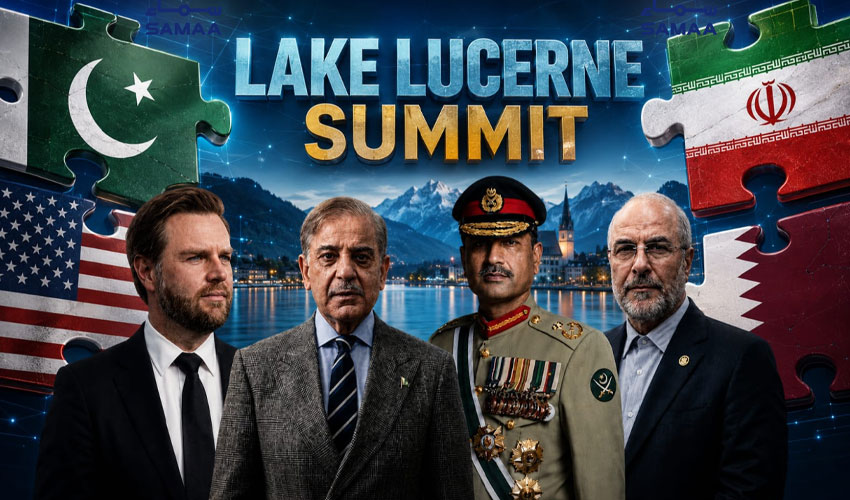
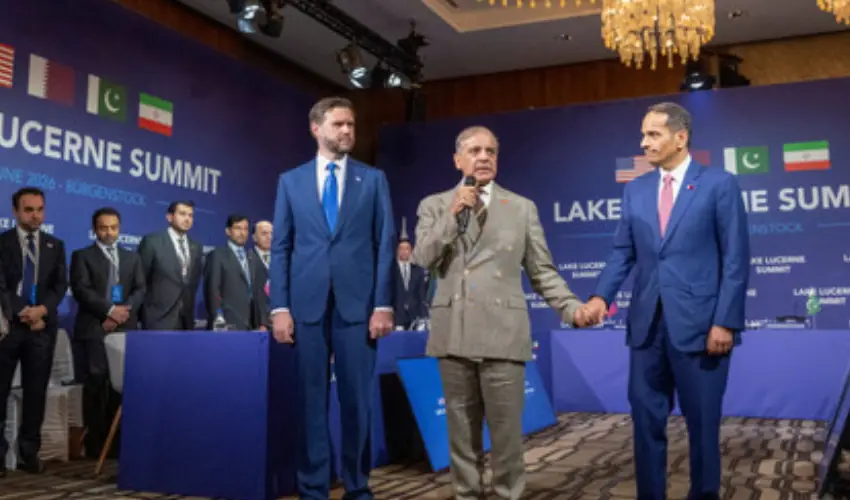
Dar said the US vice president, the Iranian speaker and Iran’s foreign minister represented their respective sides during the talks. On behalf of Pakistan, Dar said he, the chief of defence forces and the national security adviser participated as mediators and witnesses.
He added that Pakistan also kept other regional countries in confidence during the diplomatic process.
R4 Forum formed as common regional platform
Dar further said Pakistan, Saudi Arabia, Egypt and Turkey have established the R4 Forum. He clarified that the forum is not a bloc, but a common platform representing around half a billion people.
Also Read: US-Iran talks lay 'good foundation' for final deal: Vance
According to Dar, the R4 connects the Red Sea, the Mediterranean and Africa. He said Qatar, Bahrain, Kuwait, Jordan and China supported Pakistan’s peace efforts, while the European Union, Canada, Australia and Japan also backed the initiative.
Copies of the Islamabad agreement were also shared with the foreign ministers of Egypt, Saudi Arabia and Turkey.
"Pakistan has been lucky to have a brother like Saudi Arabia."
— Al Arabiya English (@AlArabiya_Eng) June 22, 2026
Pakistan Foreign Minister Ishaq Dar reflects on Saudi Arabia's support for diplomatic efforts to advance the US-Iran negotiations.@MIshaqDar50 pic.twitter.com/3NXYkAEwd2
No fees for Hormuz shipping for 60 days
Dar said no transit or service fees will be imposed on ships passing through the Strait of Hormuz during the trial period. He said 60 days have been set for the free movement of ships through the key maritime route.
According to Dar, vessels passing through the Strait of Hormuz will not face any transit or service charges during this period.
The deputy prime minister said the short-term war severely affected the global energy supply chain. He said oil prices skyrocketed during the conflict, causing severe inflation worldwide.
Dar also said around 20 to 25% of global GDP was affected by the crisis.
Pakistan passed relief to consumers
Dar said Pakistan gave a major petroleum subsidy worth billions of rupees for three weeks instead of placing the burden on the public. He added that as prices in the global market declined, all relief was immediately transferred to Pakistani consumers.
"Everybody SUFFERED."
— Al Arabiya English (@AlArabiya_Eng) June 22, 2026
Pakistan Foreign Minister Ishaq Dar reflects on the regional impact of the conflict and the urgency of reaching a final agreement.@MIshaqDar50 pic.twitter.com/ri4ZaKSyoo
The deputy prime minister said Pakistan’s mediation efforts were aimed at reducing regional tensions, restoring maritime movement and protecting people from the economic fallout of war.