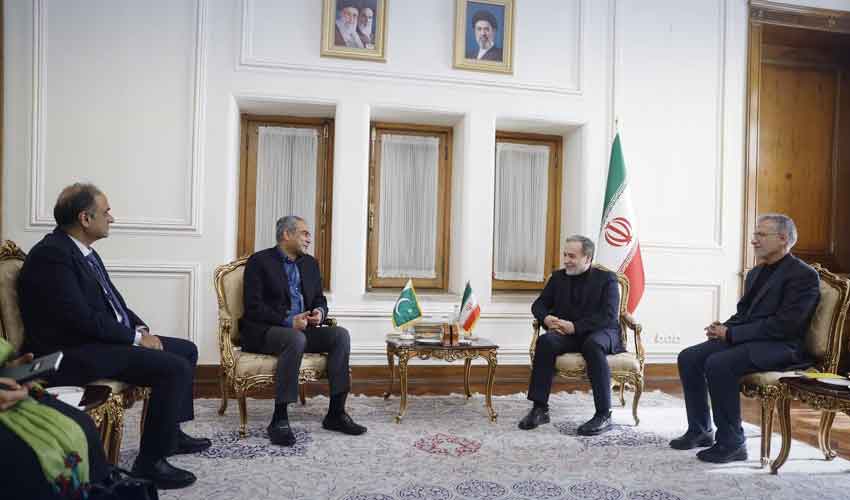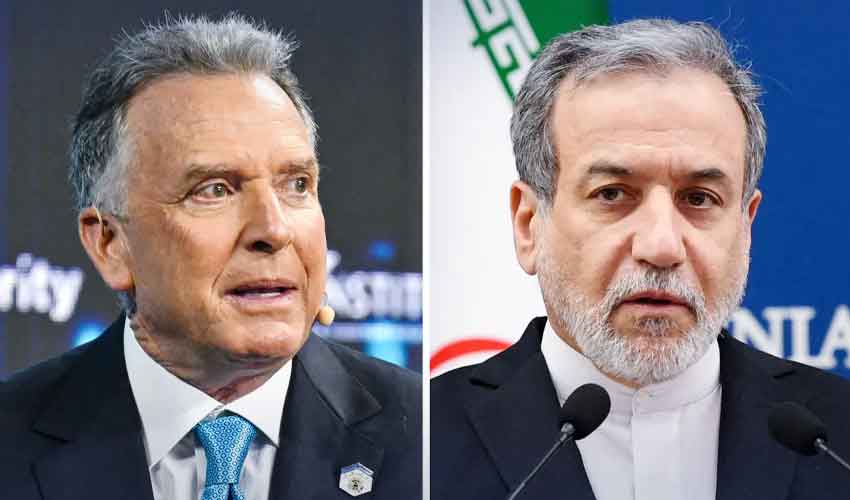
The United States and Iran have agreed on a structured roadmap to reach a comprehensive peace deal within 60 days after marathon negotiations in Switzerland.
The breakthrough was announced through a joint statement issued by mediators Pakistan and Qatar, following the conclusion of the first high-level session under the Islamabad MoU framework.
High-level talks conclude in Switzerland
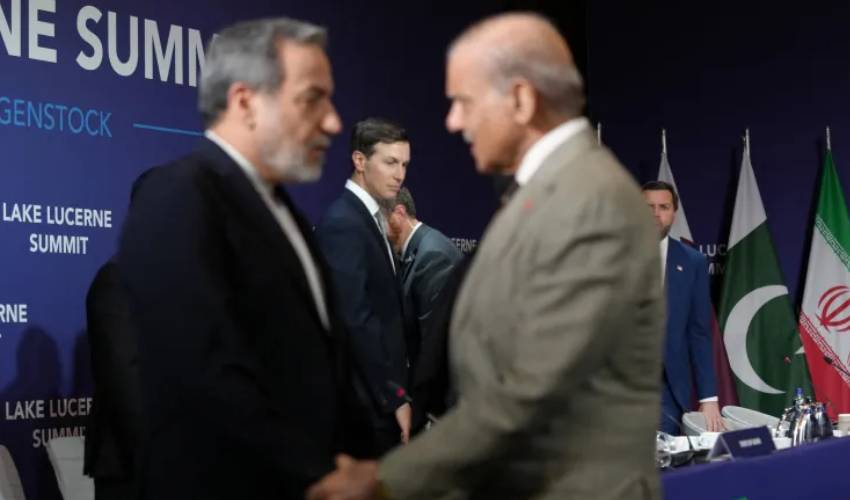
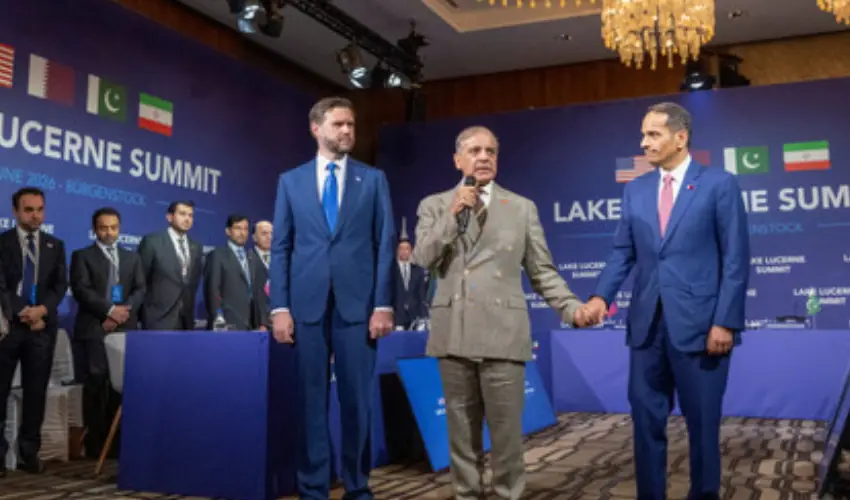
The talks were held in the Swiss resort of Bürgenstock (also referred to as Lake Lucerne Summit), where representatives from the US, Iran, Pakistan, and Qatar participated.
According to the joint statement, the discussions were conducted in a “positive and constructive atmosphere,” with both sides showing willingness to move forward on implementation mechanisms.
🔊PR No: 1️⃣5️⃣1️⃣/2️⃣0️⃣2️⃣6️⃣
— Ministry of Foreign Affairs - Pakistan (@ForeignOfficePk) June 22, 2026
Joint Statement by the State of Qatar and the Islamic Republic of Pakistan Regarding the Conclusion of Lake Lucerne Summit, First High-Level Committee Meeting with Participation of the United States of America and the Islamic Republic of Iran pic.twitter.com/2G3PAf7LVY
The session marked the first major meeting after the signing of the Islamabad Memorandum of Understanding earlier this week.
Roadmap for 60-day final agreement
A key outcome of the talks was the agreement on a roadmap toward a final deal within 60 days.
Joint Statement by the State of Qatar and the Islamic Republic of Pakistan Regarding The Conclusion of Lake Lucerne Summit, First High-Level Committee Meeting with Participation of the United States of America and the Islamic Republic of Iran
— Ministry of Foreign Affairs - Qatar (@MofaQatar_EN) June 22, 2026
Lucerne | June 22, 2026
The first… pic.twitter.com/bLVpaR2uua
The mediators said a High-Level Committee has been established to oversee the process politically. Chief negotiators will report regularly to this committee and guide technical working groups.
These groups will focus on:
- Nuclear-related issues
- Sanctions framework
- Monitoring and dispute resolution mechanisms
- Implementation of the MoU
Officials said this structure is designed to ensure continuous diplomatic engagement and accountability.
Technical talks to continue this week
Further technical-level negotiations will continue throughout the week at the Bürgenstock resort.
These discussions will cover all major issues, with working groups expected to refine the framework agreed in the high-level session.
Live from Lucerne, work continues with @VP & @jaredkushner. pic.twitter.com/MhTtjbNuGK
— محمد بن عبدالرحمن (@MBA_AlThani_) June 22, 2026
A mechanism for continued coordination between all parties has also been established to maintain momentum.
Communication line
The joint statement confirmed that a direct communication channel has been set up between the US and Iran for the next 60 days.
The purpose is to prevent misunderstandings and ensure the safe passage of commercial vessels through the Strait of Hormuz, a critical global shipping route.

Officials said this step is intended to reduce escalation risks and maintain maritime stability during negotiations.
De-confliction cell for Lebanon
The parties also agreed to establish a “de-confliction cell” involving the relevant parties and facilitated by mediators.
This mechanism is designed to ensure compliance with the cessation of military operations in Lebanon, as outlined in the MoU.
The move is part of broader efforts to stabilize regional tensions linked to ongoing conflicts.
Pakistan and Qatar as key mediators
The mediating countries, Pakistan and Qatar, praised the progress and expressed appreciation for both delegations’ commitment to diplomacy.
They confirmed that they will continue to monitor and support the process, ensuring that talks remain constructive and focused on reaching a final agreement.
RELATED: Vance names Field Marshal among two most important figures
The mediators also acknowledged the contribution of other friendly countries supporting the negotiations.
Statements from US and Iran
Earlier, a US official confirmed that “robust discussions” were held on all elements of the nuclear agreement, including sanctions and regional security concerns.
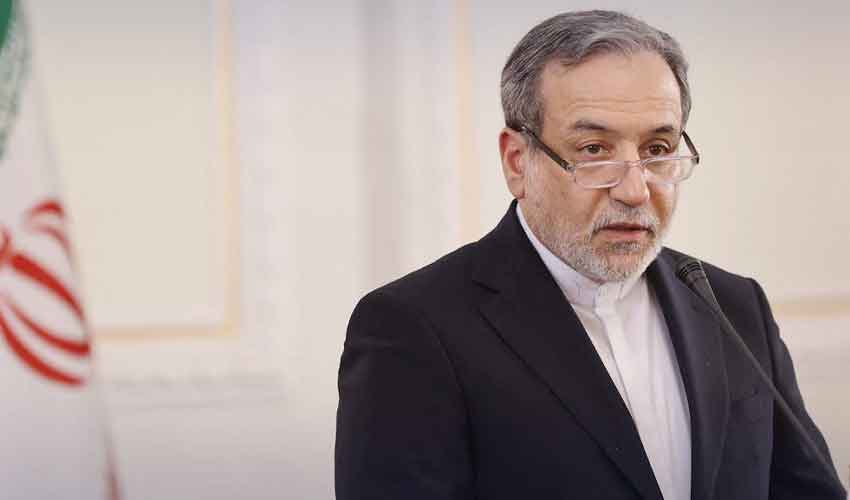
Iranian Foreign Minister Abbas Araghchi said Iran had secured oil and petrochemical export waivers, partial release of frozen assets, and steps toward reconstruction and development planning.
He also described discussions as covering de-escalation mechanisms in Lebanon and maintaining stability in maritime routes.
he talks came amid heightened rhetoric from both sides, including warnings over Lebanon and the Strait of Hormuz.
US President Donald Trump had issued strong statements urging Iran to control regional proxy groups, while also warning of potential military action if tensions escalated.
Iranian officials, meanwhile, insisted negotiations were being conducted with “power and caution,” rejecting what they called external pressure tactics.
Statements by leaders at opening session
At the opening ceremony, Prime Minister Shehbaz Sharif said he hoped the talks would lead to “peace, progress, and prosperity.”
US Vice President JD Vance called the meeting “historic,” noting that it marked the beginning of structured technical negotiations between the two sides.
He emphasized that “peace requires give and take,” and expressed optimism about building a framework for long-term regional stability.
Progress and immediate outcomes
According to the mediators’ statement:
- A high-level oversight committee has been formed
- Technical working groups have been launched
- A 60-day negotiation roadmap has been agreed
- A Strait of Hormuz communication system is active
- A de-confliction mechanism for Lebanon has been established
The statement said these steps represent “encouraging progress” toward a final agreement.