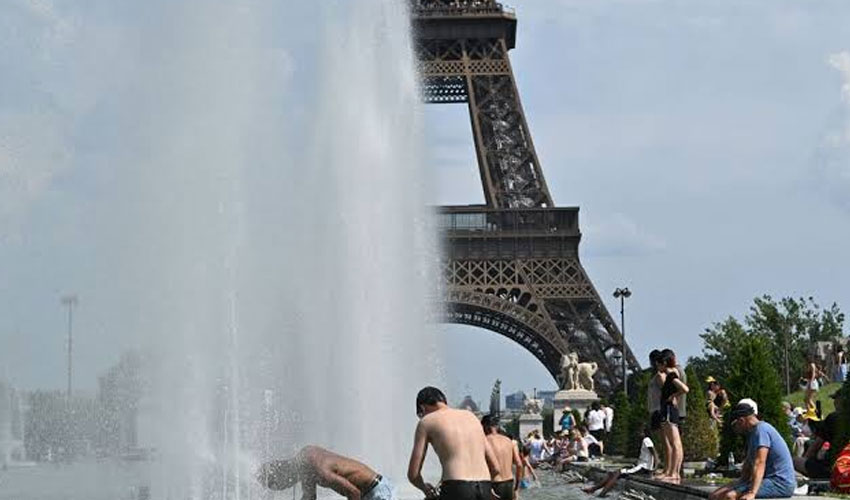
A powerful heatwave sweeping across Europe has forced governments to introduce emergency measures, including alcohol restrictions in France, nationwide heat alerts in Germany, and the closure of a major football fan zone in Spain.
Temperatures are expected to reach extreme levels over the weekend, with some regions forecast to approach or exceed 41°C, raising concerns over public health and infrastructure strain.
France is among the hardest-hit countries, with officials expecting temperatures between 39°C and 41°C in several regions on Sunday.
Authorities have issued red heatwave alerts across 35 departments, covering large areas from southwestern France through Paris and into Burgundy.
In response, Prime Minister Sébastien Lecornu ordered a partial ban on alcohol consumption during public events, including the annual Fête de la Musique, as part of emergency heat safety measures.
Despite the restrictions, Paris authorities have kept public parks open 24 hours to help residents cope with the extreme conditions.
Germany issues nationwide heat alerts
In Germany, the national weather service issued widespread heat warnings as temperatures climbed close to 38°C in several regions.
Meteorologists also warned that the combination of heat and humidity could trigger severe thunderstorms in some areas, adding further risk to already strained conditions.
Authorities have urged citizens to limit outdoor activity and stay hydrated as temperatures continue to rise.
Spain closes World Cup fan zone in Madrid
In Spain, officials closed a major football fan zone in Madrid’s Plaza de Colón, where large screens had been set up for World Cup viewing.
The decision was made due to health concerns as temperatures surged, forcing fans to watch matches in alternative locations.
Ironically, the teams themselves are set to play in air-conditioned stadiums in Atlanta, highlighting the uneven impact of extreme weather conditions on fans and athletes.
Italy is also experiencing intense heat, with temperatures reaching 36°C to 37°C in several cities.
In Rome, tourists queued under scorching sun outside the Colosseum, while some sought relief in underground archaeological areas such as the Temple of Claudius.
In Bologna, residents used fountains and shaded porticoes to escape the heat as daily life slowed under extreme conditions.
Climate change intensifies heatwaves
Scientists say climate change is increasing both the frequency and severity of heatwaves across Europe, raising the risk of health emergencies, wildfires, and economic disruption.
Experts warn that prolonged exposure to extreme heat can strain healthcare systems and reduce productivity across sectors.
Bank of France Governor Emmanuel Moulin noted that the short-term economic impact of heatwaves remains mixed, with both reduced productivity and higher energy consumption.
However, he warned that in the long term, recurring heatwaves could negatively affect economic growth across Europe.







.jpg)