






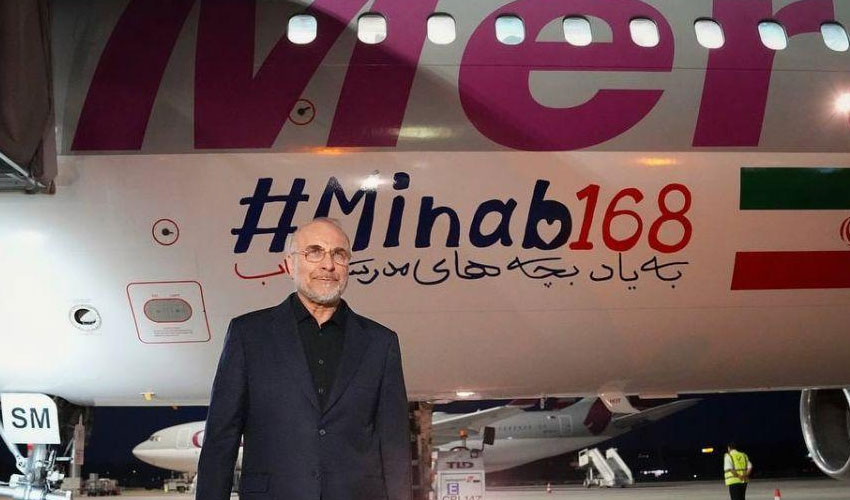
A high-level Iranian delegation headed by Parliament Speaker Mohammad Bagher Qalibaf arrived in Switzerland on Saturday evening to follow up on the implementation of commitments under a memorandum of understanding (MoU) between Iran and the United States.
The visit comes amid ongoing diplomatic engagement aimed at reviewing compliance with previously agreed obligations and assessing the next steps in the fragile understanding between the two sides.
According to Iranian officials, the delegation’s primary purpose is not to begin a new round of negotiations, but to evaluate whether the opposing party has fulfilled its commitments under the existing agreement.
The discussions are expected to focus on the practical implementation of provisions outlined in the Iran–US understanding, with Tehran insisting that full compliance is a prerequisite for moving toward a final agreement.
Iran stresses 'commitment for commitment' principle
Before departing, Iranian Foreign Ministry spokesperson Esmaeil Baghaei emphasized that the visit does not mark the start of a second phase of negotiations.
He reiterated that Iran’s approach is based on the principle of “commitment for commitment,” meaning that progress depends entirely on the fulfillment of obligations by all parties involved.
Iran's delegation, named "Minab 168", led by Iranian Parliament Speaker and Chief Negotiator Mohammad Bagher Ghalibaf, has just arrived in Zurich, Switzerland.
— PressTV Extra (@PresstvExtra) June 20, 2026
Follow Press TV on Telegram: https://t.co/h0eMpifVIe pic.twitter.com/VHOMLokGXG
Baghaei also stated that past experiences have made Iran cautious, adding that implementation is the real test of any agreement.
Iranian officials claim that several key commitments under the MoU have not yet been fully implemented, despite being agreed upon in earlier stages.
Tehran has linked further negotiations for a final agreement to the execution of specific clauses within the memorandum, underscoring that progress remains conditional.
The Iranian Foreign Ministry also pointed to ongoing regional developments, including Israeli military actions in Lebanon, which Tehran described as a violation of ceasefire-related commitments.
Officials said the United States had an obligation to restrain escalation but has failed to ensure compliance, further complicating the diplomatic environment.
High-level composition of delegation
The Iranian team includes senior political, economic, and security officials, reflecting the strategic importance of the talks.
Alongside Qalibaf, the delegation features Foreign Minister Seyed Abbas Araghchi, Ali Bagheri Kani from the Supreme National Security Council, Central Bank Governor Abdolnaser Hemmati, and senior officials from the oil and foreign ministries.
Upon arrival in Zurich, Qalibaf reportedly made emotional remarks, stating that he felt accountable to the “martyrs” and citizens of Iran, and expressed hope that the delegation would uphold national expectations during the talks.
He emphasized the importance of returning with what he described as “honor,” reflecting the domestic political significance attached to the negotiations.








.jpg)







