






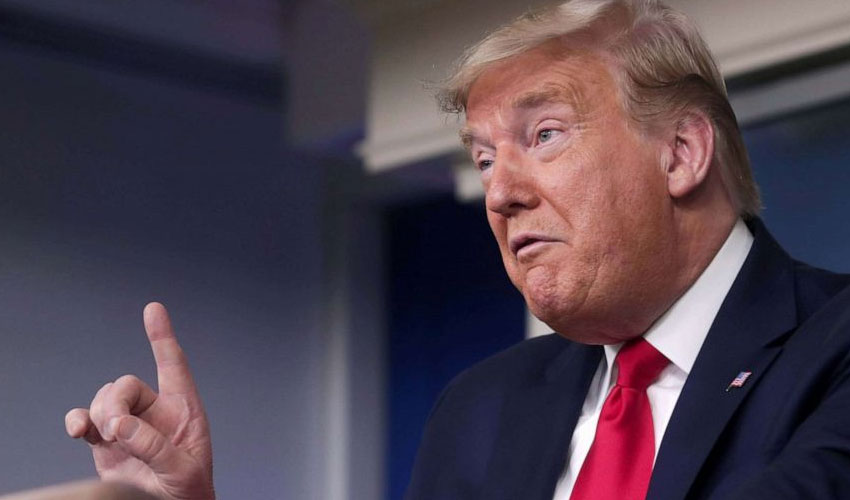
United States President Donald Trump has declared that there will be no tolls for passage through the Strait of Hormuz, except if they are imposed by the United States itself.
The statement, posted on his Truth Social account on Saturday, comes amid growing tensions over the implementation and interpretation of the ceasefire framework between Washington and Tehran.
In his post, Trump said there would be “NO TOLLS” in the Strait of Hormuz during a 60-day ceasefire period, and insisted that no charges would apply after that period either.
However, he added a major caveat, stating that tolls could still be imposed “by and for the United States of America” if the agreement is not fully implemented.
The Strait of Hormuz is one of the world’s most critical energy transit routes, with nearly 20 percent of global oil and gas shipments passing through it.
It also carries around 30 percent of global fertiliser trade, making it a key chokepoint for international supply chains and global energy stability.
Any disruption in the strait has historically led to sharp increases in global fuel prices and broader economic pressure.
Ceasefire memorandum under strain
The statement comes shortly after the signing of a US-Iran memorandum of understanding aimed at de-escalating regional tensions.
Under the agreement, Iran was expected to allow passage through the strait without imposing charges during an initial 60-day ceasefire period.
However, the deal has already faced challenges, with conflicting claims emerging over compliance and implementation.
A US Central Command (CENTCOM) source rejected reports that the strait had been closed, insisting that maritime traffic continues to flow normally.
Iran’s position and military claims
Iranian military officials have previously indicated that the Strait of Hormuz could be used as a pressure point in response to regional tensions.
Earlier claims suggested temporary restrictions on maritime traffic, which Tehran described as a response to alleged breaches of the agreement.
However, these claims have been disputed by US officials, who maintain that the waterway remains operational.
The memorandum, signed earlier this week, was intended as an interim framework rather than a long-term peace deal.
While it pauses hostilities across multiple fronts, including in Lebanon, it does not clearly define long-term rules regarding tolls or maritime passage after the 60-day period.
This ambiguity has fueled political and diplomatic uncertainty over the future of the agreement.
Trump also reiterated his view that the United States should be compensated for its role in securing the region, describing the country as the “guardian of the Middle East.”
He suggested that such a role could justify financial compensation tied to regional stability efforts.
Earlier comments in an interview with The New York Times also indicated similar ideas regarding US involvement in securing maritime routes in exchange for economic returns.




.jpg)







