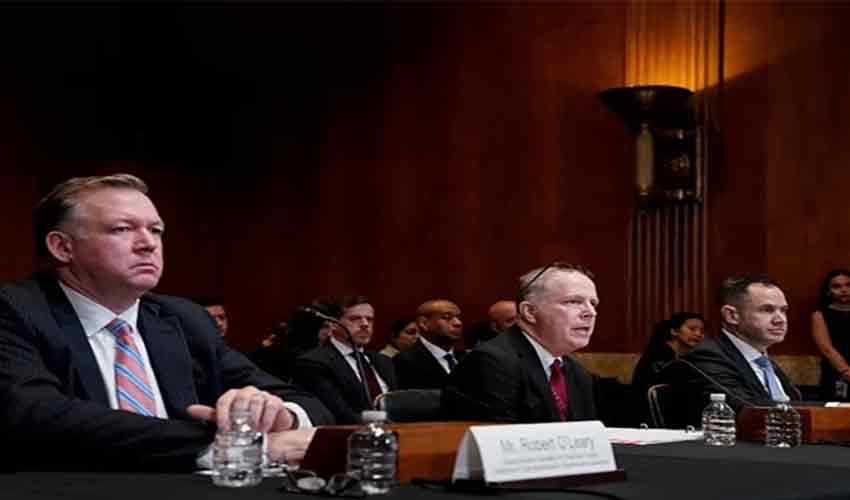
The US government has released all funds allocated for security at the upcoming FIFA World Cup 2026, but a prolonged shutdown of the Department of Homeland Security has slowed key planning and coordination efforts, officials told a Senate hearing.
Christopher Tomney, a senior official at DHS, informed the United States Senate Appropriations Committee that preparations for the tournament have been delayed due to furloughs and a lapse in funding. He noted that staffing shortages have hindered coordination with state and local authorities.
Security concerns remain high, with intelligence reports warning that extremists and criminal groups could target the tournament. Although the Federal Emergency Management Agency has now distributed the full $625 million set aside for security, disruptions caused by the shutdown—now in its third month—continue to affect readiness.
The tournament, set to take place across the United States, Canada, and Mexico in June and July, will feature 48 teams and is expected to be one of the largest sporting events in the world. However, the shutdown has led to the departure of hundreds of personnel from the Transportation Security Administration, creating gaps in expertise that are difficult to fill quickly.
The funding impasse stems from political disagreements in Congress following policies introduced by U.S. President Donald Trump, although he recently signed an order to ensure DHS employees continue receiving pay.
Meanwhile, concerns over transportation costs for fans attending World Cup matches have triggered political pushback. New Jersey Governor Mikie Sherrill has urged FIFA to subsidize travel expenses, warning that train fares from New York to MetLife Stadium could exceed $100—far above the usual $12.90 fare.
Sherrill criticized the financial burden on local transit systems, noting that NJ Transit could face a $48 million cost to manage fan transport, while FIFA is expected to generate billions in revenue from the event. She vowed not to pass these costs onto taxpayers.
New York Governor Kathy Hochul also expressed concern, calling the reported ticket prices excessive and urging affordability for fans.
Similar pricing issues have emerged in Massachusetts, where travel to Foxborough for matches could cost up to $80 by train and as much as $95 by bus, adding to growing criticism over the accessibility of the tournament.