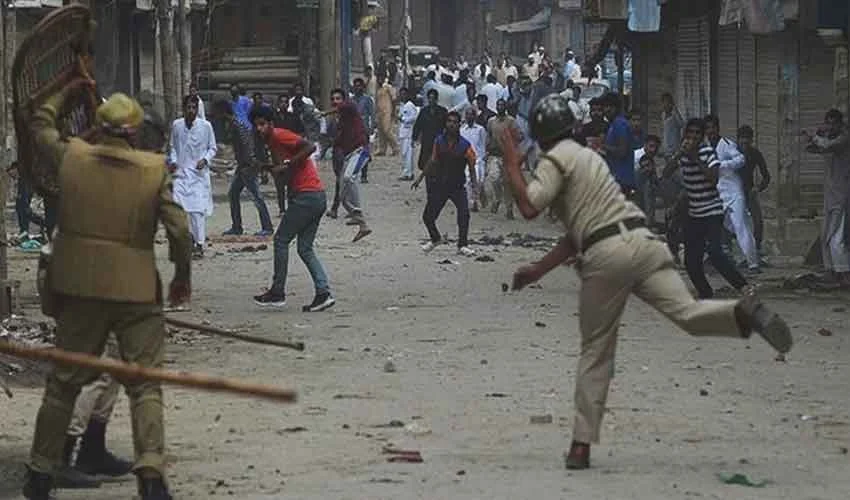
Official figures presented in the Rajya Sabha show that 7,151 people were reported missing in Indian Illegally Occupied Jammu and Kashmir during 2023.
Of these, 2,961 individuals were traced or recovered within the same year, while 4,190 remained missing by the end of 2023. The figures are not speculative but part of data formally acknowledged within India’s parliamentary system.
The trend over the past four years shows a steady rise. In 2020, 5,824 people were reported missing in the region. The number increased to 6,486 in 2021 and further to 6,983 in 2022, before reaching 7,151 in 2023.
During the same period, unresolved cases also increased. The number of those still missing rose from 3,813 at the end of 2020 to 4,190 by the close of 2023. Over four years, the backlog of unresolved disappearances has grown rather than declined.
The situation raises fundamental questions regarding accountability. In a heavily militarised region where thousands disappear each year, and the number of unresolved cases continues to rise, institutional responsibility becomes a central issue.
Despite the scale of the figures, little evidence has emerged of transparent and independent investigations or effective judicial oversight proportionate to the numbers involved.
Equally significant is the limited international response. Major Western countries continue to prioritise trade, defence cooperation and strategic partnerships with India. Human rights concerns are mentioned but rarely pursued through sustained diplomatic pressure.
The result is evident: the rising number of missing persons alongside expanding economic relations reinforces the perception that, at the international level, Kashmiri lives carry limited weight.




.gif)
.jpg)