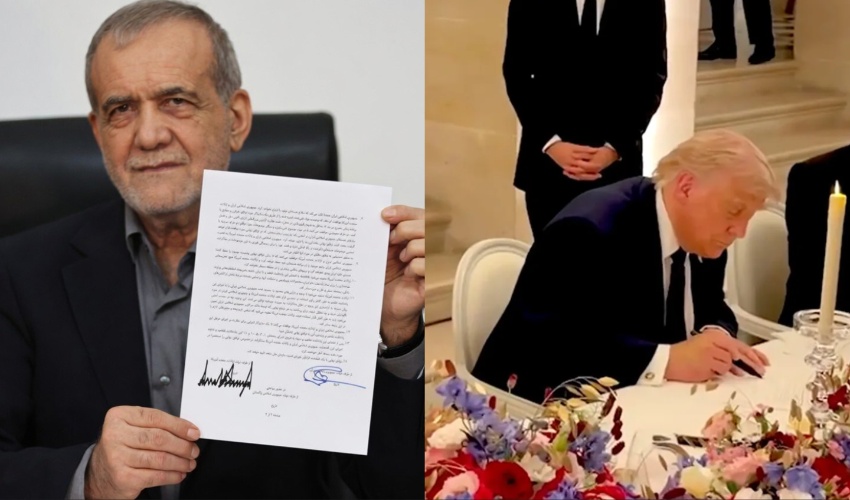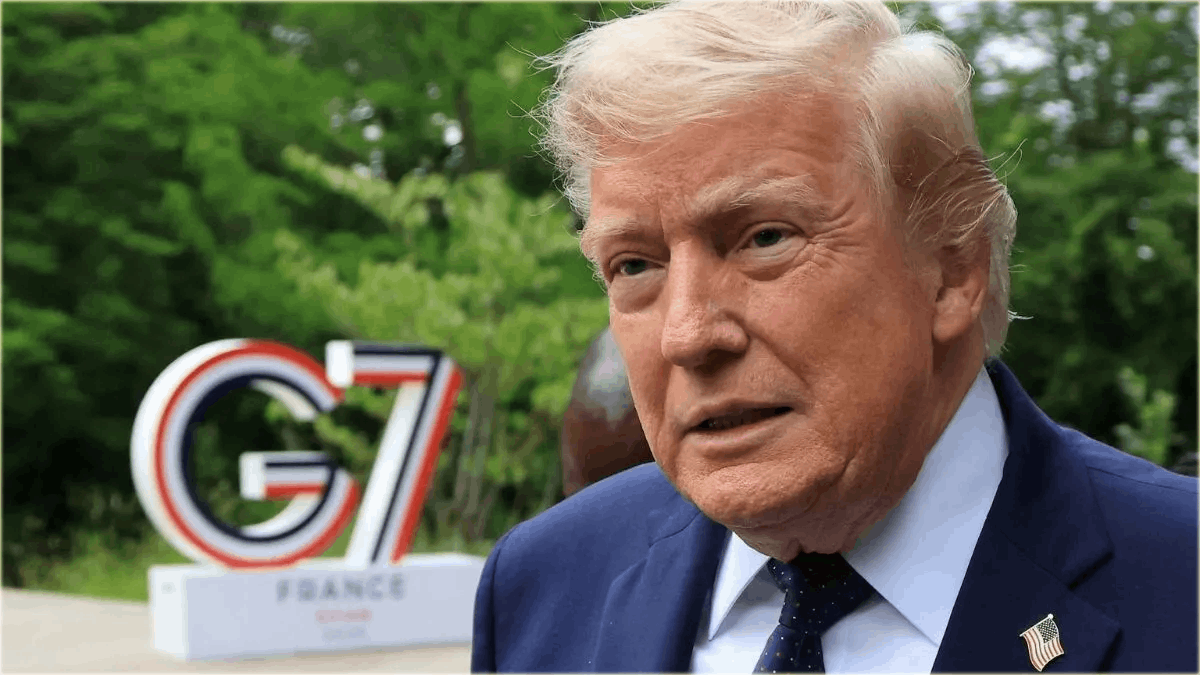
US President Donald Trump on Wednesday strongly defended the interim agreement reached with Iran, saying it prevented a global economic crisis and could pave the way for broader peace in the Middle East, while warning that Washington would not hesitate to launch fresh military strikes if Tehran violated the deal.
Speaking at a press conference following the Group of Seven (G7) summit in Evian-les-Bains, France, Trump said the agreement had already helped restore maritime traffic through the Strait of Hormuz and reduce tensions across the region after nearly four months of conflict.
"We're going to bomb the hell out of them if they violate the agreement," Trump said. "I don't want them to. I want them to honor the agreement."
Iran can have ballistic missiles
Trump also suggested that it would be unfair to completely deny Iran ballistic missiles while other countries in the region possess similar capabilities.
"If other countries have them, it's a little bit unfair for them not to have some," he told reporters in Paris.
Referring to Gulf states, Trump added: "If Saudi Arabia and Qatar, and they all have some, I would say in relative proportion, I think it's okay."
At the same time, he said the United States would maintain a military presence in the Gulf "for a while" despite the ceasefire agreement with Tehran.
Averted economic disaster: Trump
The US president argued that the agreement had prevented a potentially devastating impact on the global economy, particularly by reopening one of the world's most important maritime trade routes.
According to Trump, shipping activity through the Strait of Hormuz has increased significantly since the ceasefire was announced three days ago.
He expressed hope that the truce could become the foundation for a wider regional settlement involving multiple Middle Eastern actors.
Netanyahu's Lebanon strategy
Trump also publicly rebuked Israeli Prime Minister Benjamin Netanyahu over Israel's military operations in Lebanon, highlighting continuing differences between Washington and Tel Aviv regarding Hezbollah.
"Netanyahu happens to be a good man, gets a little excited sometimes," Trump said.
"We have a little dispute over Lebanon. I say you can do a little softer touch, Bibi. You don't have to knock down a building every time somebody walks into it that's from Hezbollah."
The remarks came as Lebanese state media reported fresh Israeli air strikes and artillery shelling in southern Lebanon. Security sources in Lebanon also reported two Hezbollah drone attacks that allegedly injured five Israeli soldiers.
Trump thanks Xi, Putin for remaining neutral
Trump praised Chinese President Xi Jinping and Russian President Vladimir Putin for remaining neutral during the conflict and for not obstructing US efforts against Iran's nuclear program.
"I want to thank China, President Xi. He stayed neutral, totally neutral, and I appreciate it," Trump said.
"And I want to thank Vladimir Putin. He was very neutral. They could have made it much more difficult for us."
Trump claimed that Beijing could have increased military support to Tehran but chose not to escalate the conflict.
"They could have sent in an oil ship with six destroyers alongside of it. They didn't do that," he said.
China's embassy in Washington later reiterated that Beijing's position had remained consistent and focused on ending hostilities and promoting peace.
Sanctions could be lifted if Iran 'behaves'
Trump also signaled that the United States may eventually remove sanctions on Iran if Tehran complies with the terms of the agreement.
"They would have no money, they would be in poverty, the 91 million people would starve, so something will happen as soon as they behave," Trump said.
"When they behave, we're going to let that go."
He further suggested that frozen Iranian assets could eventually be released.
"We have taken their money, it's not our money, it's their money, and we froze it. At a certain point in time I guess we're going to have to give it back," he said.
Iranian school strike: 'Nobody did on purpose'
Trump also commented on the ongoing investigation into a strike that hit a girls' school in Iran's Minab city during the opening day of the conflict.
The attack reportedly killed more than 175 children and teachers, according to Iranian officials.
While an internal US military investigation reportedly found that American forces were likely responsible, the Pentagon has not publicly confirmed those findings.
"Nobody did that on purpose," Trump said, adding that mistakes can occur during wartime and that the investigation remains ongoing.
US military officials have described the probe as complex because the school was located near an active Iranian cruise missile base.
Trump said Washington would hold separate discussions with Gulf countries regarding Iran's ballistic missile program and Tehran-backed armed groups across the region.
He also revealed that Syria's leadership has expressed interest in targeting Hezbollah positions in Lebanon using what he described as "precision" operations.
Additionally, Trump said Lebanon's leader is expected to visit Washington in the coming weeks as diplomatic efforts continue following the ceasefire agreement.
Focus on final peace negotiations
The interim agreement between Washington and Tehran has halted active hostilities and reopened key maritime routes, but major issues remain unresolved, including Iran's nuclear programme, sanctions relief, ballistic missiles and regional proxy groups.
Negotiators are expected to begin formal talks in Switzerland on Friday, with both sides aiming to convert the temporary arrangement into a comprehensive long-term peace agreement.

.jpg)