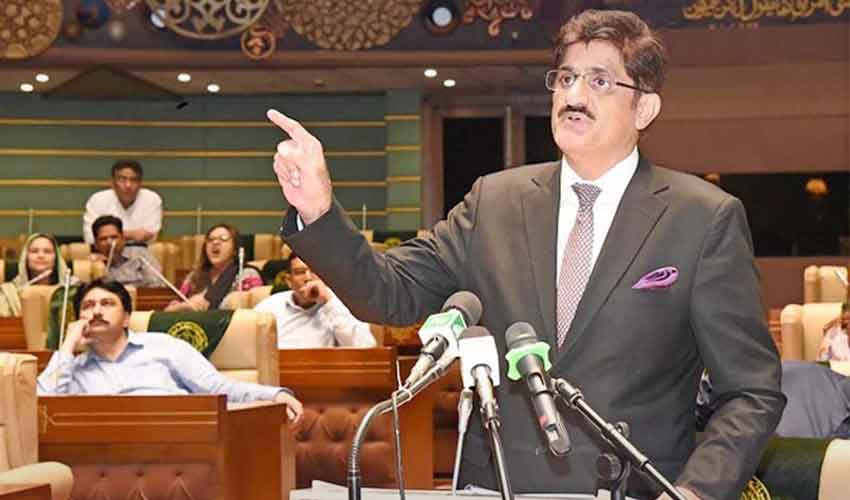
Sindh Chief Minister Syed Murad Ali Shah presented the provincial budget for fiscal year 2026-27 in the Sindh Assembly, with total outlay exceeding Rs3.562 trillion and no new taxes imposed.
The budget focuses on public welfare, constitutional rights, financial sustainability and national stability, while announcing relief measures for employees, workers, farmers, women, youth and the business community.
Murad Ali Shah presents Sindh budget for 13th time
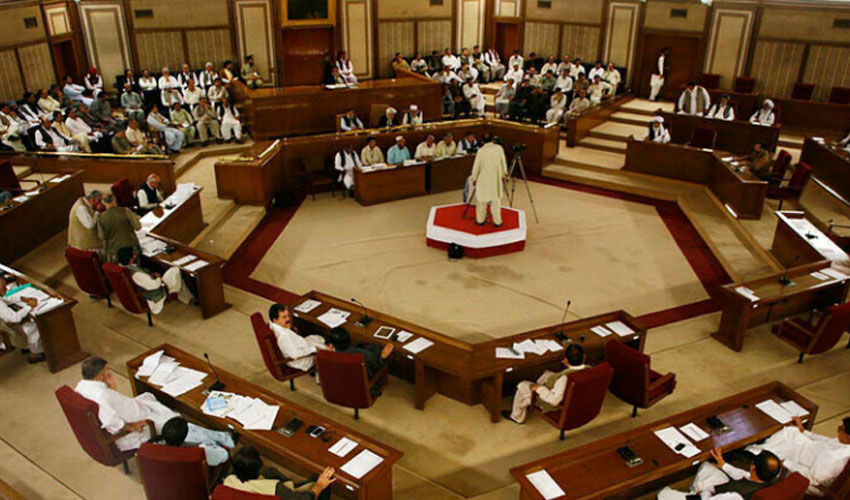
The Sindh Assembly session began under the chairmanship of the speaker, where Chief Minister Syed Murad Ali Shah presented the budget for the next fiscal year.
“By the grace of Allah, I am presenting the Sindh budget for the 13th time today,” Murad Ali Shah said.
He said it was both an honour and a great responsibility to present 11 consecutive budgets, adding that no other elected public representative had been given the opportunity to present budgets so many times in a row.
The chief minister paid tribute to his late parents, saying the values they gave him continue to guide him. He also thanked his family for their sacrifices and support in his journey of serving the people of Sindh.
Tribute to PPP leadership and armed forces
Murad Ali Shah said PPP founder Zulfikar Ali Bhutto strengthened the foundations of democracy and social justice, while Benazir Bhutto’s courage and sacrifices remain a beacon of light for the nation. He also thanked President Asif Ali Zardari for his guidance and constant support.
The chief minister said PPP Chairman Bilawal Bhutto Zardari’s vision of people-friendly development and social justice is at the centre of Sindh government’s priorities. He said the welfare of farmers, labourers, women and youth is a fundamental part of the province’s development agenda.
Murad also paid tribute to the brave armed forces of Pakistan for their sacrifices and services, saying the forces are the guarantors of the country’s sovereignty and territorial integrity.
Pakistan’s peace role highlighted
The chief minister said Pakistan has become a strong voice for peace, stability and principled diplomacy in the region. He said that during the Iran crisis, Pakistan played a role in reducing tensions and promoting peace.
According to Shah, Pakistan has once again proven that it is a country that advocates peace and dialogue in the region. He also paid tribute to the courageous and steadfast people of Sindh. He said Sindh agreed to arrangements worth Rs260 billion under Article 164 of the Constitution to ensure national stability.
However, he said that despite this national assistance of Rs260 billion, Sindh ensured the protection of its constitutional rights. The chief minister said Sindh played its role in the national interest but did not compromise on its rights under the NFC Award.
He added that the people of Sindh have always proven themselves to be a responsible federal unit.
According to Murad Ali Shah, the Sindh government has set an example by carrying national responsibility and public development together.
Opposition walks out during speech
During the budget speech, opposition members walked out of the Sindh Assembly. Opposition Leader Ali Khorshidi said the protest was being held because “one-way traffic” was taking place in the House.
He said citizen representation had not been taken on board, adding that Pakistan is a democracy and its traditions should be preserved.
“You have the majority, so do whatever you want, then we will do it too,” the opposition leader said.
Khorshidi said protest was their democratic right and announced that the opposition was boycotting the budget speech.
The speaker, while speaking to the opposition leader, said, “Your people are not listening to you, do they not believe you?”
Despite noise in the House, the chief minister continued presenting the budget.
Rs3.562tr budget with no new taxes
Murad Ali Shah presented a Rs3.562 trillion budget for the new fiscal year. He announced that no new taxes have been imposed in the budget, with the government determined to provide relief to the public and the business community.
The budget deficit is expected to be Rs36.9 billion, while revenue has been set at Rs3.525 trillion. The chief minister said Sindh’s budget is based on four principles: constitutional rights, fiscal sustainability, national stability and public welfare.
Salaries, pensions and minimum wage
The Sindh government announced a 7% increase in salaries and pensions of provincial government employees. The minimum wage for workers in Sindh has been increased from Rs40,000 to Rs43,000 per month.
Murad Ali Shah said the government has also made decisions regarding workers’ welfare in the new budget.
Development budget reduced by 29%
Sindh’s development budget has been reduced by 29%, with more than Rs720 billion allocated for development. According to documents, estimated expenditure has been kept at Rs2.142 trillion.
The chief minister said the development portfolio had to be reduced from Rs575 billion to Rs400 billion under cooperation with the federal government.
He said the annual development programme for the new fiscal year has been set at Rs400 billion.
According to budget documents, Rs385 billion has been proposed for the Sindh development budget, while Rs15 billion has been proposed for district ADP.
Major sectoral allocations
The budget allocates Rs620 billion for education and more than Rs393 billion for health. A total of Rs155 billion has been allocated for municipalities, while Rs41 billion has been set aside for agriculture.
The budget also earmarks Rs222 billion for law and order. For irrigation projects, Rs30.9 billion has been allocated, while Rs25.9 billion has been set aside for the education sector’s development work.
The health sector has been allocated Rs17.4 billion for development, while Rs6.3 billion has been allocated for agriculture and livestock development works.
Relief package for key sectors
The chief minister announced a special relief package for education, agriculture, insurance and employment sectors. Sales tax on educational support services has been reduced to 5%.
Taxes imposed on insurance agents and brokers have also been reduced. Concessionary tax has been maintained for beauty salons affiliated with SE and overseas employment recruiting agencies.
The exemption limit of agricultural super tax has been increased from Rs150 million to Rs500 million. The rate of agricultural super tax has also been reduced from 10% to 8%.
Social protection and poverty reduction
Murad Ali Shah said a huge amount of Rs13.2 billion has been allocated for the social protection package. The package includes Kitchen Garden, Benazir Hari Card and Benazir Women Agriculture Workers Programme.
Relief schemes for widows and orphans will also continue. The CM said special steps are being taken on the instructions of Bilawal Bhutto Zardari to eradicate poverty.
The Sindh government has proposed major allocations for education and health.
According to documents, more than Rs393 billion has been allocated for health, while Rs620 billion has been allocated for education. The budget also proposes a grant of Rs26 billion for SIUT.
Thar coal, Lyari and rescue services
The budget proposes Rs10 billion for Thar coal. A total of Rs4 billion has been proposed for the Lyari package. Another Rs4 billion has been proposed for the Shaheed Benazirabad Trauma Center.
The government has proposed Rs3.8 billion for the upgradation of KMC Fire Brigade. A total of Rs1.7 billion has been proposed for Rescue 1122.
Karachi Yellow Line and municipal infrastructure
The budget allocates Rs22 billion for the Karachi Yellow Line project. Murad Ali Shah said Rs121.6 billion has been allocated for local government and municipal infrastructure.
A total of Rs40.9 billion has been allocated for public health engineering. The government has also allocated Rs39.5 billion for transport and communication projects.
Revenue collection targets
According to budget documents, the target for revenue collection for the next fiscal year has been set at Rs555 billion.
The Revenue Department has been assigned a target of Rs42 billion. The Sindh Revenue Board has been given a target of Rs455 billion.
Chief Minister Shah announced the establishment of the Sindh International Financial Center in Karachi. He said the financial center will serve as a platform for infrastructure finance, Islamic finance and climate finance.
The chief minister said Karachi is being made a centre of global investment under the vision of the PPP. He also announced the launch of the Sindh Green Data Infrastructure Initiative to attract global investment. Under this initiative, investment will be brought into world-class data centers and AI infrastructure.
Keti Bandar to become economic gateway
Murad expressed determination to make Keti Bandar a global maritime, logistics, industrial and energy hub. He said Zulfikar Ali Bhutto laid the foundation of Port Qasim, and Bilawal Bhutto will now shape the new economic destiny of Keti Bandar under the vision of Shaheed Benazir Bhutto.
According to the chief minister, the economic development of Keti Bandar after Port Qasim will become a major milestone for Sindh. He said Pakistan will be more strongly connected to global trade routes through Keti Bandar.
The Keti Bandar project will be connected to Dhabeji Special Economic Zone and Thar coal resources. “We will make Keti Bandar Pakistan’s new economic and maritime gateway,” Murad Ali Shah said.
Digital Sindh, AI and renewable energy
The chief minister said the foundation of green data infrastructure and an AI economy is being laid under the Digital Sindh vision. He added that Sindh is being made a centre of renewable energy according to Bilawal Bhutto’s vision.
Murad Ali Shah said the largest solar programme in Pakistan’s history is being launched. He announced that 275,000 free solar home systems will be distributed at a cost of Rs18 billion.
The free solar systems will be provided to poor families. The government also announced a concessional solar financing programme for the middle class.
The Sindh government introduced a waste-to-value programme to produce fuel and commercial products from waste. Murad said waste will be converted into economic resources through the programme. He said the initiative will generate carbon credits and reduce environmental pollution.
Special legislation for small farmers
The Sindh government has decided to enact special legislation for small farmers. Murad said legislation will be introduced to establish agricultural collective institutions for small farmers.
Through these agricultural collectives, farmers will be given access to machinery, finance, insurance and modern technology.
The chief minister said small farmers are being given new economic power through agricultural collectives. He said despite climate challenges, farmers are meeting the country’s food needs and playing a key role in keeping the wheels of the economy moving.
Murad said climate change has become a major challenge for Pakistan, including Sindh. He also praised teachers and medical staff, saying they are serving the nation with sincerity and dedication.
The chief minister said that despite economic difficulties, investors and the business community are participating in the journey of development.
Sindh emerging as economic powerhouse
Murad Ali Shah said new doors of investment, industry, trade and employment are being opened in Sindh. He said the government is laying the foundation to make Sindh an emerging economic powerhouse of South Asia.
According to the chief minister, Sindh is being developed as a regional hub of trade, technology, finance and energy. He said the next phase of the Sindh government is a journey from welfare to prosperity, and from prosperity to economic leadership.
Record development spending and Bhutto Highway
Murad said a record Rs900 billion was spent on development activities last year. He described Bhutto Highway as the largest urban infrastructure project in the history of Sindh.
The chief minister said modern infrastructure and an effective transport system are indispensable for Karachi’s development.
Bhutto Highway, being built at a cost of Rs60.7 billion, is a major convenience for the people. The 39-kilometre-long modern corridor connects Qayyumabad with the M-9 Motorway.
He said Bhutto Highway is bringing a revolutionary change to Karachi’s traffic system. He said Karachi’s first major infrastructure project was completed under the public-private partnership model.
The chief minister described Bhutto Highway as a successful example of modern financial strategy and effective planning. He said travel time has been reduced to about 25 minutes because of the project. According to him, the project has significantly improved time and fuel savings for citizens.
Bhutto Highway is providing travel facilities to around 25,000 vehicles daily. The chief minister said the highway marks the beginning of a new era of fast, safe and efficient transportation in Karachi.
Housing for flood victims underway
The chief minister said a project to build houses for flood victims in Sindh is underway. He added that the government’s focus remains on public welfare, economic development and sustainable growth.
Under the Sindh People’s Housing Programme, one million houses have been completed for victims of the 2022 floods.
-
An additional 1.7 million housing units have been funded with international support worth $1.675 billion. The housing initiative has empowered lakhs of women by granting them land ownership rights.
-
Funds have been released for the resettlement of families affected by the Gujjar, Mehmoodabad and Orangi drain projects.
Health and education initiatives
-
Services at NICVD, SICVD, SIUT and JPMC have been expanded.
-
The 1123 tele-doctor service and 1122 ambulance network have been further strengthened.
-
More than 1,300 school buildings have been constructed and teachers have been recruited.
-
Development funds have been allocated for Karachi University, Jinnah Sindh Medical University and other educational institutions.
Law and order improvements
-
Technology-based policing has reduced vehicle theft and snatching incidents in Karachi by 67%.
-
Street crime has declined by 54%.
-
Traffic accidents and fatalities have also decreased significantly.
Karachi development portfolio
The Sindh government has allocated special attention to Karachi’s mega development projects.
-
A total of 816 development projects are planned for Karachi at an estimated cost of Rs644.3 billion.
-
Rs100.19 billion has been allocated for Karachi during FY2026-27.
-
Overall, Rs108.1 billion has been earmarked for 822 Karachi-related projects.
The city’s development programme includes infrastructure, transport, sanitation, water supply and education projects.
Traffic and road infrastructure projects
-
Rs1.2 billion allocated for a new flyover from Airport Road to Star Gate.
-
Rs1.5 billion allocated for a right-turn underpass from Malir Halt to Shahrah-e-Faisal.
-
Rs1.65 billion allocated for flyovers at Sir Shah Suleman Road crossing Gujjar Nala.
-
Rs159 million allocated for the Bhutto Highway-Korangi Causeway Junction project.
-
Rs105 million allocated for the Azimpura Intersection Flyover and Shah Faisal Road project.
-
Two new underpasses planned at Khayaban-e-Ittehad and Khayaban-e-Shahbaz.
-
A new interchange will be constructed at the junction of M-9 and Abul Isphahani Road.
-
Traffic improvement projects are planned for Shahrah-e-Faisal, Malir Halt and Star Gate.
Drainage and flood management projects
-
Rs1 billion allocated for Phase-III of major storm drain construction and rehabilitation.
-
Rs1.1 billion allocated for Gujjar Nala rehabilitation and service roads.
-
Rs280 million allocated for the stormwater drain project from M-9 to Thaddu Nala.
-
Rs1 billion allocated for continuing work on the Greater Karachi Sewerage Plan S-III.
Water supply and sewerage projects
-
Rs575.2 million allocated for expanding the water supply system linked to the K-IV project.
-
Rs1 billion allocated for upgrading water pumping stations in East and Central districts.
- Rs1.27 billion allocated for a new water supply line along the Lyari Expressway.
-
Funds allocated for Karachi Water and Sewerage Services Improvement Project Phase-II.
Solid waste and environmental projects
-
Rs166 million allocated for six modern garbage transfer stations.
-
Rs9 billion allocated for the Solid Waste Emergency and Efficiency Programme.
-
Rs1.18 billion allocated for upgrading Jam Chakro and Gond Pass landfill sites.
Modern waste management projects are under way across Karachi. Tree plantation projects are being implemented along Bhutto Highway and Malir Expressway.
Health sector development projects
-
Rs1 billion allocated for Sindh Infectious Diseases Hospital Karachi.
-
Development funds allocated for establishing a new medical college in Karachi.
-
Rs1.4 billion allocated for the Paediatric Cardiology Unit at NICVD Karachi.
Higher education and training facilities
-
Bilawal Bhutto Engineering College in Lyari will cost over Rs1.84 billion.
-
Rs200 million allocated for Zulfikar Ali Bhutto Law University Karachi.
-
Development funds allocated for the Karachi Education Complex project.
-
Rs1 billion allocated for establishing a Provincial Civil Services Academy.
-
Plans included for a Sindh Revenue Board training academy and office.
Rs262.5 million allocated for upgrading business centres and markets. Karachi is being developed as a hub for investment, industry and economic growth. New initiatives aim to strengthen commercial activity and employment opportunities.
Public transport projects
-
Rs13.2 billion allocated for the Karachi Red Line BRT project.
-
More than Rs3.5 billion allocated for the Yellow Line BRT corridor.
Transport and communication projects remain a key priority for the provincial government.
Funding has also been allocated for Karachi Safe City Project Phases I and II. Work will be accelerated on establishing a modern forensic laboratory and forensic science agency.
Karachi urban renewal and community projects
-
Rs4.37 billion allocated for the Lyari Transformation Package.
Road rehabilitation and reconstruction projects are under way in Baldia, Korangi, Malir, Central, East and West districts. Alternative traffic routes in Clifton have been included in the budget.
Karachi Fire Brigade modernization project has been approved. New streetlights and urban infrastructure improvement schemes will be launched.
Sports and youth development
Funds allocated for sports complexes, stadiums and youth facilities across Karachi. The chief minister said youth aspirations continue to drive the government’s development agenda.
Murad Ali Shah said the budget reflects a commitment to citizen protection, human development and a brighter future. The PPP’s vision focuses on education for every child, healthcare for every citizen and opportunities for every young person.
The chief minister said every district of Sindh will benefit from prosperity and development under the new budget.


.jpg)

.jpg)