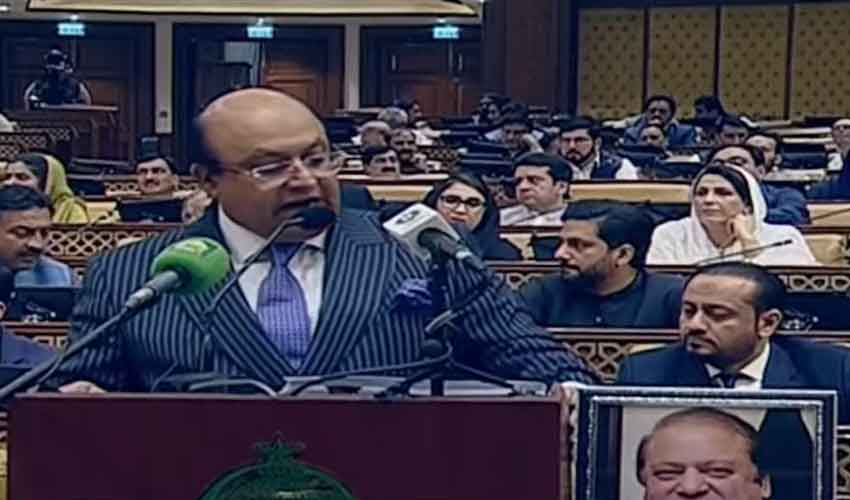
The Punjab government has prepared a budget of more than Rs5.903 trillion for the financial year 2026-27, with a strong focus on development, austerity, revenue generation, e-governance and industrial expansion.
According to a copy of the budget speech obtained by Samaa TV, the government has proposed major spending on education, health, clean water, sanitation, transport, youth development and export-oriented industries.
PUNJAB TOTAL BUDGET: PKR 5,903.5 BN
— PMLN (@pmln_org) June 16, 2026
750.1 Bn - Education
500.6 Bn - Health
409.8 Bn - Local Govt.
272.8 Bn - Infrastructure
252.1 Bn - Public Safety & Police
91.9 Bn - Agriculture
#PunjabBudget2026 pic.twitter.com/2C8hpAUUpw
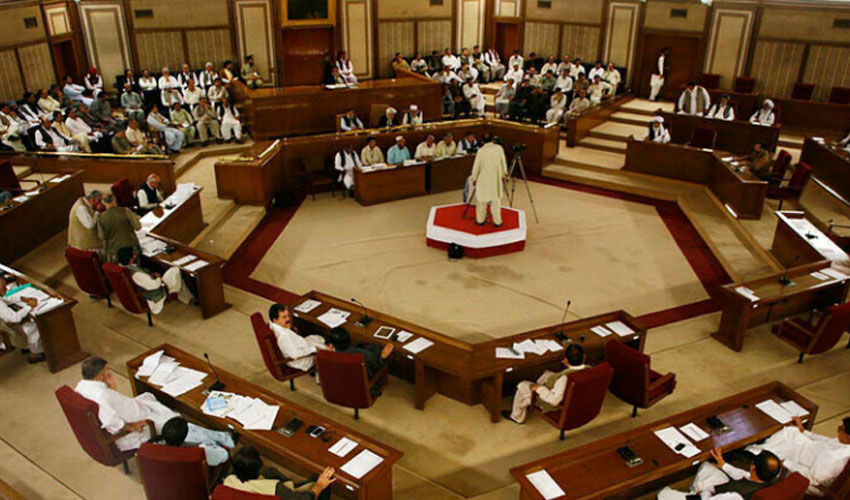
Opposition members staged a protest outside the Punjab Assembly and raised slogans demanding the release of the PTI founder. The opposition later entered the assembly hall in the form of a rally, continuing their protest during the budget session.
Finance minister highlights govt achievements
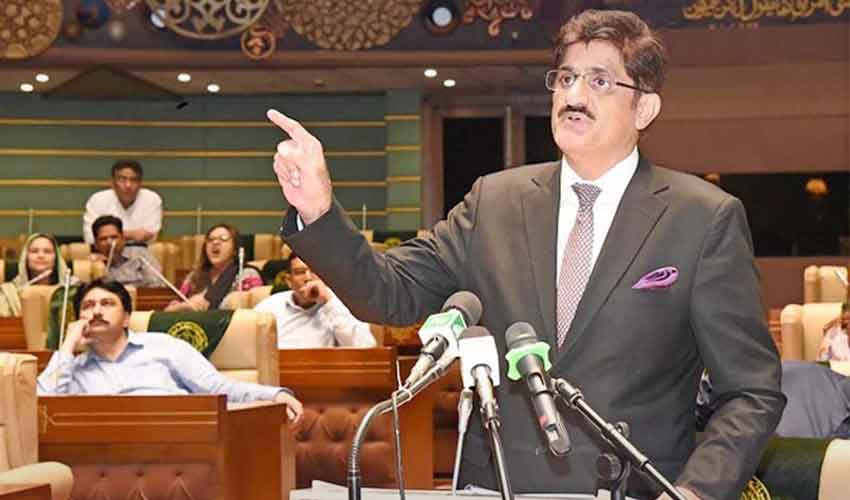
Punjab Finance Minister Mujtaba Shujaur Rehman praised Chief Minister Maryam Nawaz for taking what he described as revolutionary steps across the province.
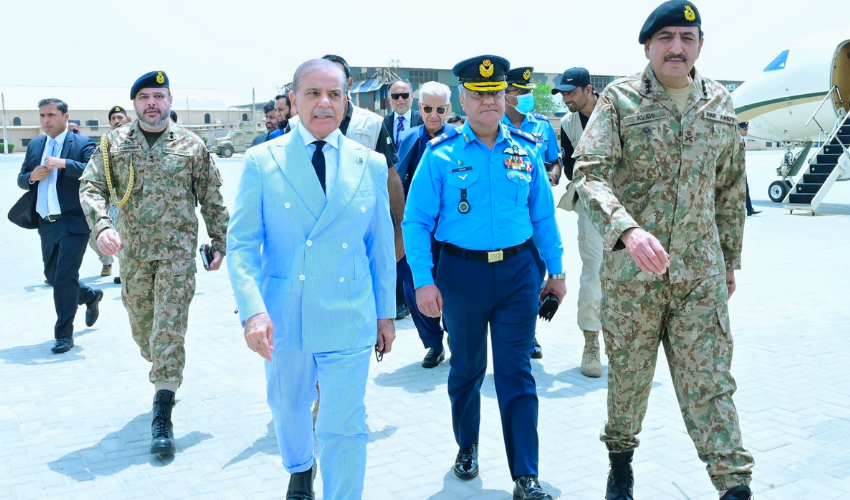
He paid tribute to Prime Minister Shehbaz Sharif and Field Marshal Asim Munir, stating that Pakistan had emerged victorious in global peace efforts and played a significant role during the Iran-US conflict, a situation he said had put world peace at stake.
The minister said the PML-N government had saved the country from economic collapse and that the Punjab government had taken several measures to protect citizens from inflation. He noted that Chief Minister Maryam reduced government expenditures, implemented austerity measures, cut ministers’ salaries, and personally supervised flood relief operations, setting an example of responsible governance and fiscal discipline.
The minister said the Punjab Development Management (PDM) system is being expanded to the tehsil level to improve governance and service delivery. He added that Punjab contributed Rs546 billion to the federation and described the province as the backbone of Pakistan’s economy, emphasizing its central role in national development and financial stability.
Education gets largest share
The Punjab budget proposes Rs750 billion for education, making it the largest allocation in the budget.
The government has also announced the continuation of more than 100,000 laptops and merit-based scholarships for students across the province.
Punjab Total Education Budget: PKR 750.1 BN
— PMLN (@pmln_org) June 16, 2026
22 Bn – Honhaar Scholarship
15.69 Bn – Laptop Program
33 Bn – STEAM Labs
55 Bn – Punjab Education Foundation
6.9 Bn – IT Labs in Colleges
7.8 Bn – New Colleges and Campuses / Sub-Campuses
#PunjabBudget2026 pic.twitter.com/qTaLuHyMe2
The health sector has been allocated Rs500.62 billion.
The budget proposes Rs507 billion for clean water and sanitation, including Rs187.1 billion for water, sanitation and urban development projects.
For agriculture and livestock, Rs132.54 billion has been allocated, while Rs111.97 billion has been proposed for the promotion of fisheries.
Punjab Total Health Budget: PKR 500.6 BN
— PMLN (@pmln_org) June 16, 2026
169 Bn – Nawaz Sharif Medical District
10 Bn – Special Initiative for Cancer Patients
8.3 Bn – Provision of MRI Machines
1.2 Bn – Stroke Initiative
20 Bn – Nawaz Sharif Cancer Hospital
9.3 Bn – Cath Labs
#PunjabBudget2026 pic.twitter.com/DFdUbHu7yr
The budget also includes Rs4.85 billion for livestock health.
Salaries, pensions and local bodies
Salaries of government employees have been proposed to increase by 7%, while pensions will rise by 3.5%. The government has proposed Rs803 billion for local government institutions under the PFC award.
Service delivery expenses are recommended at Rs783 billion, daily expenses of government institutions at Rs578 billion, and current expenses at Rs679 billion.
Punjab is estimated to receive Rs4.39 trillion from the federal government under the NFC award. The provincial revenue target for the next fiscal year has been set at Rs1.20986 trillion.
A surplus budget of Rs910 billion has also been included under the financial framework agreed with the IMF.
Youth, law and order, women and skills
The Punjab government has introduced a special development package for youth.
The budget proposes Rs252 billion for law and order, Rs4.83 billion for the Himmat Card, Rs260 million for skill development, and Rs150 million for women’s development.
Sports, culture and transport
Programs worth Rs5.5 billion will be introduced for the development of the sports sector.
A major allocation of Rs50 billion has been proposed for Maryam Nawaz Sports City Lahore.
The government has also proposed a Film City Program to promote cultural and creative industries, with Rs55 billion allocated for the initiative.
For transport, the government plans to introduce 2,000 electric buses, with Rs168 billion allocated for the sector.
Development and digital governance
More than Rs1.24 trillion has been allocated for the development program.
The budget outlines a roadmap for austerity, development priorities and revenue growth.
The Punjab government has also placed major focus on e-governance and digitalization, along with proposals to establish new departments and authorities in the province.
An investment of Rs783 billion is expected in the next fiscal year to promote the industrial economy. A new land lease policy has been introduced to promote investment in economic zones.
The government has recommended reducing land lease rates from Rs50,000 to Rs200,000 per acre.
A new land lease policy for special economic zones has also been proposed, with SEZ land lease rates recommended at Rs50,000 to Rs200,000 per acre per month.
Garments, leather and footwear sectors
The budget document says new measures will pave the way for additional exports and 20,000 new jobs in the garment sector.
More than 40 new garment houses are proposed.
For the leather and footwear sector, a wastewater treatment plant will be established at a cost of Rs4.6 billion.
Testing laboratories and a common facility center will also be established in Kasur, enabling more than 100 tanneries to work according to international standards.
The government expects additional export capacity of up to $300 million in the leather sector.
Pharmaceutical and business reforms
A biotech bioequivalence lab will be upgraded in the pharmaceutical sector at a cost of Rs2 billion.
More than 20 bioequivalence studies will be created to promote local pharmaceutical manufacturing. A unified inspection regime will also be introduced to facilitate business activity.
The inspection system of more than 15 institutions will be shifted to a one-window system, with reforms expected to reduce business costs by 40 to 60%.
Green production and exports
The budget proposes incentives of up to 40% to promote environment-friendly production and exports.
Under the new policy, investment of around Rs1.995 trillion is expected, along with a significant increase in industrial development and employment opportunities.
Sports goods and export industry reforms
The budget proposes Rs5.5 billion for the development of the sports goods sector. International-standard testing facilities will be established for sports goods.
The government also plans to introduce ICC, FIFA and other global certification programs. A series of reforms will be introduced to remove unnecessary obstacles for the export industry.
More than 1,000 export institutions are expected to benefit from government measures, with additional exports of $100 million projected from new policies.
Cutlery, hand tools and ceramics
The budget allocates Rs4 billion for the promotion of cutlery, hand tools, arts and crafts. Financial assistance will be provided for technology upgradation, and 2,500 new jobs are expected to be created.
The government also expects a significant increase in exports of value-added products. For the ceramics sector, modern kilns and testing facilities will be established at the Gujrat Institute.
The budget proposes Rs250 million for the development of the ceramics sector.
Fan industry and global market access
A regulated material testing lab will be established for the fan sector in Sambrial. A modern lab is expected to be set up at a cost of Rs700 million for the fan industry.
The new testing facilities are expected to help local manufacturers access European and global markets.
Industrial estates and cluster development
The budget allocates Rs35 billion for the Industrial Estates Development Program. Industrial estates will be developed in Faisalabad, Vehari, Rahim Yar Khan, Bahawalpur and AIIC.
The program is expected to pave the way for more than 1,000 new industrial units. Private investment of Rs80 billion is expected from industrial projects, while more than 40,000 new jobs are likely to be created in the industrial sector.
The budget also proposes Rs20 billion for the Cluster Infrastructure Development Program. Export clusters will receive 100% financial assistance for machinery and basic infrastructure.
Environmental treatment, sustainable development
A CETP package will be introduced for environmental quality and sustainable development. The government has allocated Rs25 billion for the Combined Effluent Treatment Plant Package.
Wastewater treatment capacity will be created in four industrial estates.
Step financing and industrial growth
A Rs193 billion step financing program has been launched to promote industrial development and exports. Concessional financial assistance will be provided to 463 industrial projects.
Government initiatives are expected to increase exports, investment and employment opportunities.
Industrial development projects are expected to create 29,400 direct jobs, while additional export capacity of $5.6 billion is also projected.
The budget also proposes steps to mobilize billions of rupees in private investment.
The budget proposes Rs100 billion for the Industrial Growth Accelerators Program. Two industrial estates and 14 agro-processing parks will be provided with modern machinery.
The industrial sector will also be supported through equipment and solar energy.
E-commerce and digital trade
The budget proposes Rs700 million for the e-Biz and e-Commerce Readiness Program. E-commerce hubs will be established to provide businesses access to global markets.
Four e-commerce centers will be set up to promote digital trade.
The program is expected to help 2,000 businesses access online trade and export opportunities. So far, receipts worth Rs6.9 billion have been made possible through digital means. The government expects additional annual exports of $24.5 million from e-commerce initiatives.
Horticulture, floriculture and pink salt
The budget proposes financial assistance of Rs300 million for the promotion of horticulture and floriculture. Improved cold chain and logistics systems will help promote the floriculture sector, benefiting more than 100 farmers.
The government has also proposed Rs1.5 billion for the Pink Salt Value Addition Financing Program. Concessional financial assistance will be provided to 200 mineral and industrial enterprises linked to pink salt.
The budget places special focus on value addition to achieve greater economic benefits from mineral resources.
Environment, roads and energy
-
A plan to plant trees on 12,000 acres of barren land in south Punjab has been included in the Punjab budget. More than 10 million trees will be planted under a plantation campaign costing Rs8 billion.
-
A Rs100 billion road improvement plan will be introduced.
-
Rs900 million has been allocated for the CM Free Solar Panel Scheme for the next financial year.
-
Rs17.2 billion has been allocated for the Environment Department.
Other development programmes
-
The Lahore Development Program has been launched at a total cost of Rs137 billion, while Rs10.6 billion has been allocated for the Lahore Development Program in the new financial year.
-
Improving urban infrastructure and local government services has been declared a priority.
-
The Punjab Development Program has been launched at a cost of Rs505 billion. Work is underway on sewerage, stormwater drainage and street pavement projects.
-
66 major cities of Punjab will benefit from the Punjab Development Program. Rs31 billion has been proposed for the Punjab Development Program in the next financial year.
Model villages and parks
-
The Model Village Program has been launched at a cost of Rs59 billion. Under the programme, 485 villages across 10 divisions of Punjab will be converted into model villages. Rs10 billion has been proposed for the Model Village Program in the new financial year.
-
A special programme has been introduced for the establishment, rehabilitation and upgradation of parks across Punjab.
-
Rs2 billion has been proposed for park improvement projects.
Apni Chhat Apna Ghar programme
-
173,000 housing loans have been issued under the Apni Chhat Apna Ghar programme. So far, Rs255 billion has been spent on the programme.
-
More than 101,000 houses have been completed. More than 32,000 houses are currently under construction.
-
In the next financial year, 200,000 people will be provided Rs300 billion in interest-free loans. The programme has also received recognition at the global level.
-
The government has reiterated its commitment to expanding housing facilities under the Apni Zameen Apna Ghar programme.
-
The scope of housing projects will be further expanded for low-income and homeless families. Provision of basic facilities and dignified housing has been declared a top priority.
Suthra Punjab programme
-
A province-wide cleanliness campaign is being implemented under the Suthra Punjab programme for which Rs270 billion has been provided.
-
Around 120 million citizens have been provided improved sanitation facilities. The programme has helped create a cleaner and healthier environment.
-
Rs170 billion has been allocated for Suthra Punjab in the next financial year. Suthra Punjab has been included among the Punjab government’s major people-friendly projects. The programme has also received appreciation at international forums.
Clean water and sanitation
-
Clean water projects are being implemented in 18 districts of Punjab. The Chief Minister’s Clean Water Program will cost Rs45 billion.
-
Rs8 billion has been proposed for clean water projects in the new fiscal year. Provision of safe drinking water to citizens is among the government’s priorities.
-
The Chief Minister’s Rural Sanitation Program will be launched at a cost of Rs300 billion. Major projects have been introduced to improve sanitation in rural areas.
-
The CM Sustainable Goals Program will be launched with Rs5 billion to achieve sustainable development goals. Special funds have been allocated to further strengthen public welfare projects.
-
The WATSAN Program has been proposed at a cost of Rs4 billion to provide better water and sanitation facilities.
-
The Punjab Rural Sustainable Water Supply and Sanitation Project has been launched at a cost of Rs96.20 billion. Around 2,000 villages in 16 districts will benefit from the project.
Murree and intermediate cities development
-
Rs10.7 billion has been allocated for the Murree Development Program. Projects have been launched to improve urban facilities and infrastructure in Murree.
-
The Punjab Intermediate Cities Improvement Program has been launched at a cost of Rs62 billion. Water, sewerage and solid waste management projects are underway in 10 medium-sized cities.
-
The DREAMS Project has been launched in Rawalpindi and Bahawalpur at a cost of Rs64.48 billion. Major urban development projects are progressing in Rawalpindi and Bahawalpur.
Agriculture, livestock and aquaculture
Agriculture, livestock and aquaculture have been declared main pillars of Punjab’s economy. These sectors play a key role in food security, rural employment and exports.
-
Rs132.54 billion has been allocated for agriculture, livestock and aquaculture. Government investment of Rs481 billion is expected over the next three years under economic transformation measures.
- Special focus will be placed on agricultural value addition, livestock value chains and aquaculture projects. Additional private-sector investment of Rs134 billion is expected. Total investment in agriculture and rural sectors is expected to exceed Rs615 billion.
Government initiatives are expected to increase production, exports and value addition. The government has pledged to create rural prosperity and new employment opportunities.
The Kisan Card Program has been declared an important milestone for financial support to farmers.
Agro-processing and agricultural mechanization
-
Agro-processing parks will be established in Sargodha, Khanewal, Okara and Bhakkar. Rs60 billion has been proposed for the establishment of agro-processing parks.
-
More than 500 new industries will be established in the agro-processing sector over the next three years. More than Rs20 billion in private investment is expected from agro-processing projects. These projects are expected to create around 20,000 direct and indirect jobs.
-
A comprehensive Rs135 billion agricultural mechanization programme will be introduced. The programme is expected to generate additional benefits of Rs120 billion in agricultural production.
-
The government has set a target to reduce imports of agricultural machinery by 70%. Private investment of Rs48 billion is expected from the mechanization project.
Wheat, fruits and vegetable processing
-
Wheat-related projects worth Rs20 billion will be launched to promote value addition. Wheat value enhancement projects are expected to generate additional economic value of $289 million annually.
-
Around 200,000 farmers will benefit from wheat value chain projects. Farmers’ income is expected to increase by 30 to 50%. A major reduction in post-harvest losses has also been targeted.
-
Government investment of Rs15 billion will be made in mango, quinoa and potato processing projects. Fruit and vegetable processing projects are expected to create more than 20,000 jobs.
-
Private investment of Rs48 billion is expected in the processing sector. Agro-processing projects are expected to generate additional exports of $200 million.
Kisan Card and tractor schemes
-
Rs10 billion has been proposed for the Kisan Card Program in the next financial year. The facility will help 1 million farmers purchase fertilizers, seeds, agricultural chemicals and other inputs.
-
Under the Green Tractor Program, 9,900 tractors were provided to farmers this year at a cost of Rs5 billion. Another 9,300 high-power tractors were provided at a cost of Rs9.60 billion.
-
In the next phase, 10,000 low-power tractors will be provided on subsidy at a cost of Rs7 billion. Another 6,500 high-power tractors will be provided on subsidy at a cost of Rs9.9 billion.
-
Rs7.81 billion was spent on the Water Efficient Agriculture Program, benefiting 150,000 farmers. Under this, 7,086 agricultural tube wells are being converted to solar energy at a cost of Rs8.82 billion.
-
Modern agricultural machinery will be provided under the Punjab Climate Resilient Program at a cost of Rs36.12 billion. Small farmers will receive modern facilities under the Low Carbon Agriculture Mechanization Program.
Punjab Total Agriculture Budget: PKR 91.9 BN
— PMLN (@pmln_org) June 16, 2026
10 Bn - Kissan Card
6.1 Bn - Farm Mechanization Project
2.7 Bn - Internship Scheme for Agriculture Graduates
1 Bn - Model Agriculture Malls
8.8 Bn - Hi-Tech Farm Mechanization
8.2 Bn - Transformation of Agriculture in Thal… pic.twitter.com/pT44CtpA71
Agricultural graduates and model malls
-
Under the Agricultural Graduates Internship Scheme, 1,661 youth were trained at a cost of Rs2.16 billion. In the next fiscal year, 3,000 agricultural graduates will be included in the internship programme at a cost of Rs2.7 billion.
-
10 more model agriculture malls will be established to provide facilities to farmers under one roof. The scope of modern model agriculture malls will be expanded at a cost of Rs1.82 billion.
Livestock support and veterinary services
-
Rs5.2 billion has been spent on the Chief Minister’s Herd Transformation Program. Special measures have been taken to improve livestock breed and productivity. Livestock assets worth Rs2 billion were provided to 4,385 rural women.
-
Rs4.44 billion has been proposed for Livestock Card Phase II in the next fiscal year. Interest-free loans will be provided to 300,000 livestock farmers under Livestock Card Phase II.
-
Milking animals will be distributed to 10,000 rural women under the Livestock Support Program at a cost of Rs3.12 billion, 146 veterinary hospitals will be established at a cost of Rs4.85 billion, 482 mobile veterinary dispensaries will be launched at a cost of Rs10.17 billion.
-
Mobile veterinary services will be expanded for the treatment of cattle in remote areas. Rs1 billion has been proposed for the training of livestock farmers. 240,000 livestock farmers will be trained in modern rearing methods and business skills.
Live Meat and Live Milk programmes
-
The Live Meat Program will be introduced under the Economic Transformation Plan. Government support of Rs19.10 billion will be provided under the programme. Private investment of Rs65 billion is expected to be mobilized.
-
A target has been set to increase meat exports by 200%. The programme is expected to create more than 15,000 jobs.
-
Steps will also be taken to promote milk production and processing under the Live Milk Program. Projects worth Rs25.9 billion will promote dairy sector development.
-
Milk exports are expected to increase threefold. The dairy sector’s import bill is expected to fall by up to $40 million. Income of milk-producing farmers is expected to double.
Fisheries and aquaculture
-
Projects worth Rs111.97 billion are underway for the promotion of aquaculture and fisheries. Shrimp farming and shrimp estate projects will play an important role in developing the aquatic sector.
-
Model Aqua Business Hubs will be established at a cost of Rs9.66 billion in the next financial year. Modern fish market projects will be launched at a cost of Rs47.40 billion.
-
The Nature Enclave Project will be launched next year at a cost of Rs29 billion. A trout hatchery will be upgraded in Murree’s Masrot area at a cost of Rs3 billion. New fisheries projects will boost employment, exports and the local economy.
-
Government investment of Rs80 billion will be made to promote aquaculture under the Economic Transformation Vision. Three shrimp estates, aqua business hubs and fish markets will be established.
-
Aquaculture projects are expected to attract private investment of Rs30 billion. These projects are expected to generate more than $235 million in annual production and export earnings.
Social security and welfare
-
Rs361 billion was spent in the social security sector during FY2025-26. Major social sector steps were taken under the vision of Sports Punjab, Safe Punjab and Clean Punjab.
-
The Punjab Socio-Economic Registry Project was completed at a cost of Rs20.8 billion. Socio-economic data of more than 110 million people was collected.
A PSER database has been created for transparent and effective targeting of welfare programmes. The Punjab government plans to convert the Socio-Economic Registry into a regular authority.
-
Rs2 billion has been proposed for the expansion of PSER in FY2026-27. Rs2 billion has also been allocated for the reorganization and capacity building of the Punjab Social Protection Authority. Monitoring and transparency of social protection programmes will be further improved.
Himmat Card and special persons support
-
The Himmat Card Program has been included among the important welfare projects of the current financial year. Chief Minister Maryam Nawaz Sharif has reiterated her commitment to provide state assistance to every citizen.
-
Rs4.83 billion was spent to support special persons, benefiting 100,000 people; Rs5 billion has been proposed for the welfare of special persons in the next financial year.
-
Rs1 billion was spent to provide artificial limbs, hearing aids and assistive devices to special persons; 18,803 special persons benefited from the facility. Rs3.7 billion has been allocated for the assistive devices programme in the next financial year.
-
Another 40,000 people will benefit from the Special Individuals Assistance Program.
-
Rs2.6 billion has been allocated for the establishment of old age homes, named Aafit, in different districts of Punjab.
Ration Card, Dhee Rani and Maryam Ko Batayn programmes
-
Financial assistance of Rs3 billion was provided to 29,265 livestock farmers under the Livestock Card Program.
-
Rs4.4 billion has been allocated for the Livestock Card Program in the coming fiscal year. The scope of the programme will be further expanded.
-
Rs24.87 billion was spent on the Maryam Nawaz Social Security Ration Card Program. The programme provided basic necessities to industrial workers and low-income families.
-
Rs40 billion has been proposed for the Ration Card Program in FY2026-27.
-
Rs1.77 billion was spent on mass marriages of 5,000 deserving couples under the Dhee Rani Program. Rs1.7 billion will be allocated for the Dhee Rani Program next year.
-
Financial assistance was provided to 13,757 citizens at a cost of Rs1 billion under the Maryam Ko Batayn Program.
Ramazan package and mosque imams’ support
-
Rs39 billion was spent under the Ramadan Guardian Package 2026. Financial assistance of Rs10,000 per family was provided to around 3.4 million deserving families.
-
Rs9.22 billion was allocated for financial assistance to mosque imams. 60,000 imams benefited under the programme. Monthly financial assistance of Rs25,000 was provided to mosque imams.
-
Rs18.5 billion has been allocated for the Imams of Mosques Support Program in the next financial year.
Minorities, women and vulnerable groups
Several steps have been taken for the welfare of minorities, women and vulnerable groups. Significant funds have been proposed for social inclusion projects in FY2026-27.
-
Rs2.11 billion was spent on the restoration of gurdwaras, churches, temples, cemeteries and other religious sites. Rs5 billion has been allocated for the construction and development of religious and historical sites of minority communities.
-
Financial assistance of Rs3 billion was provided to deserving minority families under the Chief Minister’s Minority Card. New projects worth Rs4 billion have been proposed under the CM Minority Development Program.
Special development projects will be launched to provide basic facilities to minority communities.
South Punjab poverty alleviation and skills
The Southern Punjab Poverty Alleviation Program is being implemented to address backwardness in south Punjab. Under the ongoing project costing Rs25 billion, 6,985 deserving families have benefited. Rs2.5 billion has been allocated for the programme in FY2026-27.
-
7,500 youth will be trained under the Skills Training Program to promote economic independence. Rs100 million has been allocated for skill training in the current financial year.
-
Educational and merit scholarships were issued to 50 minority students at a cost of Rs435 million. Relief money was provided to 32,600 deserving Christians at a cost of Rs435 million.
Sahulat Bazaar and inflation relief
Steps are underway through the Punjab Sahulat Bazaar Authority to provide relief from inflation. The Sahulat Bazaar system is being promoted to ensure the availability of quality essential goods at official rates.
Improving purchasing power and public relief are among the government’s priorities. The authority is playing an active role in providing inflation relief. Rs10 billion was allocated in FY2025-26 to expand the scope of the Sahulat Bazaar Authority.
Under the Sahulat on the Go programme, essential commodities were delivered to citizens’ doorsteps free of cost:
-
Rs19.34 billion has been proposed for the Punjab Sahulat Bazaar Authority in the next financial year.
-
Rs1.43 billion has been allocated for the upgradation of industrialists across Punjab.
Human capital and women empowerment
-
Rs41 billion was spent under the Punjab Human Capital Investment Project. More than 1.5 million people were provided health, education and social security facilities through PHCIP.
Chief Minister Maryam Nawaz has reiterated her commitment to economically and socially empower women. Providing equal opportunities to women in education, health, employment and decision-making is a government priority.
-
Rs1 billion was spent on IT training for women across Punjab. 2,400 women benefited from the IT training programme. Rs150 million has been proposed for women’s IT training in the next financial year.
Construction of lady bar rooms has been started across Punjab for women lawyers.
- The Lady Bar Rooms project will cost Rs1.4 billion. Providing a safe and professional environment for women lawyers is a government priority. Rs332 million has been allocated in FY2026-27 for completion of the project. Around 200,000 people are expected to benefit from the Lady Bar Rooms project.
-
Technical training is being provided to women and youth under the Skill Enhancement Through Home Reach Program. Rs975 million is being spent on the SEHR programme.
The government has decided to provide women and youth with professional skills aligned with modern employment needs.
Women development and empowerment
-
Day care centres have been established under the Women Development Department at a cost of Rs1 billion. So far, 27,252 women have benefited from these day care centres.
New projects are being launched to promote women’s economic independence. Significant funds have been allocated for the Women Empowerment Program in the next financial year.
- Women will be economically empowered under the Punjab Women Empowerment Program. Rs2.35 billion has been allocated for the Women Empowerment Through Communication and Enterprise Program.
Livestock assets were distributed to provide economic stability to rural women in south Punjab. Under the Livestock Asset Transfer Program, 4,385 rural women benefited at a cost of Rs2 billion.
-
The Livestock Support Program will continue to provide sustainable livelihood opportunities to rural women. Rs1 billion has been allocated for the Livestock Asset Transfer Program in FY2026-27.
-
A plan to establish a Women’s University in Dera Ghazi Khan is being launched. The establishment of DG Khan Women’s University will cost around Rs550 million.
Law and order under Safe Punjab vision
Chief Minister Maryam Nawaz has reiterated her commitment to maintaining law and order and eliminating crime. The writ of the state is being strengthened through modern technology and an integrated strategy.
-
Effective steps are being taken under the Safe Punjab vision. Rs252 billion has been allocated for police and law enforcement agencies in FY2026-27.
The capacity of law enforcement agencies will be enhanced to improve law and order. A modern policing system will be promoted to eliminate crime and protect citizens.
Establishing a safe and peaceful society has been included among the Punjab government’s top priorities. A modern digital security system is being expanded across Punjab under the Smart Safe Cities Project.
Modern surveillance systems are being introduced up to the tehsil level under the Chief Minister’s Smart Safe Cities Program. Regional data centres and PPIC projects will help establish modern security infrastructure.
Several security and surveillance projects are being implemented at a total cost of Rs47 billion. Data analytics, command-and-control systems and modern camera networks are being promoted.
Digital systems are being introduced to improve the efficiency of law enforcement agencies. 19 districts and several tehsils of Punjab will benefit from Smart Safe Cities projects.
Police infrastructure and crime scene units
New measures have been proposed to strengthen policing in underdeveloped areas.
-
Police stations, police posts and police pickets will be built at a cost of Rs2.2 billion.
-
Crime scene units will be established in 28 districts. The establishment of crime scene units will cost Rs14.21 billion. These units will ensure scientific collection and analysis of crime evidence.
Evidence preservation, storage and transfer will be carried out according to international standards.
Youth skills and employment
-
Youth are being provided modern technical training under the Chief Minister Skills Development Program. A market-based training programme has been launched at a cost of Rs2.30 billion. So far, 5,000 youth have benefited from the programme.
-
Rs260 million has been allocated for the Chief Minister Skills Development Program in the next financial year. Under the CM Skill Punjab Program, youth are being provided employment opportunities abroad.
-
Rs1.44 billion is being spent on the CM Skilled Punjab Program. So far, 2,200 people have benefited from the Skilled Punjab programme.
Skilling Punjab and global workforce training
The Skilling Punjab Program is being introduced under the Economic Transformation Vision; Rs42 billion has been allocated for skills training aligned with local needs.
A modern training system aligned with the European Qualification Framework will be introduced. Skilled manpower will be developed through Centres of Excellence and modern vocational institutes. More than 162,000 people will receive additional training over the next three years and Rs51 billion has been allocated to provide skills according to global market needs.
Under the Skills for Global Needs Program, 240,000 people will be trained. Youth will be provided world-class training and overseas employment opportunities through the Flight Card.
Twelve international-standard training programmes will be introduced, including construction, health and automotive sectors. The Skills for Global Needs Program is expected to increase annual remittances by $466 million.
Technology skills and startups
-
Rs12.3 billion has been allocated for the Frontier Tech Skills and Innovate Punjab Program. Technology-based training will be provided through a modern LMS platform and incubators.
-
A target has been set to provide modern technology training to 6 million people. A plan has been prepared to produce 1.5 million Frontier Tech graduates.
-
1,200 startups will be supported under the Innovate Punjab Program. At least 40% participation of women will be ensured in technology programmes.
-
Rs19.7 billion has been allocated for the Accelerate Punjab Tech Skills Program. More than 70,500 youth will benefit through boot camps, IT internships and maker spaces. International IT certifications will help provide youth with world-class skills. The programme is expected to help increase the monthly income of youth to Rs100,000–Rs150,000.
Automotive, construction, hospitality and BPO training
-
A Centre of Excellence for Advanced Automotive Technologies will be established in Shahdara, Lahore, at a cost of Rs990 million. The centre will provide international-standard technical training to 400 people every year.
-
A new plan has been introduced to prepare skilled manpower for the construction sector; Rs7.4 billion has been proposed for construction sector training.
-
67 new training laboratories will be established across Punjab. 22,200 people will be trained to international standards over the next three years. World-class certification will also be provided to trained individuals. 60 new laboratories have been proposed at a cost of Rs3.96 billion.
-
The Chief Minister Youth Employability in BPOs Program is being launched. Youth will receive modern training for the BPO sector at a cost of Rs3 billion. A target has been set to train 25,000 youth under the BPO programme in five years. In FY2026-27, 5,000 youth will be trained under the programme.
Sports and youth development
-
Rs9.53 billion was spent on the sports sector in FY2025-26. Rehabilitation and upgradation of 42 old sports facilities has been completed.
-
Under the Khelta Punjab project, 25 modern multi-purpose sports facilities were established. Two modern athletics tracks were built in Chakwal and Bahawalpur.
-
Rs39 billion has been allocated for the Youth Development Initiative in FY2026-27. A proposal has been made to establish Maryam Nawaz Sports City in Lahore at a cost of Rs50 billion.
-
Rs6.6 billion has been allocated for the promotion of sports and improvement of sports infrastructure across Punjab. Various sports facilities and infrastructure will be upgraded.
-
Rs650 million has been proposed for the Chief Minister Youth Engagement Program.
Film City and creative economy
-
The Film City Program is being introduced to promote cultural and creative industries. A total of Rs55 billion has been proposed for the Film City Program.
-
Rs14.2 billion will be spent on the establishment of a post-production utility block. Rs10 billion has been allocated to strengthen film industry infrastructure. A film and music school has been included in the Film City project.
Significant funds have been proposed for the establishment of a modern convention centre. An administrative and studio complex is also part of the Film City Program.
The Film City project is expected to become an important milestone in promoting the cultural and creative economy. Modern facilities will be provided to people associated with the film industry.
Environment and climate change
The Punjab government is taking comprehensive steps to address the effects of climate change. Environmental protection and effective use of natural resources have been included among government priorities.
-
Rs17.2 billion has been allocated for the Environment Department in the coming fiscal year. Huge funds have been allocated for development and non-development expenses in the environment sector.
-
Rs123 billion was spent to combat smog in FY2025-26. Spending on anti-smog measures was 30% higher than last year.
-
67 Quick Response Centres were established under Punjab Climate Watch. 8,500 AI CCTV cameras were installed to monitor smog. The grievance redressal rate reached 96% after the establishment of Quick Response Centres.
SUPARCO’s supervision and the provision of modern agricultural machinery helped achieve environmental goals. The Punjab government is committed to increasing environmental sustainability and disaster resilience.
-
Projects worth Rs14.6 billion have been introduced under the Climate Observatory.
-
An Environment Protection Force was established in 10 zones of Punjab at a cost of Rs3.7 billion. Pollution control and law enforcement are being made more effective through the Environment Protection Force.
-
11 EPA laboratories will be constructed and expanded with Rs4.8 billion in the next financial year. Expansion of laboratories will strengthen environmental monitoring and testing.
-
Rs4.54 billion is being spent on the Lahore Air Improvement Framework. Plans are underway to deploy 30 anti-smog guns at a cost of Rs4.74 billion. Anti-smog guns will help improve control over air pollution and smog.
Public transport and electric buses
A modern transport system plays a fundamental role in economic development and urban convenience.
-
Projects worth Rs143 billion have been launched for mass transit systems in Faisalabad and Gujranwala.
-
Rs26.6 billion has been allocated for mass transit projects in the next financial year.
-
Procurement of 1,100 environment-friendly electric buses is underway at a cost of Rs94 billion.
-
A modern public transport system has been introduced in 9 divisions under the electric bus project. More than 400 electric buses are already operating on different routes. Another 700 electric buses will be brought on roads soon.
-
Urban bus depots are being established for electric buses at a cost of Rs18.9 billion. In the next financial year, the government proposes to purchase 2,000 more electric buses at a cost of Rs168 billion.
Anti-smog and pollution control measures
A 65% reduction in crop residue burning incidents has been recorded. Modern agricultural practices have been promoted on more than 500,000 acres.
Effective action has been taken against industrial pollution through e-mapping and strict monitoring. E-mapping of 35,560 industries has been completed. 3,809 industrial units were sealed for violating environmental laws.
Emission control systems have been installed in 96% of industries.
-
A plan for more than 2,000 electric buses has been introduced to promote environment-friendly transport. A plan to introduce 120,000 electric two- and three-wheelers is underway.
Emission testing of 298,114 vehicles has been completed. A buyback scheme for old polluting vehicles will be introduced next year. The government is taking practical steps to remove environmentally harmful vehicles from roads.
Environmental inspection of 4,257 educational institutions was conducted. 2,076 notices were issued for violation of environmental regulations.
-
25 million trees were planted across the province. The tree plantation campaign significantly reduced dust and air pollution.
-
508 plastic seizure operations were carried out. A waste segregation system was introduced in 5,112 schools. Waste segregation is helping promote a clean environment and recycling culture.
-
More than 116,000 citizens have been included under the Green Credit Program. Environment-friendly measures worth Rs40 million have been approved under the Green Credit Program.
-
More than 600 electric vehicles have been brought on roads. Environmental measures have led to a significant improvement in air pollution levels.
-
Programmes worth Rs32 billion have been introduced to monitor air and water pollution. Rs5.2 billion has been allocated for air quality monitoring systems. Rs2.9 billion has been allocated for water quality monitoring systems.
-
Rs5.3 billion has been allocated for the Punjab Smog Mitigation and Response Initiative — Air Safe.
-
Rs3.7 billion has been proposed for the Green Building Program.
Public facilities remain top priority
The budget document says urban development and the provision of basic amenities remain among the government’s top priorities.
With major allocations for clean water, sanitation, education, health, industry and digitalization, the Punjab government says the FY2026-27 budget aims to balance austerity with development and job creation.

.jpg)

.jpg)