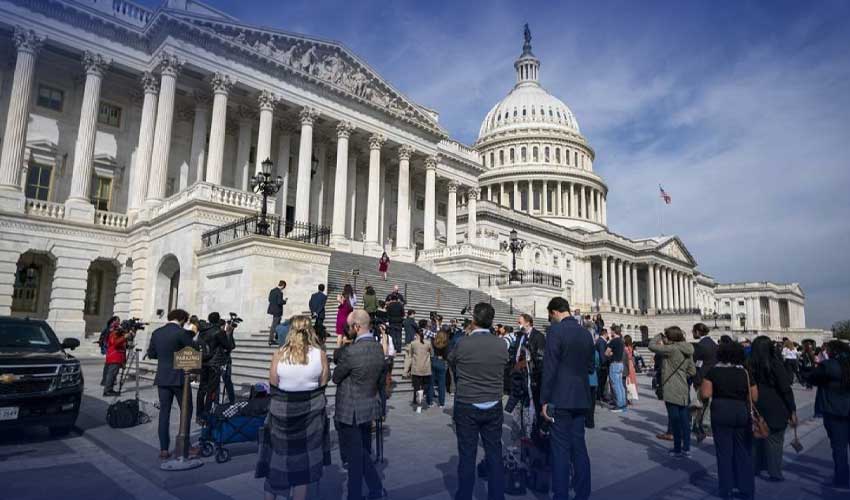
The United States House of Representatives passed a landmark defence policy bill on Wednesday, authorizing $901 billion in military spending for fiscal year 2026.
The vote saw 312 lawmakers in favour and 112 opposed. The legislation now heads to the Senate and is expected to be signed into law by President Donald Trump after approval.
The National Defense Authorization Act (NDAA) sets a record for annual military funding, exceeding Trump’s initial request by $8 billion. Spanning 3,086 pages, the bill covers defence acquisitions aimed at countering rivals like China and Russia, alongside measures to improve troop welfare, including nearly a 4% pay increase and better housing on military bases.
Support for Europe and Ukraine
The bill underscores U.S. commitment to Europe amid Russian aggression, providing $400 million annually in military assistance to Ukraine over the next two years.
It also mandates that at least 76,000 troops and major equipment remain stationed in Europe unless NATO allies are consulted.
Cuts and controversial measures
The NDAA removes approximately $1.6 billion from initiatives focused on diversity, equity, inclusion, and climate change — programs previously criticized by Trump.
Additionally, it introduces oversight measures demanding greater transparency from the Department of Defense regarding recent US military strikes on alleged drug-smuggling vessels in the Caribbean and Pacific, threatening to withhold 25% of Defense Secretary Pete Hegseth’s travel budget unless detailed disclosures are provided.
The bill faced opposition from both hardline conservatives and critics concerned about Trump’s management of the military.
Republican House Armed Services Committee Chair Mike Rogers emphasized the need for a “ready, capable and lethal fighting force,” citing complex threats from China.
Meanwhile, top Democrat Adam Smith described the legislation as a step toward restoring congressional authority, though he noted it does not fully rein in the administration’s overseas commitments.






.gif)
.jpg)