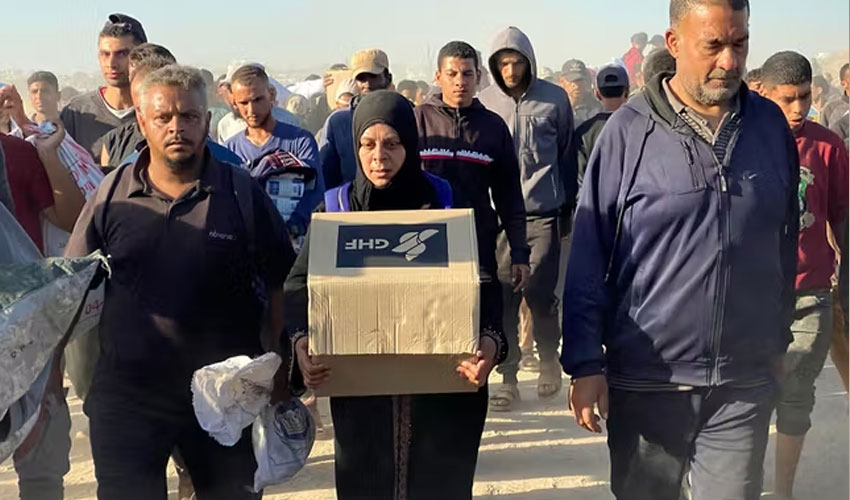
The US-backed Gaza Humanitarian Foundation (GHF) announced it will end its “mission” in Gaza, months after its controversial launch drew widespread condemnation from rights observers and UN officials.
The organisation’s operations had been marred by deadly incidents at distribution points and criticism for bypassing established aid mechanisms.
Since May 2025, GHF’s presence in the Palestinian enclave attracted scrutiny for circumventing the UN and other humanitarian frameworks. Aid distribution sites became flashpoints for violence, with at least 859 reported fatalities near GHF locations since its inception.
GHF Executive Director John Acree defended the organisation’s approach, saying the goal was to meet urgent needs and demonstrate a new model of aid delivery, ultimately transferring responsibility to the broader international community.
Ceasefire and coordination bids
The decision to end operations follows the October ceasefire between Israel and Hamas, which allowed UN-backed aid delivery to partially resume. The establishment of the US-supported Civil-Military Coordination Center (CMCC) further facilitated coordinated humanitarian efforts, reducing the need for independent operations.
Criticism from UN
Top figures in the international humanitarian community strongly criticized GHF. In August, 28 UN experts called for its dismantling, describing the operation as “an utterly disturbing example of how humanitarian relief can be exploited for covert military and geopolitical agendas.” They also condemned ongoing attacks by Israeli forces and foreign contractors on aid seekers at GHF sites.
Experts highlighted that GHF’s model required Palestinians to travel long distances under dangerous conditions, diverging from UN protocols that prioritize direct delivery to affected communities. UN officials continued to stress that regulated access by independent aid workers is crucial to effectively addressing the humanitarian crisis.
GHF’s final statement
GHF confirmed it operated only four distribution sites—three in Rafah and one near Gaza City. Despite limited scale, the organisation hailed its efforts as a potential model for future humanitarian interventions.
The statement added that GHF remains a registered NGO and “will maintain readiness to reconstitute if new humanitarian needs are identified.”








.gif)
.jpg)