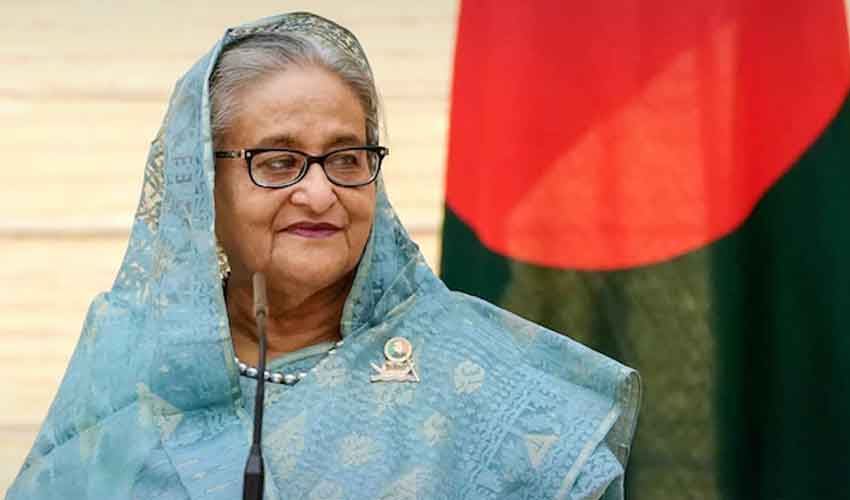
Former Bangladesh prime minister Sheikh Hasina issued a blistering response on Monday after being sentenced to death, in absentia, by the International Crimes Tribunal (ICT) on charges of crimes against humanity stemming from last year’s violent crackdown on student protests.
Minutes after the ICT announced its verdict, Hasina released a strongly worded statement rejecting all charges and condemning the ruling as the product of an “unelected government with no democratic mandate.”
She said the judgement exposed “the brazen and murderous intent of extremist figures in an unelected government” that had seized power following widespread unrest earlier this year.
Hasina insisted she and the Awami League were denied “a fair chance to defend themselves,” alleging that tribunal judges and lawyers had “publicly expressed sympathy for the current administration.”
Hasina accuses interim govt of using trial as diversion
The 78-year-old Awami League chief accused the tribunal of being “rigged from the start,” arguing that the proceedings were never intended to deliver justice but to politically neutralise her party.
“Millions of Bangladeshis toiling under the chaotic, violent, and socially-regressive administration of Dr Mohammad Yunus will not be fooled,” she said, referring to the Nobel laureate who heads the interim government.
Also Read: Bangladesh's Sheikh Hasina sentenced to death for crimes against humanity
Hasina claimed the trial was used to “scapegoat the Awami League and distract the world’s attention from the failings of Dr Yunus and his ministers,” accusing the administration of mismanaging public services, failing in law enforcement, and overseeing rising violence.
Allegations of minority repression and rise of extremism
In her statement, Hasina accused the interim government of enabling assaults on religious minorities, saying, “Hindus and other religious minorities are assaulted, and women’s rights have been suppressed.”
She also warned of growing influence from hardline factions inside the administration, alleging that “Islamic extremists, including figures from Hizb-ut-Tahir, seek to undermine Bangladesh’s long tradition of secular government.”




.gif)
.jpg)