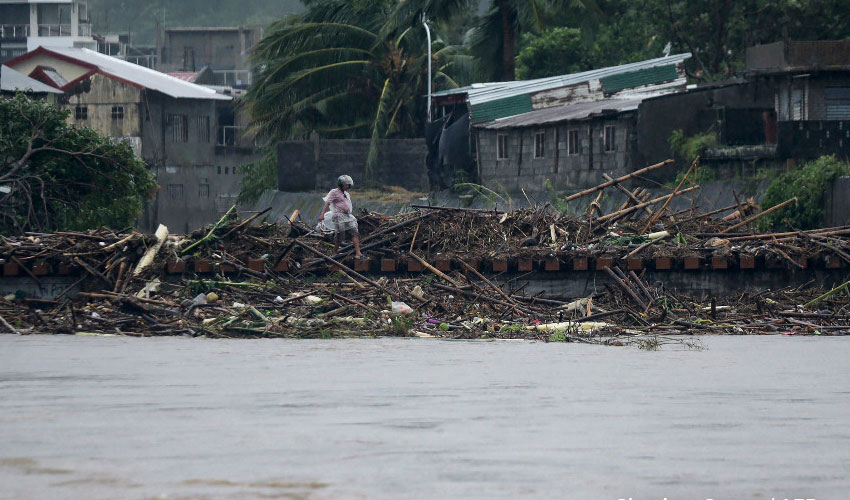
Typhoon Fung-wong tore through the northern Philippines overnight, killing at least two people and forcing the evacuation of over one million residents.
The storm brought fierce winds, torrential rain, and coastal flooding, leaving communities struggling to recover on Monday morning.
Fung-wong, known locally as “Uwan,” made landfall as a super typhoon late Sunday in the eastern town of Dinalungan, Aurora province. The storm battered large parts of Luzon, the country’s main island, with powerful gusts and relentless rain through the night.
Houses in Santiago City, Isabela province, were heavily damaged, while trees and power lines were knocked down, cutting electricity in several areas. “We could not sleep last night because of the winds hitting our metal sheets and the tree branches falling,” said resident Romeo Mariano, who sheltered with his grandmother during the storm.
Widespread damage and casualties
According to an early report from the Civil Defence office, at least two people were killed and two others injured due to the typhoon. In Aurora province, Vice-Governor Patrick Alexis Angara confirmed that at least three towns remain inaccessible due to landslides and broken roads.
“Assessment and clearing operations are underway,” Angara told local broadcaster DZMM, adding that rescue teams were deployed to isolated areas.
The state weather agency reported that Fung-wong has now moved over the South China Sea, but warned that heavy rain and severe winds could continue across several northern provinces. Coastal areas are still under alert for storm surges and flooding.
Flights cancelled and power outages reported
The Civil Aviation Authority said more than 400 flights were cancelled since Sunday as strong winds and poor visibility disrupted operations across major airports. Meanwhile, emergency services are working to restore power in hard-hit provinces, where communication lines have been severed.
Fung-wong is the 21st tropical storm to hit the Philippines this year and comes just days after Typhoon Kalmaegi, which killed 224 people in the country and another five in Vietnam. The back-to-back storms have intensified calls for better disaster preparedness in one of the world’s most typhoon-prone nations.








.gif)
.jpg)