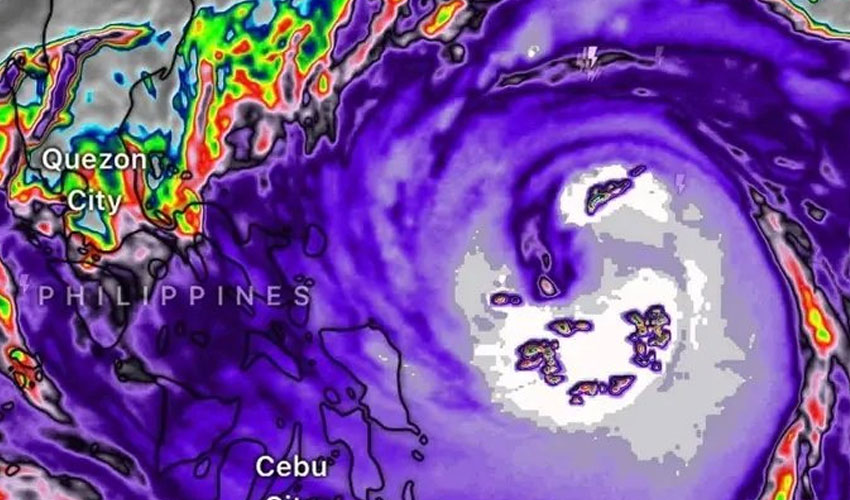
The Philippines has evacuated over 100,000 residents as Super Typhoon Fung-wong intensified, threatening central and eastern regions with severe weather. Metro Manila and surrounding provinces brace for strong winds and heavy rainfall.
Super Typhoon Fung-wong, locally named Uwan, intensified on Sunday with sustained winds of 185 kph (115 mph) and gusts reaching 230 kph. Meteorologists forecast its earliest landfall in Aurora province, central Luzon, Sunday night.
Authorities have raised storm alert signals nationwide, with Signal No. 5—the highest warning—issued for southeastern Luzon, including Catanduanes and coastal areas of Camarines Norte and Camarines Sur. Metro Manila and nearby areas are under Signal No. 3.
Mass evacuations underway
Over 100,000 residents across eastern and northern regions were moved to safer areas as preemptive evacuations intensified. The Philippine Coast Guard shared images of evacuees carrying personal belongings while transferring from narrow passenger boats to waiting trucks.
Electricity disruptions were reported in parts of Eastern Visayas, reflecting the storm's growing impact even before landfall.
Civil aviation authorities announced the cancellation of more than 300 domestic and international flights. Videos circulating online from Catanduanes show stormy conditions with swaying trees, heavy rain, and overcast skies, highlighting the storm's severity.
Aftermath of Typhoon Kalmaegi
Fung-wong’s approach comes just days after Typhoon Kalmaegi wreaked havoc across the Philippines, claiming 204 lives and causing widespread damage. The storm later hit Vietnam, killing five more people and devastating coastal communities.
In Vung Cheo, central Vietnam, fishing vessels were destroyed, and hundreds of lobster farms were damaged, underscoring the continuing vulnerability of coastal areas in the region.








.gif)
.jpg)