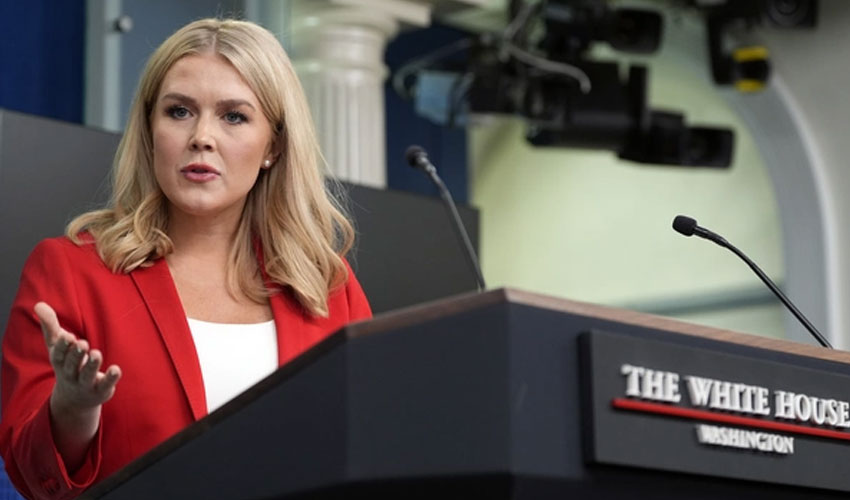
In a move drawing strong criticism from journalists and press freedom advocates, the White House on Friday announced new restrictions limiting reporters’ access to key West Wing offices, including those of Press Secretary Karoline Leavitt and her senior aides.
According to a memorandum issued by the National Security Council (NSC), accredited journalists will no longer be allowed to enter Room 140, known as “Upper Press,” without prior appointments. The memo cited the need to “protect sensitive material” now handled by the communications team following structural changes to the NSC.
“In order to protect such material, and maintain coordination between National Security Council staff and White House communications staff, members of the press are no longer permitted to access Room 140 without prior approval,” the directive stated.
Access now by appointment only
The decision immediately restricts access to an area just steps away from the Oval Office, where reporters have traditionally interacted with senior officials — sometimes on short notice — to verify information or seek comments.
Journalists previously had open access to speak with Leavitt, her deputy Steven Cheung, and other top aides, a hallmark of West Wing reporting that dates back decades.
Cheung defended the change in a post on X (formerly Twitter), alleging misconduct by some reporters.
“Some reporters have been caught secretly recording video and audio of our offices, along with pictures of sensitive info, without permission,” he wrote, claiming that others had “wandered into restricted areas” or “eavesdropped on private, closed-door meetings.”
He further argued that cabinet members were being “ambushed” by reporters waiting outside their doors for impromptu questions.
Journalists decry move as threat to transparency
The White House Correspondents’ Association (WHCA) condemned the decision, calling it a blow to press freedom and government transparency.
“The White House Correspondents' Association unequivocally opposes any effort to limit journalists from areas within the communications operations of the White House that have long been open for newsgathering,” said Weijia Jiang, WHCA president. “Access to the press secretary’s office is essential for transparency and accountability.”
Journalists will still be allowed to enter another designated workspace in the White House where lower-level communications staff are based.
Follows Pentagon’s tightened media rules
The White House directive follows similar restrictions introduced earlier this month at the Department of Defense, where dozens of journalists were forced to vacate Pentagon offices after refusing to sign new media access agreements.
Under the Pentagon policy, reporters must acknowledge new rules that allow the department to revoke press credentials if they are deemed “security risks” or if they ask employees to disclose certain classified — or even some unclassified — information.
At least 30 media outlets, including Reuters, the Associated Press, and Bloomberg News, declined to accept those conditions, citing a direct threat to independent journalism.
The move also recalls an episode from 1993, when President Bill Clinton’s administration temporarily restricted media access to certain West Wing offices — a policy quickly abandoned after public backlash.
The Trump administration had similarly drawn criticism months ago for removing major outlets like Reuters, AP, and Bloomberg from the permanent “press pool” covering the president, though they remain eligible for ad-hoc participation.
Friday’s announcement adds to growing concern over a broader pattern of restricted press access under Trump’s current term. Critics say these measures signal an attempt to limit scrutiny of government operations.
Press freedom organizations have urged the administration to reverse the decision, warning it could set a dangerous precedent for relations between the executive branch and the media.
“When journalists can’t freely question officials in the nation’s most powerful building,” said one senior correspondent, “the public loses its right to know.”



.gif)
.jpg)