Nepal’s President Ram Chandra Paudel dissolved parliament late Friday and announced fresh elections for March 5, 2026, just hours after swearing in former chief justice Sushila Karki as interim prime minister.
The decision came in the wake of violent anti-corruption protests that left more than 50 people dead and forced Prime Minister KP Sharma Oli to resign.
On the recommendation of the new prime minister, the House of Representatives was dissolved and a new election date set.
“The election date is March 5, 2026,” said Kiran Pokharel, press advisor to the president. The announcement followed days of unrest that plunged the Himalayan nation of 30 million into its worst crisis in years.
Sushila Karki sworn in as interim PM
Sushila Karki, 73, Nepal’s first woman chief justice, took oath at a small ceremony in the presidential palace in Kathmandu. Diplomats and former leaders attended the swearing-in, where President Paudel congratulated her, saying: “We wish you success, wish the country success.”

“I… take an oath in the name of the country and the people to fulfil my duty as the prime minister,” Karki said. She will lead a six-month transition to elections.
Deadly protests force Oli’s exit
The unrest was sparked by a controversial social media ban, later rolled back, and fueled by anger over corruption. Demonstrators, largely from Nepal’s younger generation, clashed with security forces in the worst violence since the 2006 civil war.
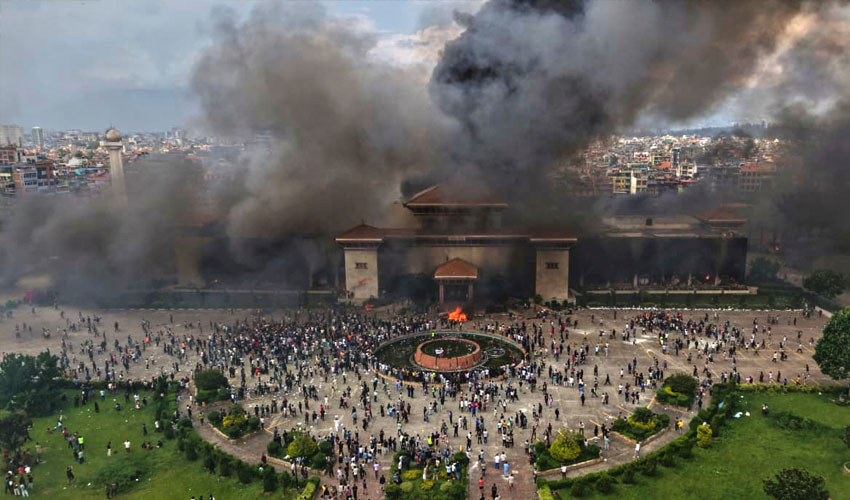
At least 51 people were killed and more than 1,300 injured during the protests. Parliament was set ablaze before Oli resigned on Tuesday, paving the way for an interim administration.
The military enforced curfews and retook control of the streets midweek, though police presence remained heavy in major cities.
India welcomed the leadership change and upcoming polls. “Heartfelt congratulations to the Honorable Sushila Karki Ji on assuming the office of Prime Minister of Nepal’s interim government,” Indian Prime Minister Narendra Modi posted on X. “India is fully committed to the peace, progress, and prosperity of Nepal’s brothers and sisters.”
Nepal has grappled with political and economic instability since abolishing its monarchy in 2008. Job shortages at home have pushed millions of Nepalis to seek work abroad, mainly in the Middle East, South Korea and Malaysia.
By Friday, signs of normalcy returned to Kathmandu as shops reopened and traffic resumed, with police replacing rifles with batons.



.gif)
.jpg)