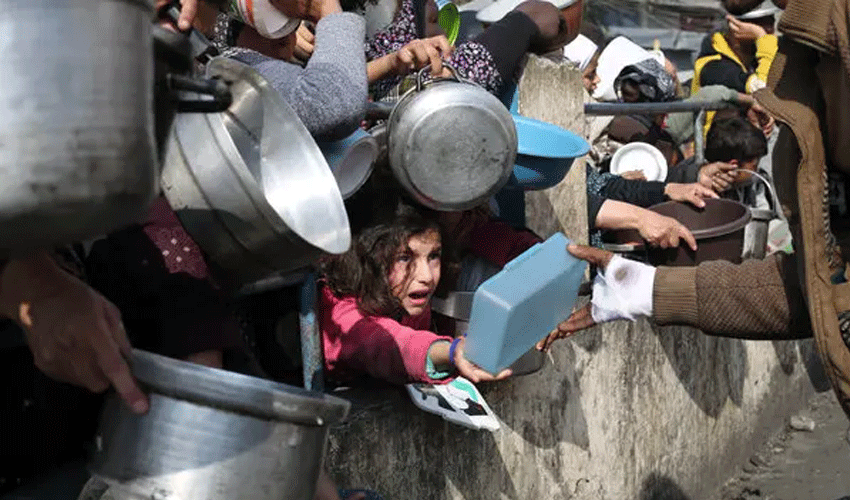
The World Health Organization (WHO) has sounded the alarm over a growing hunger crisis in Gaza, with its Director-General Dr. Tedros Adhanom Ghebreyesus describing the situation as a "man-made mass starvation" resulting from restrictions on humanitarian aid reaching the war-torn enclave.
Speaking at a virtual press conference from Geneva on Wednesday, Dr. Tedros said, “I don’t know what you would call it other than mass starvation, and it’s man-made, and that’s very clear. This is because of (the) blockade.”
His remarks follow a joint appeal by over 100 aid agencies warning of a catastrophic humanitarian situation in Gaza, where food, clean water, and medical supplies remain stranded just outside the territory due to bureaucratic hurdles and security restrictions.
Since the escalation of hostilities between Israel and Hamas in October 2023, aid deliveries have been severely disrupted. A complete cutoff of supplies in March 2025, followed by a partial easing of the blockade in May, has resulted in only a limited amount of aid reaching the 2.2 million people in Gaza.
Israel maintains that it is committed to allowing humanitarian assistance into Gaza, but insists on strict controls to prevent aid diversion to militant groups. Israeli officials say they have facilitated the entry of sufficient supplies and place the blame for the humanitarian crisis on Hamas.
However, the situation on the ground tells a different story.
According to the Gaza health ministry, 10 more Palestinians died of starvation overnight, bringing the total death toll due to hunger to at least 111 — most of them in recent weeks as conditions continue to deteriorate.
The WHO has confirmed that at least 21 children have died due to malnutrition this year, but warns that the actual toll is likely far higher. "This is just the tip of the iceberg," a WHO spokesperson said, highlighting that treatment centres for malnutrition are overwhelmed and lacking the necessary supplies for emergency feeding.
Between March and May, the United Nations and its humanitarian partners were unable to deliver any food for nearly 80 days. While deliveries have resumed since then, WHO officials say the current levels are still far from adequate.
“The situation is dire,” said Rik Peeperkorn, WHO’s representative for the occupied Palestinian territories. He added that around 10 per cent of people screened in Gaza are suffering from moderate to severe malnutrition, including up to 20 per cent of pregnant women.
In July alone, 5,100 children were admitted to malnutrition treatment programmes, of whom 800 were classified as severely emaciated.
The hunger crisis is being further exacerbated by the collapse of aid infrastructure, ongoing military operations, and restrictions on access for humanitarian workers. International aid convoys face long delays and logistical challenges, while many hospitals and clinics are struggling to operate amid shortages of fuel, medicines, and staff.
The WHO has reiterated its call for unfettered humanitarian access to Gaza and urged all parties to facilitate the safe and timely delivery of aid.
Dr. Tedros concluded his briefing by calling on the international community to act urgently. “People are dying not just from bullets and bombs, but from hunger. And hunger, in this case, is preventable,” he said.
Despite repeated warnings from the United Nations and relief organizations, diplomatic efforts to ensure sustained humanitarian access remain mired in geopolitical disputes, with little sign of immediate resolution.








.gif)
.jpg)