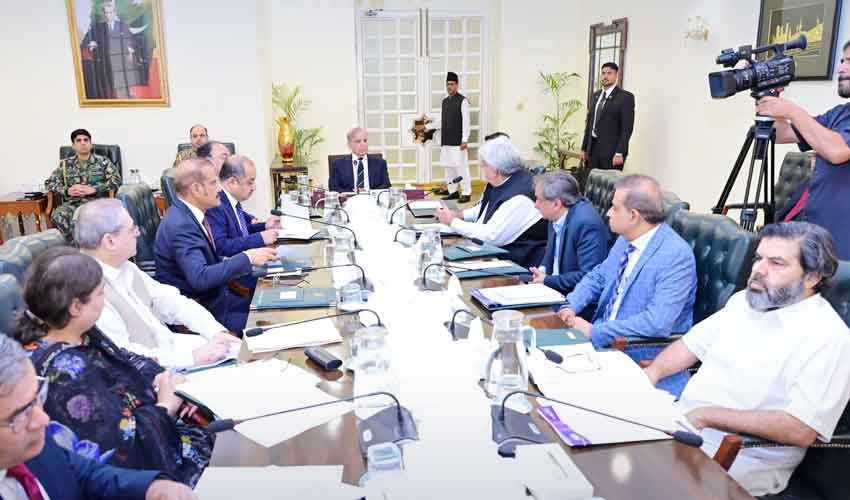
Prime Minister Shehbaz Sharif on Monday chaired a high-level meeting to review the ongoing reforms at the Federal Board of Revenue (FBR), where he unveiled the country’s first-ever artificial intelligence (AI)-powered customs clearance and risk management system.
According to the official briefing, the new system uses AI algorithms and bots to automatically estimate the cost and nature of goods during import and export procedures. The system is designed to speed up the identification and clearance of goods while also improving transparency, efficiency, and risk detection.
The officials briefed the meeting that the risk management system would continue to improve the movement of goods along with the automatic method using machine learning. The meeting was attended by federal ministers Muhammad Aurangzeb and Attaullah Tarar, the FBR chairman, and other senior officials.
“The government is prioritizing FBR reforms, and this technology-driven transformation will make the system more transparent, effective, and business-friendly,” said Prime Minister Shehbaz Sharif.
Officials informed the PM that initial testing of the AI system showed over 92% improved performance, while 83% of goods declarations were determined more accurately for tax collection purposes.
Additionally, the system allows for the quick and effective estimation of goods’ value, which is expected to significantly reduce clearance time, minimize human intervention, and cut operational costs.
Prime Minister Shehbaz emphasized that the AI-based solution would ease the burden on customs officials, facilitate businesses, and provide a seamless experience for taxpayers. He appreciated the efforts of the officers and teams behind the system's development and called for making the system integrated, sustainable, and scalable.
The meeting also reviewed ongoing efforts to boost tax collection in the manufacturing sector using video analytics-based monitoring. Officials noted that the new system, which works without human involvement, is not only cost-effective but also delivered 98% efficiency during preliminary trials.




.gif)

.jpg)