






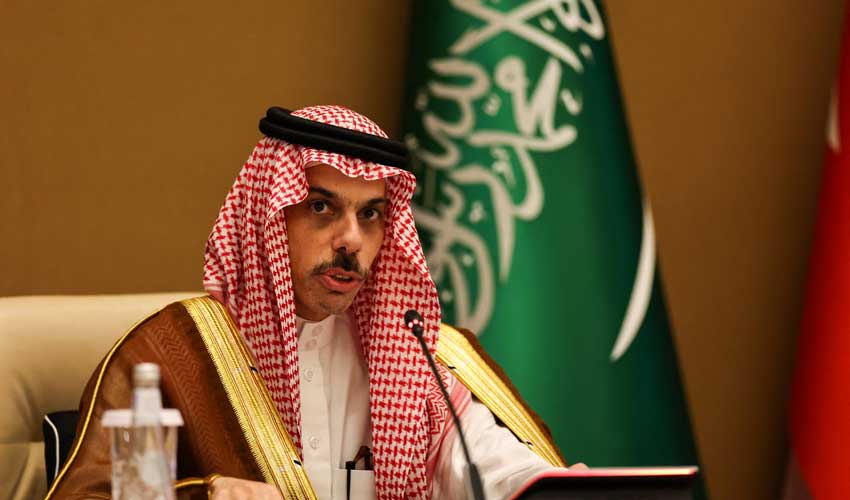
Saudi Arabia has said that strict verification measures will be the most important factor in ensuring the success of upcoming nuclear discussions between the United States and Iran.
The remarks were made by Saudi Foreign Minister Prince Faisal bin Farhan during a conference in Vienna hosted by the European Council on Foreign Relations.
Focus on monitoring Iran’s nuclear programme
Prince Faisal said that the key issue in the negotiations is how Iran’s nuclear programme will be monitored and enforced under any future agreement.
He emphasized that “the detail will matter,” particularly when it comes to mechanisms that verify compliance with commitments on uranium enrichment and nuclear material management.
Saudi Arabia, a close ally of the United States and regional rival of Iran, has long closely monitored Tehran’s nuclear activities.
The Saudi foreign minister highlighted that effective verification systems are essential for ensuring transparency and trust in any agreement.
He said mechanisms such as removal or downblending of nuclear materials and strict oversight of enrichment levels would be critical for long-term stability.
According to him, a sustainable verification regime would give both the international community and regional countries greater confidence in the agreement.
Background to the nuclear talks
The comments come as Washington and Tehran move toward wider negotiations following reports of an interim understanding aimed at ending conflict and reopening diplomatic channels.
A senior US official reportedly presented the text of a memorandum of understanding, though both sides have indicated that discussions are still ongoing and not yet final.
Reference to 2015 nuclear agreement
The discussion also recalls the 2015 nuclear deal between Iran and major global powers, which placed strict limits on Iran’s nuclear programme in exchange for sanctions relief.
That agreement had included enhanced verification powers for the International Atomic Energy Agency (IAEA), including snap inspections of undeclared sites.
However, the deal collapsed after the United States withdrew in 2018 under then-President Donald Trump, leading Iran to gradually expand its nuclear activities beyond agreed limits.
Saudi Arabia’s statement reflects broader regional concerns over Iran’s nuclear capabilities and long-term intentions.
As diplomatic efforts continue, Gulf states and global powers are closely watching whether any new agreement will include stronger inspection and enforcement mechanisms than previous deals.


.gif)
.jpg)








