The Pakistan Cricket Board (PCB) has announced sweeping changes to its central contracts system and introduced a new policy for Test cricketers, banning red-ball specialists from participating in T20 leagues around the world.
The move is part of a broader strategy aimed at strengthening Test cricket, improving player development and creating a more performance-based contract structure.
Under the new policy, players categorized as Test specialists will be limited to red-ball cricket only.
According to the PCB, these players will be allowed to participate in first-class competitions and county cricket around the world but will not be permitted to play in short-format T20 leagues.
Board officials said the decision is intended to provide Test cricketers with greater exposure to high-quality first-class environments and help them develop further in the longest format of the game.
The PCB confirmed that the doors of T20 franchise leagues will remain closed for Pakistan’s Test specialists.
White-ball players allowed to play leagues
While restrictions have been placed on Test specialists, ODI and T20 players will continue to have opportunities to compete in franchise cricket.
The board said white-ball specialists will be allowed to participate in two different leagues.
Officials believe the policy strikes a balance between player development, workload management and international commitments.
PCB introduces new contract structure
The board has also unveiled a completely revamped central contracts system for national cricketers. Previously, players were grouped into Categories A, B, C and D.
The new model replaces that structure with five distinct performance-based tracks designed to reflect modern cricket’s evolving demands.
New player categories
Under the revised framework, Track AB will serve as the prime category and include players who regularly represent Pakistan in both Test and One-Day International cricket.
Track A has been reserved specifically for red-ball specialists. Tracks B will consist of players who feature in ODI and T20 international cricket. Track C will include T20 international and franchise cricket specialists.
Track D will be designated for emerging cricketers from development programmes and academies.
Performance to determine contracts
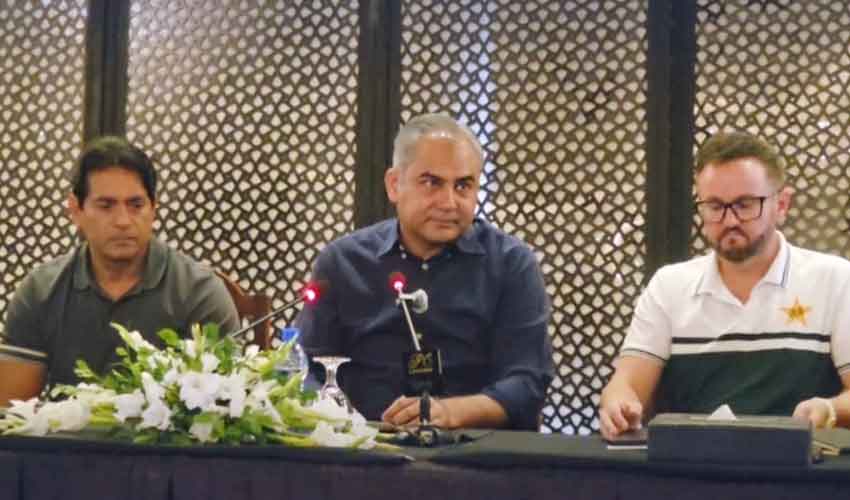
PCB Chairman Mohsin Naqvi said the new system places a strong emphasis on merit and performance.
According to Naqvi, 85% of a player's central contract evaluation will be based on performance metrics. The remaining 15% authority will rest with the selection committee.
“It was very important to create a separate category for Test cricket,” the PCB chairman said.
Fitness remains key factor
Naqvi emphasized that medical fitness will play a crucial role in central contract decisions. He said the PCB is introducing more data-driven evaluation methods into domestic cricket to improve transparency and accountability.
“We are bringing data into domestic cricket. People will no longer be unfairly criticized,” he said.
Naqvi expressed confidence that the new process would be transparent and objective. “Hopefully, the procedure will be transparent and no one will be able to object to this method,” he added.
Former cricketer and selector Aqib Javed said the new framework is designed to ensure that selection is based on performance rather than reputation.
“Now if performance comes into the system, selection will follow,” he said.
Aqib added that players must move beyond focusing solely on individual achievements and embrace team performance as a priority. He noted that the committee has already briefed players on the new structure and its benefits.
Head coach backs Test cricket reforms
Pakistan head coach Mike Hesson said the sport has changed significantly in recent years and requires modern solutions.
According to Hesson, the PCB has developed a format that can help improve the quality and competitiveness of Test cricket. He welcomed the initiative as a positive step for the future of Pakistan’s red-ball game.
PCB medical expert Dr. Javed Mughal highlighted the importance of fitness and injury prevention under the new system.
He said sports medicine has evolved significantly worldwide and that players must be protected from injuries while improving their physical condition. Dr. Mughal acknowledged that assessing player fitness remains challenging at present.
“Where we want to see their fitness, it is still at a slightly lower level,” he said.
He stressed that improved monitoring and medical support will help players meet the demands of international cricket.
PCB aims to strengthen Test cricket
Board officials said the overall objective of the new policy is to strengthen Pakistan’s Test cricket structure and provide specialist players with better preparation in the red-ball format.
The PCB believes the separation of red-ball and white-ball pathways will create clearer development opportunities and improve performance across formats.
The reforms represent one of the most significant changes to Pakistan’s central contracts system in recent years.




.gif)
.jpg)