Federal ministers have defended Budget 2026-27 as a people-friendly budget, saying the government has reduced the tax burden on the salaried class, provided additional subsidies and laid the foundation for export-led growth.
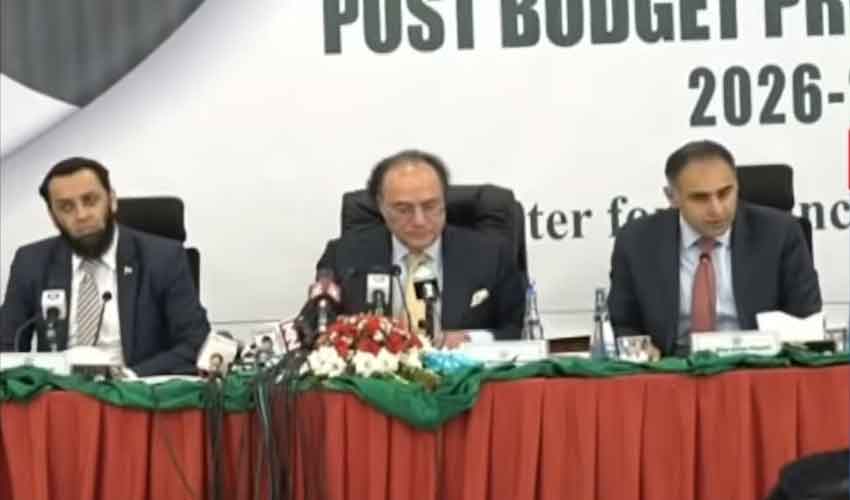
Addressing a post-budget press conference, Finance Minister Muhammad Aurangzeb said the economy was moving in the right direction and the government was now shifting its focus from stability to growth.
Muhammad Aurangzeb said the government had made “extraordinary progress” in the budget and had fulfilled its promise to provide relief after difficult economic conditions.
He said Pakistan had achieved macroeconomic stability last year and would now move toward growth, with exports as the permanent solution to the country’s economic challenges.
The finance minister said the budget had been prepared in consultation with the IMF and that discussions with the Fund were ongoing.
Relief for salaried class
Aurangzeb said the tax rate for the salaried class had been reduced, adding that the government’s entire focus was to lessen the burden on salaried citizens.
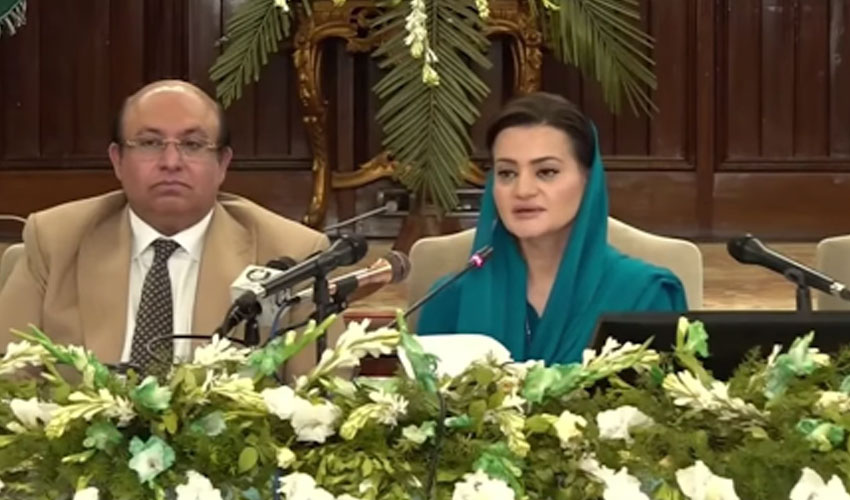
Minister of State Bilal Azhar Kayani said relief had been provided to salaried people on the instructions of Prime Minister Shehbaz Sharif.
He said people earning Rs300,000, Rs500,000, Rs800,000 or Rs1.2 million per month would all feel a reduction in their tax burden.
Subsidies and support for exporters
The finance minister said an additional subsidy of Rs70 billion had been given in the budget. He said the government had worked on exports and the tax system, adding that IT exports would be taken up to $4.5 billion.
Aurangzeb said services sector data was encouraging, IT exports had reached $3.8 billion and the 0.25% tax rate had been maintained on the recommendations of P@SHA.
He said the government was reducing the cost of raw materials and production, while the super tax on incomes above Rs500 million had been reduced from 10% to 8%. He also said the government intended to abolish super tax for all exporters.
Housing and construction sector measures
Aurangzeb said tax rates in the housing and construction sectors had been revised. He said transaction taxes had been reduced in the housing and construction sectors, while loans of up to Rs10 million would be available under the Apna Ghar Scheme.
Information Minister Attaullah Tarar said the lower and middle classes had been given facilities to build their own homes. He said property sales tax had also been reduced for the middle class, adding that 12 industries were linked to housing and construction.
Agriculture financing and farmer schemes
The finance minister said agricultural financing had been increased by 15%. He said financing in the agriculture sector had increased to more than Rs2 trillion, while Rs125 billion had been allocated for the Prime Minister’s Agricultural Loan Scheme.
Aurangzeb said a digital fertilizer scheme had been introduced for small farmers, and duties on imported agricultural goods and machinery had been abolished.
He added that additional customs duty on agriculture-related imports had been reduced to zero and financing at 4.5% would remain available throughout the year.
Ministers call budget public-friendly
Kayani said the new budget was a public budget and a budget for industrialists, salaried people, exporters, the construction sector and those seeking to build their own homes. He said the BISP budget had been increased for 10 million deserving families and steps had been taken to improve the social sector.
Kayani said the prime minister had held detailed meetings with chambers of commerce, the Pakistan Business Council and industry leaders before the budget.
Attaullah Tarar said the prime minister was always ready to provide relief to the people. He said the promise made by the prime minister to different classes had been fulfilled in the budget. He added that this was a budget for labourers, farmers, women, salaried people and the middle class.
He further said pink tax on women-related items had been reduced from 18% to zero.
FBR reforms and digitization
Aurangzeb said the Federal Board of Revenue was being completely digitized and human intervention would be minimized.
Tarar said political interference in the FBR had been ended and the recommendation culture for transfers and postings had been abolished. He said tax evasion and corruption in the FBR had been targeted, starting with the sugar industry, from which Rs60 billion in tax had been collected.
FBR Chairman Rashid Langrial said FBR digitization had been underway since the 1990s but earlier issues emerged because better people were not hired for PRAL. He said PRAL had now been made an independent institution with talented people, and several digital plans were being prepared in FBR.
NFC award formula to be reviewed
Finance Minister Aurangzeb said it was wrong to determine the NFC formula only on the basis of population. He said the population formula would be changed in the new NFC Award and any decision would be taken in consultation with the provinces.
Aurangzeb said the country’s population was estimated to reach 400 million by 2040, making a review of the formula necessary.
The finance minister said the government wanted to promote the private sector and involve it in commercial projects. He said the Sindh government had shown progress through public-private partnership projects.
Aurangzeb said duplication of work between the Board of Investment and SIFC had been identified, and the prime minister had taken an in-principle decision to merge the Board of Investment with SIFC.
He said the aim was to deal with foreign investors through a one-window system.
Petroleum levy and right-sizing
The finance minister said the amount of petroleum levy was not being increased. He said several ministries had been merged under the government’s right-sizing plan.
Aurangzeb also said the provinces had reduced their development budgets this year and that the country did not have a “leak of resources.”
Middle East conflict and economic risks
Aurangzeb said Pakistan’s leadership had tried to resolve the conflict in the Middle East. He said energy installations had been targeted in the conflict and its effects would be felt in the coming year as well.
The ministers said all classes had been taken care of in the budget and money had also been allocated for Danish schools and educational institutions in backward areas. They said 12 to 13 companies had brought investment to Pakistan, primary surplus targets had been met for two years, and a Fund program had also been run.
Aurangzeb said during the war with India, the Fund’s board approval was completed and no mini-budget was introduced. He said the government had promised that once difficult times passed, it would bring relief to the people.
Question of relief claims
During the long post-budget press conference, journalists questioned whether the budget provided more relief to the elite, high-salaried people, exporters and industrialists.
A journalist asked ministers to show how a household budget could be managed on the minimum monthly wage of Rs41,700, but no clear answer was given.
Journalists also protested after beat reporters were not given an opportunity to ask questions. They gathered in front of the ministers’ desks and later returned to their seats after an assurance from Attaullah Tarar.




.gif)
.jpg)