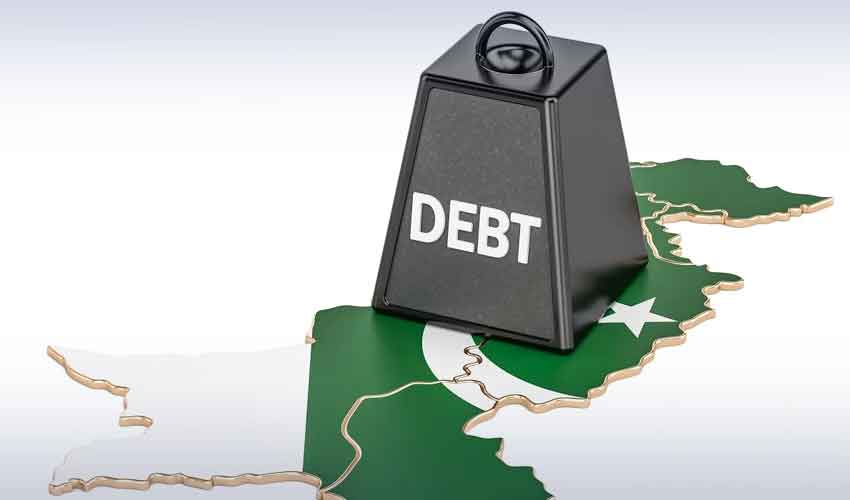
Pakistan’s external debt and liabilities have crossed $138 billion, raising fresh concerns about the country’s growing financial burden. Official documents reveal that interest payments alone have surged by 84% in just three years.
The sharp rise in debt servicing costs highlights the mounting pressure on the national economy.
According to official documents, interest payments on Pakistan’s external debts have climbed significantly over the past three years.
Three years ago, Pakistan was paying $1.91 billion in interest on its external loans. That figure has now increased to $3.59 billion, marking a steep rise in the country’s annual debt servicing costs.
Last year alone, interest payments increased by $1.67 billion compared to 2022, reflecting the growing cost of borrowing.
8% interest on foreign loans
Pakistan is currently paying interest on its external debts at rates of up to 8%, according to the documents.
The interest payments were made to major international financial institutions and lenders, including the International Monetary Fund (IMF), the World Bank, the Asian Development Bank (ADB), and various commercial banks.
Saudi Arabia and China also received interest payments on safe deposits provided to Pakistan.
Annual debt repayments cross $13.32bn
A total of $13.32 billion was spent annually on external debt repayments, including both principal and interest. Despite heavy repayments, Pakistan’s net external debt still increased by $1.71 billion last year.
During the same period, Pakistan borrowed $114.4 million while repaying $9.73 billion in principal amounts.
Breakdown of payments
Documents provide a detailed breakdown of repayments made to various institutions and countries:
-
$2.10 billion was paid to the IMF, including $580 million in interest.
-
$1.54 billion was repaid to the ADB, including $615 million in interest.
-
$1.25 billion was paid to the World Bank, including $419 million in interest.
-
$277 million was repaid to the Islamic Development Bank.
Pakistan also repaid $810 million to Saudi Arabia, including $33 million in interest. In addition, $203 million was paid to Saudi Arabia in interest on safe deposits.
To China, Pakistan paid $239 million, including $400 million in interest, according to the documents.
Last fiscal year, Pakistan also paid $500 million in Eurobonds. Germany received $10.70 million, while France was paid $240 million during the last fiscal year.
Commercial debt, Naya Pakistan Certificates
On external commercial debt, Pakistan spent $3 billion, including $7 million in interest. An additional $188 million was spent, including $1.56 billion related to Naya Pakistan Certificates, as per the documents.
These repayments form part of the broader strategy to manage external liabilities amid rising financing costs.
The steady increase in external debt and interest payments underscores the financial strain facing Pakistan’s economy. With interest payments alone rising sharply and billions allocated annually for debt servicing, managing external liabilities remains one of the country’s biggest economic challenges.
.jpg)