Pakistan and Iran have agreed to set an ambitious target of increasing bilateral trade to $8 billion annually as top officials from both countries met to strengthen economic and border cooperation.
During a meeting between Federal Minister for Commerce Jam Kamal and Iranian Minister for Industry, Mine and Trade Mohammad Atabak, the two sides discussed avenues to elevate the scale and scope of trade relations, terming the current pace insufficient given the geographical closeness of the two neighbours.
Also Read: Iranian president begins Pakistan visit, trade and regional ties on agenda
"The time has come to accelerate trade ties with Iran," Jam Kamal said. "We must convert our geographical proximity into economic strength."
The ministers also underlined the importance of enhancing cooperation along the shared border, a recurring theme in recent bilateral engagements. The talks come amid efforts to improve infrastructure and trade mechanisms on both sides of the border.
Earlier meetings strengthened defense and diplomatic ties
Pakistan and Iran reaffirmed their commitment to enhancing defence ties and promoting regional stability through a series of high-level meetings in Islamabad.
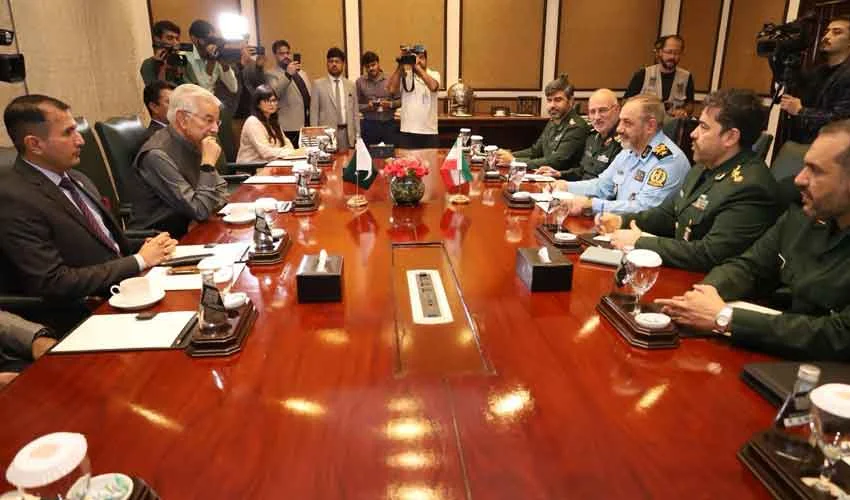
On Saturday, Iranian Defence Minister Brigadier General Aziz Nasserzadeh met with Pakistan’s Defence Minister Khawaja Muhammad Asif. The two officials discussed a wide range of issues including mutual defence interests, regional security challenges, and counter-terrorism strategies.
According to an official statement, the meeting underscored the importance of deepening military and strategic cooperation between the neighbouring countries. Both ministers expressed confidence that enhanced defence collaboration would contribute to lasting peace and stability in the region.
Welcoming the Iranian delegation, Khawaja Asif lauded Iran’s consistent support on matters of mutual concern and stressed the importance of defence diplomacy in further strengthening Pakistan-Iran relations. He highlighted the role of constructive engagement in building a secure and peaceful neighbourhood.
RELATED: Dar, Araqchi vow to boost ties in trade, economy, regional stability
General Nasserzadeh thanked the Pakistani government for its warm hospitality and reaffirmed Tehran’s desire to enhance military ties based on shared values, mutual respect, and trust. The meeting concluded on a positive note, with both sides agreeing to maintain close communication and expand cooperation in the future.
In a separate development, Iranian Foreign Minister Abbas Araqchi held talks with Pakistan’s Deputy Prime Minister and Foreign Minister Ishaq Dar at the Ministry of Foreign Affairs. The meeting took place as part of Iranian President Dr Masoud Pezeshkian’s official visit to Pakistan.
Araqchi, who is accompanying President Pezeshkian, was warmly received by Dar at the Foreign Office. Their discussions focused on strengthening collaboration in trade, economic development, and regional peace.

Both foreign ministers reaffirmed the shared commitment of Pakistan and Iran to deepen bilateral ties across multiple sectors. They emphasized the need to build sustainable regional peace and stability through cooperative mechanisms and increased partnerships in trade and connectivity.
Also present during the president's visit was Iranian Minister of Roads and Urban Development Farzana Sadiq, who met with key Pakistani ministers including Abdul Aleem Khan, Jam Kamal, and Hanif Abbasi. The leaders discussed ways to facilitate trade through improved land, rail, and sea links, and agreed to form joint working groups to address border management and transit challenges.
Federal Minister for Communications Abdul Aleem Khan welcomed the Iranian delegation, expressing admiration for Iran's regional stance. "The people of Pakistan congratulate Iran for taking a bold position against Israel — a source of pride for the Islamic world," he said. Khan added that the current geopolitical moment presents a "golden opportunity" to enhance bilateral relations.
Commerce Minister Jam Kamal echoed these sentiments, revealing that both sides have set a new target to increase annual trade to $8 billion. “It is time we turn geographical proximity into economic advantage,” Kamal said, reiterating the need to accelerate commercial engagement between the two countries.



.gif)
.jpg)