Pakistan Deputy Prime Minister and Foreign Minister Ishaq Dar revealed key details of Pakistan’s military and diplomatic response to recent tensions with India, asserting that the country has shattered the narrative of diplomatic isolation and exposed Indian misinformation at the global stage.
He said Pakistan had offered a free and transparent inquiry after the Pulwama (Pahalgam) incident, “because our hands were clean.” However, no response was received to that offer. “Despite claims that Pakistan was diplomatically isolated, we were elected to the UN Security Council by a margin of 170 votes,” he said, noting that this progress was achieved even under economic sanctions.
He added that Pakistan’s defensive programs have become a protective shield for the country, and that the nation now holds the presidency of the UN Security Council. “Between April 22 and May 6, we spoke to 29 world capitals and told them that India was spreading misinformation. We clarified Pakistan had no involvement in the Pahalgam incident and reminded them that Pakistan is one of the biggest victims of terrorism.”
Referring to cross-border tensions, he stated, “When India sent 75 to 80 jets on the night of May 6, we were ready. Our instructions were clear – do not target unless they enter our airspace, but if they strike us, we will respond.”
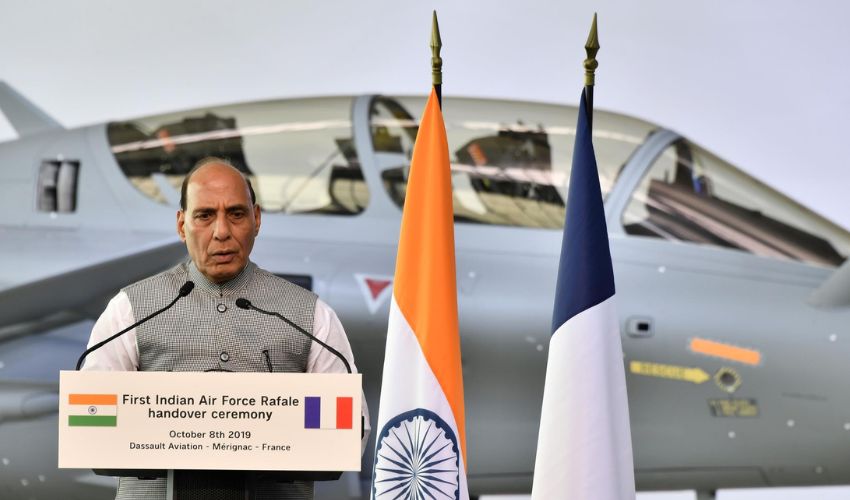
Ishaq Dar revealed Pakistan downed six Indian aircraft, including four Rafales jet along with Sukhoi-30s, and a MiG. “India couldn’t digest this response,” he said.
He also recounted how India attempted to escalate further by firing missiles into Amritsar and launching drones. “We decided to respond on the ground. On the night of the 9th, India launched another attack with missiles on our airbases. From 4 a.m. to just before 8 a.m., we gave them a clear answer.”
Following this, high-level contacts were made. “I was in my office when U.S. official Rubio called, asking if we were ready for a ceasefire. We agreed. The army chief and Prime Minister were also consulted, and 45 minutes later, the Saudi Foreign Minister called to confirm our side's ceasefire,” he stated.
However, he criticized India’s continued provocations even after the ceasefire. “They tried to save face by launching more missiles. Their military returned to positions, but their political leadership is unable to accept reality.”
He rejected India’s attempts at regional dominance, stating, “They tried to project themselves as the region’s peace provider and hegemon. But we shattered their arrogance. Pakistan is no longer isolated. Now the challenge is choosing whose invitation to accept.”
He stressed Pakistan’s belief in equality and mutual respect, regardless of the size of the country. Regarding regional peace, he said, “Peace and development in Afghanistan are essential for us too.” Highlighting improved ties, he noted that after four years of no senior-level meetings with Afghanistan, Pakistan initiated talks, and he personally spent April 19 in Kabul to build trust.






.jpg)