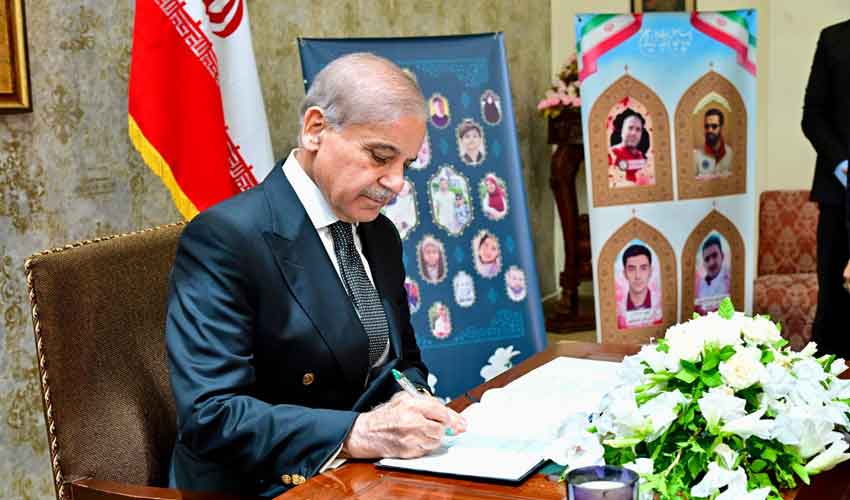
Prime Minister Shehbaz Sharif on Tuesday visited the Embassy of Iran in Islamabad to express solidarity with the Iranian government and people following recent casualties caused by Israeli aggression. He signed the condolence book in memory of the Iranians martyred during the attacks.
Accompanied by Deputy Prime Minister Ishaq Dar, Special Assistant to the Prime Minister Tariq Fatemi, and the foreign secretary, the PM was received by Iranian Ambassador Reza Amiri Moqadam and senior officials of the embassy.
The prime minister conveyed his heartfelt condolences and lauded the courage and resilience of the Iranian nation in the face of adversity. He also prayed for the speedy recovery of the injured and extended best wishes for Iran’s supreme leader and president.
Reaffirming Pakistan’s longstanding ties with Tehran, he assured the Iranian leadership of continued Pakistani support during these challenging times.
PM reviews NDMA readiness
Later, PM Sharif paid a visit to the National Disaster Management Authority (NDMA) headquarters in Islamabad, where he was briefed on the organization’s efforts to combat the increasing threats posed by climate change and natural disasters.
Reflecting on the devastating 2022 floods, PM Shehbaz noted that the calamity had caused widespread damage, destroying thousands of acres of crops and displacing families across the country. “Since then, the NDMA has been restructured along modern lines, and its efforts to adopt advanced technologies for disaster preparedness are commendable,” he said, lauding the steps taken to provide timely information.
He emphasized that Pakistan remains one of the countries most vulnerable to climate change, despite contributing minimally to global greenhouse gas emissions. “Our share in emissions is very low, but we face severe consequences. NDMA has a key role in building public awareness and strengthening the risk management system,” Shehbaz said.
Calling for enhanced public-private partnerships, he underlined the importance of collective national efforts in meeting social and economic development goals amid climate challenges. He also pledged to increase Pakistan’s investment in water conservation, noting that the country would mobilize its own resources to protect vital water reserves.
Addressing regional concerns, the PM pointed to India's attempts to weaponize water and praised the International Court of Justice’s recent decision, which affirmed that India cannot unilaterally suspend the Indus Waters Treaty. He termed the ruling a “significant diplomatic victory for Pakistan.”
He also expressed grief over the recent tragic loss of lives in Swat, vowing to further enhance national capabilities to mitigate such disasters in the future.









.jpg)