.jpg)
Iran has denied that any negotiations with the United States are scheduled this week, contradicting reports of planned talks in Doha and highlighting growing uncertainty over the implementation of the interim ceasefire that ended four months of conflict.
The conflicting statements come after fresh missile exchanges over the weekend tested the June 17 agreement aimed at ending the war, reopening the Strait of Hormuz, and paving the way for broader negotiations on Iran’s nuclear program and a permanent truce.
Iranian Foreign Ministry spokesperson Esmaeil Baghaei said on Monday that while an Iranian technical delegation would travel to Qatar this week, the visit had "no relation" to the American delegation.
"We will not have any negotiation meetings at any level with the American side in the coming days," Baghaei said, dismissing media reports that US-Iran technical talks would take place in Doha.
US President Donald Trump, however, is dispatching his son-in-law Jared Kushner and special envoy Steve Witkoff to lead the American delegation, according to White House Press Secretary Karoline Leavitt.
The disagreement over whether any talks will even take place underscores the fragile state of the June 17 memorandum of understanding that paused the conflict after months of fighting.
Ceasefire implementation remains slow
Under the 14-point memorandum, Washington and Tehran agreed to a minimum 60-day implementation period to extend an earlier April ceasefire, discuss Iran's nuclear program, and negotiate a permanent peace agreement.
Progress has been slow, with both sides accusing each other of violating elements of the agreement.
The war began after US and Israeli strikes on Iran on February 28, leading to the near shutdown of maritime traffic through the Strait of Hormuz.
Also Read: Trump claims US, Iran officials to meet in Doha
Israel has remained outside the US-Iran peace process and has distanced itself from the agreement. At the same time, tensions between Washington and Tehran have complicated efforts to secure a separate US-brokered ceasefire between Lebanon and Israel.
Lebanese Parliament Speaker Nabih Berri, a close ally of Iran-backed Hezbollah, has also expressed doubts about that agreement.
Strait of Hormuz remains major flashpoint
The closure of the Strait of Hormuz earlier in the conflict pushed global oil prices above $100 per barrel, fueling inflation and creating political pressure on President Trump ahead of November's congressional elections.
A senior Iranian official said a meeting in Doha could still take place on Tuesday, but unlike previous technical meetings in Switzerland, its focus would be on managing the Strait of Hormuz and reducing regional tensions rather than broader political negotiations.
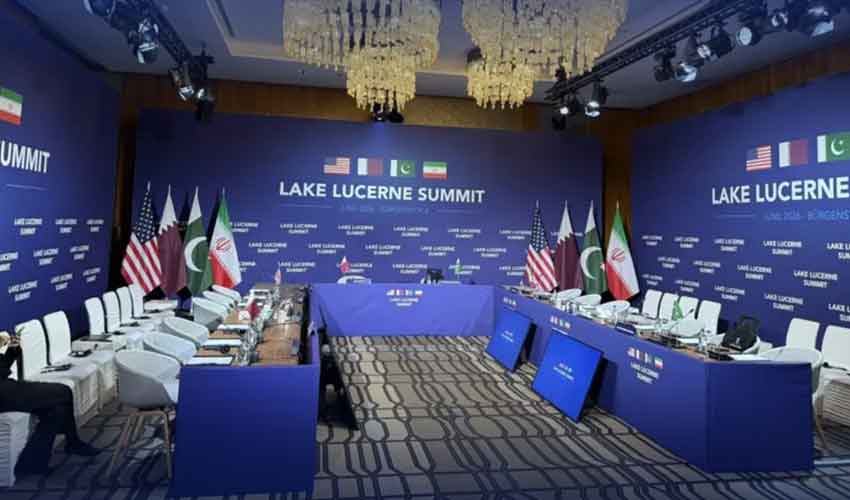
Another official familiar with the discussions said US and Iranian technical teams are expected to hold separate meetings with Pakistani and Qatari mediators on Wednesday.
Trump says Doha meeting may or may not matter
Speaking from the Oval Office, Trump said the planned Doha meeting "is going to be perhaps important, perhaps not. We're going to find out."
The president also reiterated that the United States remains militarily dominant and repeated Washington's demand that Iran must never obtain a nuclear weapon.
Iran has continued using its control over the Strait of Hormuz as leverage, announcing plans to charge transit fees for commercial shipping while warning vessels to remain within designated routes.
Also Read: US-Iran talks in Doha face confusion as conflicting reports emerge
The United States has accused Iran of attacking at least two commercial vessels with missiles or drones in recent days and responded by bombing Iranian military facilities.
Iran, in turn, launched missiles and drones targeting US military installations in Kuwait and Bahrain early Sunday.
Congress receives classified Iran briefing
Steve Witkoff and US Secretary of State Marco Rubio briefed members of Congress by telephone on Monday regarding the latest developments.
Republican Senator Steve Daines described the discussion as "constructive," despite saying officials shared limited information. Top Senate Democrat Chuck Schumer, however, criticized the briefing as "deficient, and devoid of details."
Schumer argued that after involving the United States in a costly conflict, the Trump administration had failed to demonstrate tangible gains for Americans. He said Rubio confirmed that Iran would receive billions of dollars in oil revenue while continuing to retain strategic leverage over the Strait of Hormuz.
Iran announces release of frozen assets
Iranian President Masoud Pezeshkian announced that $6 billion of the $12 billion in Iranian assets frozen in Qatar would be released and returned to Iran.
According to Iranian state media, Pezeshkian described the memorandum as "a great victory for the Iranian people."
Also Read: Iran says $6bn in frozen assets to be released by Qatar
The agreement includes US sanctions waivers covering Iran's oil and petrochemical sectors, allowing Tehran to resume energy exports under the interim arrangement.
Oil prices rise as tensions persist
Oil prices climbed more than 1% on Monday after the latest exchange of attacks raised concerns about the durability of the ceasefire.
French President Emmanuel Macron said France is working with Oman to reduce tensions and is prepared to cooperate with international partners on demining operations in the Strait of Hormuz.
Iran's Deputy Foreign Minister Kazem Gharibabadi rejected the proposal, stating in a post on X that mine clearance under the 14-point agreement is solely Iran's responsibility. He warned France against taking steps that could further complicate the situation.
Iran denies Doha meeting reports
Separately, Deputy Foreign Minister Kazem Gharibabadi said there are currently no plans for technical team talks in Qatar on Tuesday.
He said consultations with Qatar regarding technical discussions are continuing normally, but stressed that the first round of talks will only be held once appropriate conditions are established and both the date and venue are mutually agreed.
Gharibabadi also said he could not confirm media reports claiming that Iran-US technical negotiations would begin in Doha, despite reports from American and Arab media suggesting such talks were imminent.