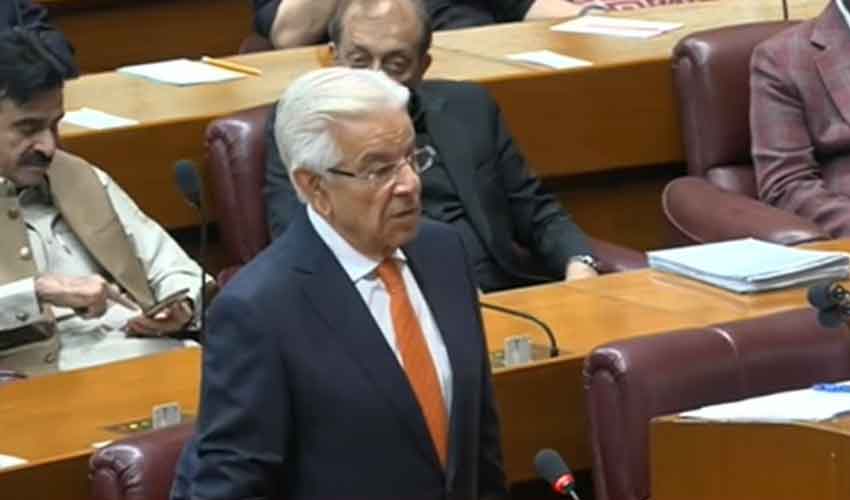
An interesting exchange unfolded in the National Assembly as Prime Minister Shehbaz Sharif and JUI-F chief Maulana Fazlur Rehman discussed mediation efforts, confidential conversations and the current political situation.
The discussion came amid growing political engagement between the government and opposition, with both leaders sharing their views on dialogue, mediation and parliamentary conduct during the assembly session.
Addressing the House, Maulana Fazlur Rehman said he had received a letter requesting him to play a mediation role. He disclosed that he had also held a private conversation with Prime Minister Shehbaz Sharif regarding the matter.
Fazlur Rehman said he was willing to allow the prime minister to share details of those discussions with the House if he wished.
PM refuses to disclose private discussions
Responding to the remarks, Prime Minister Sharif made it clear that he would not reveal the contents of any private conversation held with the JUI-F leader. He said the discussions that took place in private were a matter of trust and confidentiality.
“I will not discuss those conversations with anyone until the Day of Judgement,” Shehbaz said, emphasizing that the discussions would remain confidential.
He also remarked that Maulana Fazlur Rehman is respected by all political parties and leaders.
NA session sees cordial interaction
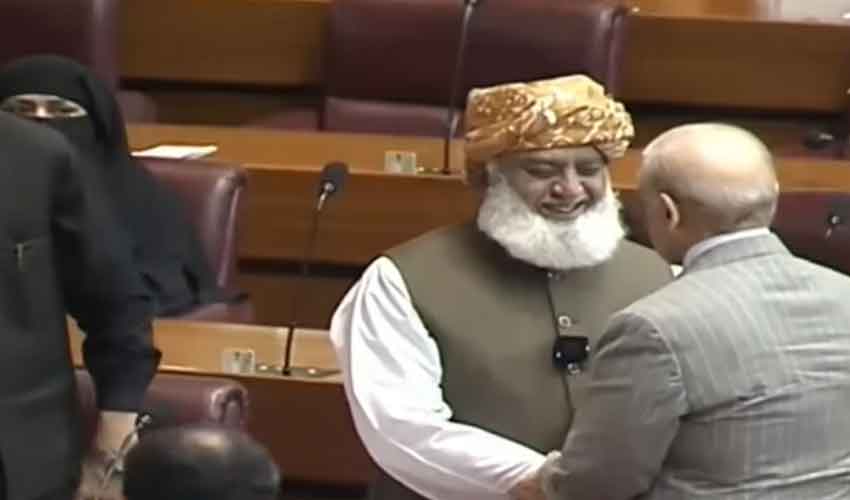
Before the debate, PM Shehbaz arrived in the National Assembly and personally greeted opposition leaders seated in the front row. He also met Maulana Fazlur Rehman and held a brief discussion with him inside the House.
Later, Shehbaz said he had not been able to hear the entirety of Fazlur Rehman’s speech and would respond through the speaker.
In a light-hearted remark reflecting his respect for the veteran politician, the prime minister said he would even go to Maulana Fazlur Rehman “to kiss his feet,” while reiterating that private discussions would remain confidential.
Fazl calls for patience and tolerance
During his speech, Maulana Fazlur Rehman urged political leaders to exercise patience, seriousness and tolerance. He observed that emotions had appeared to run high in recent political debates and stressed the need for restraint in national politics.
The JUI-F chief recalled that political leaders in the past, including Nawaz Sharif, often directly addressed opponents during rallies and container speeches. He noted that political discourse sometimes crosses acceptable limits and said politicians should avoid unnecessary escalation.
Fazlur Rehman welcomed comments by Defence Minister Khawaja Asif regarding learning from past mistakes, describing such an attitude as positive. He also emphasized respect for national institutions, saying political differences should not come at the expense of state interests.
The JUI-F chief added that if anyone had spoken against Pakistan, it was not acceptable and that the country's interests must remain paramount.
PAC approached JUI-F chief
Speaking about mediation efforts in Azad Jammu and Kashmir, Fazlur Rehman revealed that representatives of the Public Action Committee had contacted him and shared their demands. However, he clarified that mediation could not be carried out by one individual alone.
“I cannot do the work of mediation alone; the government is the government,” he said.
The veteran politician stressed that the government's response to issues should not be emotional and warned that successful mediation requires cooperation from all stakeholders.
Warning against continued deadlock
Fazlur Rehman cautioned that if the government continued what he described as a rigid approach, he would not be able to play a meaningful mediating role. He suggested that dialogue and flexibility were essential if political disputes were to be resolved peacefully.
The JUI-F chief maintained that meaningful progress could only be achieved through mutual understanding rather than confrontation.
PM stresses respect and trust
In his remarks, PM Shehbaz reiterated his respect for Fazlur Rehman and praised his role in national politics. He said confidential discussions should remain protected and should not be turned into public debate.
The prime minister also remarked that certain matters could reach a point from which there would be no return, underscoring the importance of handling political issues carefully and responsibly.
The exchange highlighted both the cordial relationship between the two leaders and the continuing importance of dialogue, mediation and political consensus-building in Pakistan's evolving political landscape.