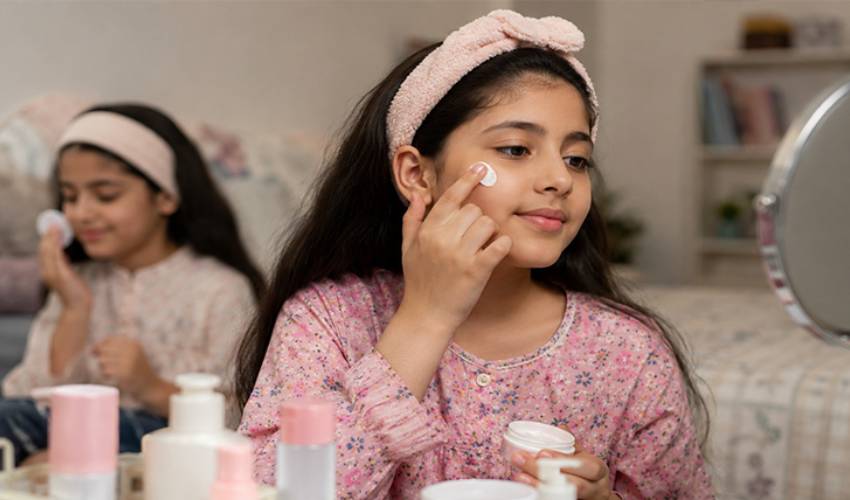
The growing popularity of skincare content on social media platforms is fueling a concerning trend among young girls known as “Cosmeticorexia.”
Health experts say children are becoming increasingly obsessed with achieving flawless skin, leading to excessive use of beauty products that may damage their skin and affect their self-esteem.
What is cosmeticorexia?
Experts describe Cosmeticorexia as a condition in which children, particularly girls, develop an intense interest—or even an obsession—with skincare products at an early age in pursuit of perfect skin.
The trend has gained momentum through social media platforms, where thousands of videos show young girls sharing elaborate skincare routines involving creams, serums, toners, and makeup products. Some children reportedly use multiple products daily and even promote beauty brands online.
Social media driving beauty standards
According to specialists, previous generations of teenagers were mainly exposed to advertisements promoting products for acne or skin cleansing. However, the social media era has introduced anti-aging treatments and “flawless skin” ideals to much younger audiences.
Experts believe this shift is influencing how children perceive beauty and self-worth, encouraging them to adopt skincare routines designed for adults rather than their age group.
How common is the trend among children?
Claims often circulate online suggesting that nearly half of all children worldwide regularly use skincare products. However, experts clarify that this figure comes from a limited survey rather than global data.
A survey conducted by skincare brand Pai involving 1,500 children aged 9 to 12 found that nearly half reported using multiple skincare products weekly. Many participants said they used the products to address perceived imperfections in their skin.
Researchers caution that the survey does not represent all children worldwide, but it does indicate a growing influence of social media and the beauty industry on younger age groups.
Italian dermatologist Professor Giovanni Damiani says one of the defining characteristics of Cosmeticorexia is excessive consumption of beauty-related content on social media.
According to him, affected children often spend hours watching skincare videos and use several products every day. Some become so influenced by beauty standards that they feel uncomfortable leaving home or meeting friends without makeup or skincare products.
Skincare products may harm young skin
Dermatologists warn that children's skin is naturally healthy, delicate, and sensitive, making many adult skincare products unnecessary and potentially harmful.
British dermatologist Dr. Jane Eyre explained that some beauty products contain active ingredients capable of altering the way skin cells function.
One commonly used ingredient, retinol, which is widely marketed for reducing wrinkles and signs of aging, is not suitable for children's skin. Excessive use can damage the skin barrier and lead to irritation, itching, sensitivity, and eczema-like symptoms.
Experts also report a rise in cases of contact dermatitis, a form of skin allergy linked to the frequent use of creams and serums among children.
Psychologists emphasize that the issue extends beyond physical skin damage.
The growing pressure to achieve flawless skin may negatively affect children's confidence, body image, and mental well-being. Experts warn that constant exposure to unrealistic beauty standards on social media can create anxiety and dissatisfaction with one's appearance from a very young age.







.jpg)