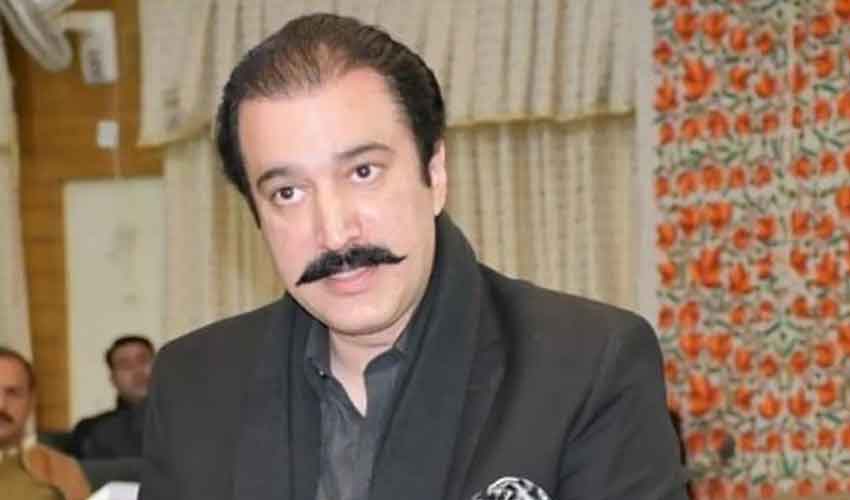
Azad Jammu and Kashmir (AJK) Prime Minister Faisal Mumtaz Rathore has said the ban on the proscribed Joint Awami Action Committee (JAAC) could be lifted if it changes its course, adding that dialogue could then resume.
He said both the federal government and the AJK government had been part of negotiations and that many issues had previously been settled through talks. He added that several matters had already been resolved and discussions could continue if the committee altered its approach.
Rathore said a committee had been holding negotiations on the issue of refugee seats, but some of its meetings had been delayed. He said the last meeting took place on the 30th, during which the government requested additional time. According to him, the committee declined to grant more time and stated it would neither continue negotiations nor halt its planned long march.
He said tourists had been advised to leave Azad Kashmir, people had been urged to stock food supplies for a month, and warnings had circulated about possible road closures. He added that various AI-generated videos had also been shared. Rathore said the ban was imposed to prevent such a situation from developing.
The prime minister said the government would continue efforts to find a way forward through negotiations. He maintained that decisions of this nature are taken after reviewing a range of factors and that the state could not afford a repeat of the circumstances witnessed on previous occasions.
He said the issue of refugee seats was linked to other political parties as well and noted that the Pakistan Muslim League-Nawaz (PML-N) supported retaining the seats.
Rathore reiterated that if the proscribed committee changed its course, the ban could be lifted and talks could resume. He said future steps would be considered in light of any court ruling and added that greater clarity on several matters would emerge after the court's decision.
He said most of the issues agreed during previous negotiations had already been resolved and that there had been no undue delay in addressing them. He added that a committee had been formed to examine the refugee seats issue and that no matter had been held up by the government.
Highlighting his administration's measures, Rathore said the cabinet had been reduced in size, government departments had been merged, a health card programme had been launched, education boards had been established, property tax had been reduced and funds had been allocated for scheduled banks.
He said the final round of negotiations took place on the 30th and that discussions on refugee seats were due to take place. According to Rathore, the government's position was that the seats should be abolished, while maintaining that the stability of the state remained its foremost priority.
The prime minister said the Pakistan Peoples Party (PPP) had been prepared to postpone the elections and had proposed extending the election schedule by 10 days to address delays. He said the government wanted to resolve the refugee seats issue before the elections through a consensus-based approach.
Rathore said his party favoured filling the seats through proportional representation in the assembly, but added that such a decision could not be taken without broad agreement. He said the PML-N wished to retain the seats and enjoyed political support for that position.
He maintained that no decision in the state is made through coercion or force. Rathore also claimed that members of the proscribed committee received support from abroad.
He said efforts had been aimed at resolving the matter through consensus despite differing political positions. He added that issues within the existing system must be addressed through established procedures and not solely on the basis of a parliamentary majority.
Rathore said deteriorating conditions could lead to unpredictable consequences, adding that any group claiming public support had the option of contesting elections. He expressed hope that an emergency situation would not arise and that conditions would improve soon.