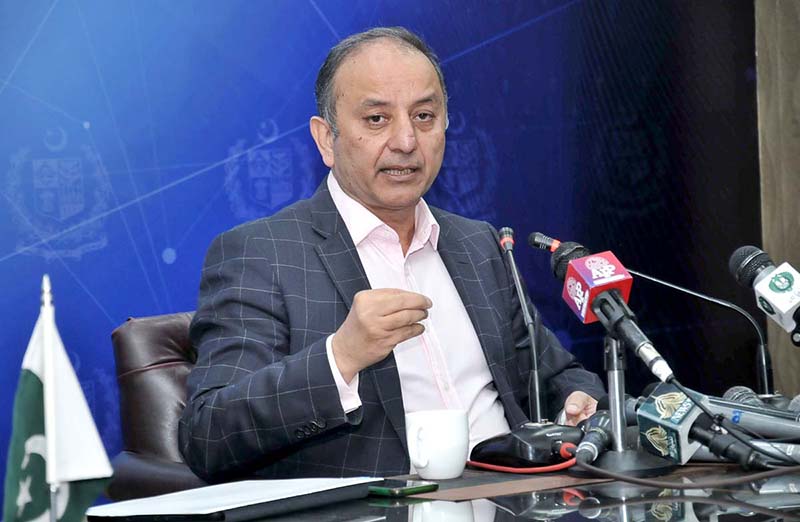
Federal Minister for Climate Change Dr Musadik Malik said India was trying to politicise shared water resources in violation of longstanding international agreements.
Addressing the Fourth High-Level International Conference on the International Decade for Action on Water for Sustainable Development in Dushanbe, the federal minister said unilateral measures affecting transboundary rivers could create serious global challenges linked to water security, food production and climate resilience.
Malik said attempts to weaken international water-sharing treaties could place the rights of downstream countries at risk.
He said water aggression was unacceptable and no country should be allowed to use water as a weapon or suspend international agreements unilaterally in a manner that deprived other nations of their lawful water rights.
Malik asked India to honour the 1960 Indus Waters Treaty and respect international arbitration mechanisms. He warned that any attempt to revoke the agreement would set a dangerous precedent for downstream countries across the world.
The federal minister expressed concern that such actions would reflect the decline of multilateralism in global affairs.
He said cooperative international frameworks were increasingly being replaced by unilateral approaches. Upstream countries, he added, could exploit this trend to pressure vulnerable downstream states by restricting access to shared water resources.
Declaring access to clean water a fundamental human right, Dr Musadik Malik said farmers and rural communities in developing countries were particularly vulnerable to disruptions in water supply. He also highlighted Pakistan’s growing climate challenges, saying the country remained among the nations most affected by global warming.
He said recurring floods and severe weather events had destroyed infrastructure across Pakistan, damaged agricultural land and disrupted livelihoods.
The federal minister warned that increasingly frequent “super floods” were intensifying economic pressure on the country and raising food security concerns through declining agricultural output.
During the conference, the minister also stressed the urgent need for regional cooperation on glacier melting and ecosystem protection. He said Pakistan and Tajikistan together possessed nearly 13,000 glaciers, while around 1,000 glaciers had already been lost because of rising global temperatures.
He called for stronger cross-border coordination to monitor shrinking glaciers and protect shared ecosystems, while also taking part in discussions on regional climate and conservation protocols, including cooperation on wildlife protection measures.
The Dushanbe conference is widely regarded as a preparatory forum for the forthcoming United Nations water conference, which is expected to address mounting concerns over climate change, international water governance and global water security.
Federal Minister Dr Musadik Malik also called for stronger international commitment to enforcing global water-sharing agreements, saying compliance with international water treaties remained one of the major unresolved challenges facing the international community.



.jpg)