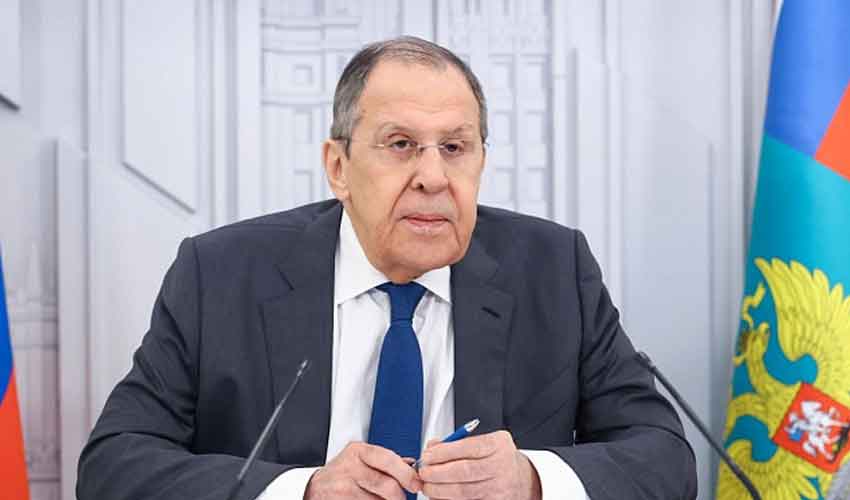
Russian President Vladimir Putin has said he believes the war in Ukraine is “coming to an end,” speaking to reporters in Moscow after a scaled-back Victory Day parade marking Soviet victory in World War Two.
The comments came alongside renewed justification of Russia’s military campaign and calls for new European security arrangements, even as fighting continues more than two years after the full-scale invasion began.
Speaking after the May 9 celebrations, Putin said the conflict, which he refers to as a “special military operation,” may be approaching its conclusion.
“I think that the matter is coming to an end,” he told reporters, while accusing Western countries of fueling tensions by supporting Ukraine.
The remarks came shortly after a speech at the Victory Day parade, where he defended Russia’s actions and described the war as a “just” campaign.
Victory Day Parade held under tight security
The annual parade in Moscow’s Red Square was noticeably scaled back this year due to security concerns, with authorities worried about possible drone attacks from Ukraine.
Instead of the usual display of tanks and missiles, the Kremlin showed military hardware footage on large screens.
A ceasefire arrangement brokered by Donald Trump helped reduce immediate risks during the event.
Conditions for peace talks
Putin said he would only meet Ukrainian President Volodymyr Zelenskyy once a final peace agreement has been reached.
He added that any meeting would take place in a third country and only to sign a completed treaty.
However, he also suggested that previous offers of dialogue from Ukraine were not new, indicating skepticism about Kyiv’s readiness.
Blame on West and NATO expansion
During his address, Putin repeated long-standing claims that Western leaders misled Russia after the fall of the Berlin Wall in 1989.
He accused NATO of expanding eastward and drawing Ukraine into its sphere of influence, which he says contributed to the conflict.
He also described Western governments as responsible for continuing confrontation with Russia.
Putin said Russia is open to discussing new security arrangements in Europe but indicated a preference for engaging with former German Chancellor Gerhard Schröder.
The suggestion reflects Moscow’s strained relations with current European leadership, which largely supports Ukraine.
Russia’s invasion of Ukraine began in February 2022 after the earlier annexation of Crimea in 2014 and conflict in eastern Ukraine.
The war has killed hundreds of thousands, displaced millions, and severely damaged Ukraine’s infrastructure.
Russian forces currently control roughly one-fifth of Ukrainian territory, but have struggled to achieve full military objectives.
Recent US-led mediation efforts resulted in a temporary ceasefire arrangement supported by both Moscow and Kyiv.
Both sides also agreed to exchange around 1,000 prisoners, although implementation details remain unclear.
Putin said Russia had not yet received full confirmation from Ukraine regarding the exchange process.
European leaders continue to support Ukraine with military and financial aid, while accusing Russia of aggression.
Russia rejects these claims, instead blaming Western governments for prolonging the conflict.
Despite occasional diplomatic signals, both sides remain far apart on core issues, including territorial control and security guarantees.