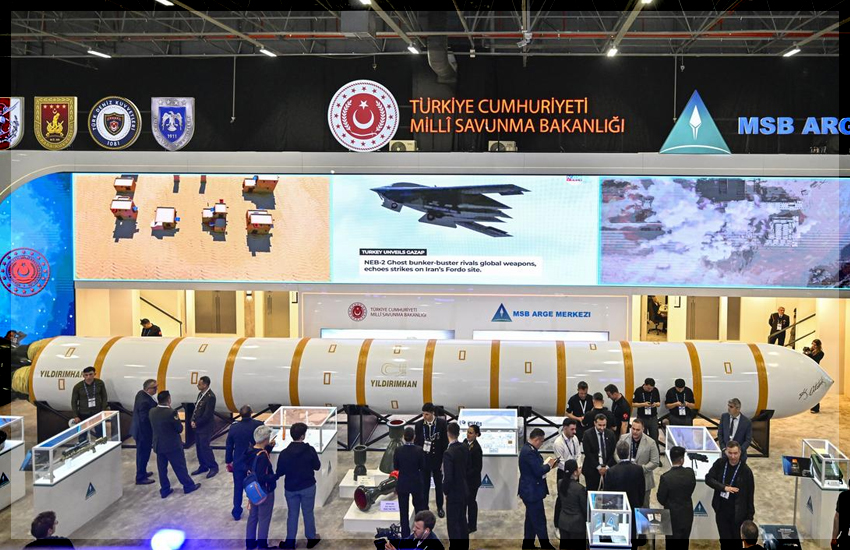
Turkiye is signalling a push to expand its long-range strike capabilities, as it showcased a new ballistic missile concept alongside drones and air defence systems at a major defence exhibition.
At an industry expo in Istanbul, Turkiye displayed a model of what officials described as its first intercontinental-range ballistic missile (ICBM), named Yildirimhan.
According to the defence ministry, the missile is designed to have a range of around 6,000 kilometres and carry a warhead weighing up to 3,000 kilograms. Authorities did not disclose a timeline for production or testing.
The unveiling comes at a time of heightened regional tensions, with several countries investing in longer-range strike systems and missile defence capabilities.
Defence Firms Showcase Drones, Systems
Separately, Turkish drone maker Baykar presented three new low-cost “kamikaze” drones. Chairman Selcuk Bayraktar said the systems are designed to operate in large numbers to overwhelm air defence networks.
Meanwhile, Aselsan said it would deliver 150 components of its Steel Dome air defence system to the military this year, up from 100 last year, according to CEO Ahmet Akyol.
The company also displayed unmanned surface and underwater vehicles designed for attack missions, expanding its portfolio of autonomous systems.
NATO Context and Regional Dynamics
Turkiye’s missile development is being closely watched within the NATO, where several member states are strengthening long-range strike options amid security concerns linked to Russia.
Recent efforts include missile programmes in Europe and increased procurement of systems such as ATACMS and Chunmoo by eastern European countries.
Analysts say Turkiye’s relatively lower production costs compared with other NATO members have helped it emerge as a significant exporter of defence equipment, particularly drones.
Capability and Technical Challenges
The Yildirimhan missile is expected to use liquid fuel propulsion, a design that can require longer preparation times before launch compared with modern solid-fuel systems.
Experts note that most countries developing intermediate- or intercontinental-range missiles have shifted to solid fuel technologies, which allow quicker deployment and improved survivability.
Turkiye’s limited experience in long-range ballistic missile development may pose challenges, although cooperation with allies such as the United States and United Kingdom could help bridge technical gaps.
Export Potential and Strategic Outlook
The unveiling has also raised the possibility that Turkiye could offer the missile or related systems to allied countries in the future, particularly within NATO.
While the project remains at an early stage, it underscores Ankara’s broader ambition to expand its defence industry and play a larger role in regional and alliance-level security.