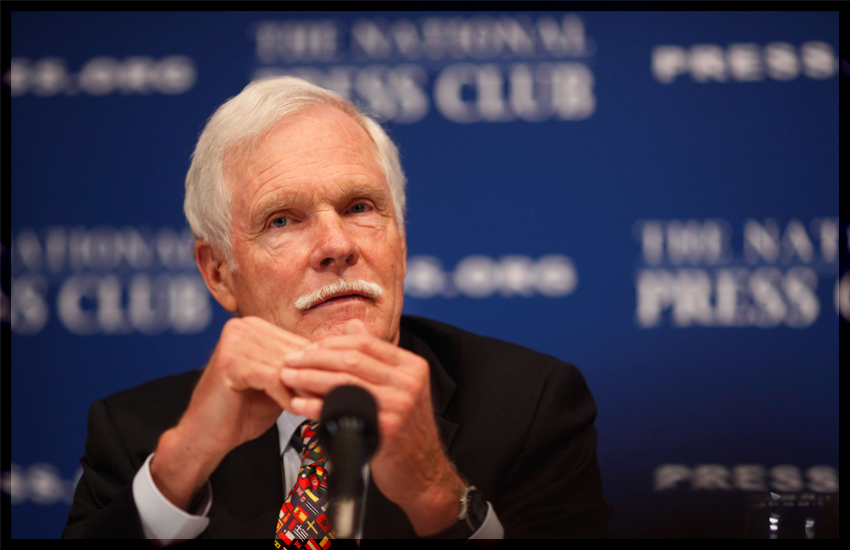
CNN Founder Ted Turner, the man who transformed television news into a round-the-clock global service, has died, closing a chapter on one of the most influential careers in modern media.
The outspoken US media entrepreneur who reshaped how audiences consume news, died peacefully on Wednesday at the age of 87, his family said in a statement.
Turner, born in Cincinnati and later based in Atlanta, built a vast media empire spanning cable television, sports franchises and film libraries, earning a reputation as a risk-taking executive with an instinct for bold ideas.
Revolutionising 24-hour News
Turner’s defining achievement came on June 1, 1980, when he launched CNN, the world’s first 24-hour television news channel. The concept, initially dismissed by critics, went on to transform global journalism by delivering live coverage around the clock.
The network’s impact became especially clear during the Gulf War, when it broadcast real-time images from the battlefield, marking a turning point in how conflicts were covered.
Turner expanded the model with additional networks, including CNN International and Headline News, as well as entertainment channels such as TNT, Turner Classic Movies and Cartoon Network.
Building a Media Empire
After taking over his father’s billboard business in his early 20s, Turner moved into broadcasting, acquiring a struggling television station that later became a national “superstation” via satellite.
He also purchased major sports teams, including the Atlanta Braves and the Atlanta Hawks, using sports programming to boost viewership and advertising.
In 1996, Turner sold his media holdings to Time Warner in a deal valued at roughly $7.5 billion, though he remained closely associated with CNN, calling it the greatest achievement of his life.
Personal Struggles and Later Years
Turner’s life was shaped by personal tragedies, including the death of his father and his sister’s long illness. He later revealed in 2018 that he had been diagnosed with Lewy body dementia.
Despite stepping back from day-to-day business, he remained active in public life and philanthropy. He had earlier been treated for pneumonia in 2025 before recovering.
Philanthropy and Environmental Work
Beyond media, Turner became known for his philanthropic and environmental efforts. He founded the United Nations Foundation and pledged $1 billion to support UN causes.
A major landowner in North America, he worked on conservation initiatives, including efforts to restore bison populations in the American West. He also backed projects aimed at raising environmental awareness, including children’s programming.
Turner is survived by five children, 14 grandchildren and two great-grandchildren.
Legacy of a Media Pioneer
Tributes highlighted Turner’s lasting influence on journalism and broadcasting. Mark Thompson described him as a fearless and visionary leader whose ideas reshaped the industry.
Turner’s legacy lies in creating a global news model that remains central to modern media, ensuring that audiences around the world can witness events as they unfold in real time.