The United Arab Emirates has lifted all air traffic restrictions introduced during the recent United States and Israel conflict with Iran, marking a major step toward regional aviation recovery.
The decision restores normal operations across UAE airspace after months of disruption. Authorities say the move follows a detailed security and operational review.
The General Civil Aviation Authority announced on Saturday that all flight restrictions have been removed and airspace operations are now back to normal status.
The authority said the decision was taken after a comprehensive assessment of operational and security conditions in coordination with relevant agencies.
Officials added that the situation will continue to be monitored closely despite the return to normal operations.
The announcement was also shared on social media platform X, highlighting ongoing coordination with national security stakeholders.
The UAE, along with several regional countries, had imposed restrictions on air traffic following escalation in the US-Israel conflict with Iran.
The situation led to widespread disruption across Gulf airspace.
At least eight countries, including the UAE, Iraq, Jordan, Qatar, Bahrain, and Kuwait, announced full or partial airspace closures during the height of the conflict.
The disruption forced airlines to suspend or divert thousands of flights across the Middle East.
Airline operations hit hard
Major UAE carriers were significantly affected during the crisis.
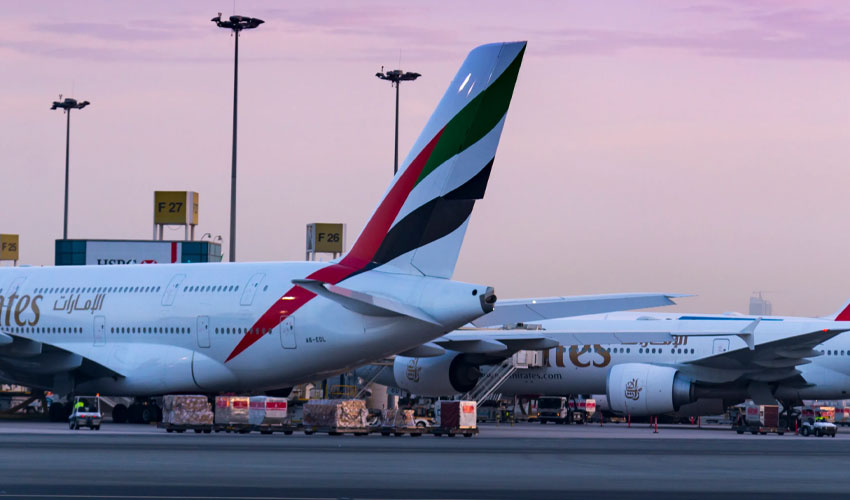
Emirates and flydubai temporarily halted operations, while Etihad Airways suspended all departures from Abu Dhabi.
According to aviation data firm Cirium, more than 11,000 flights were cancelled in the early days of the conflict, highlighting the scale of disruption across regional aviation networks.
Gradual recovery of air traffic
During the UAE’s partial reopening between March 1 and 12, airports handled 1.4 million passengers and recorded 7,839 air traffic movements.
Airline operations also recovered to around 44.6 percent of normal levels during this period.
A Pakistan-brokered ceasefire last month helped bring the conflict to a halt, enabling gradual normalization of air travel in the region.
The latest UAE decision marks one of the most significant steps in restoring full aviation capacity.
A broader recovery in Middle East aviation is also emerging.
Qatar Airways announced it will resume flights to three Iraqi cities from May 10.
The airline has also outlined plans to operate flights to more than 150 destinations worldwide as regional stability improves.