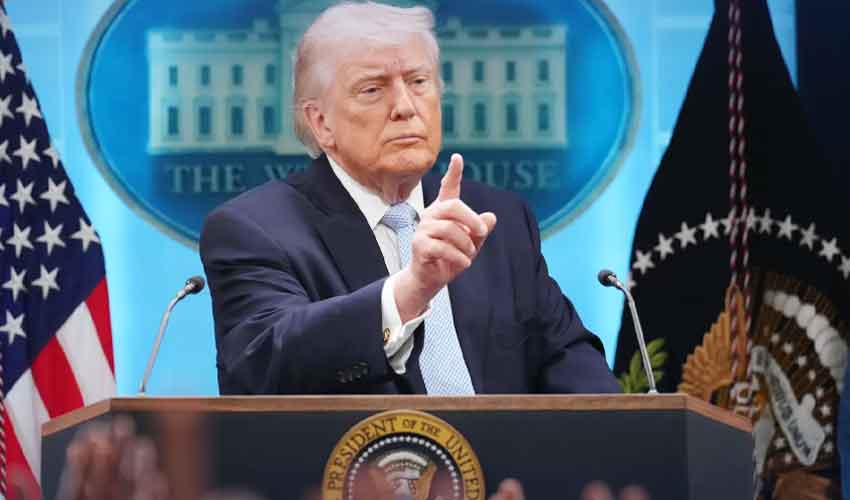
US President Donald Trump has warned that the United States could restart strikes on Iran if it “misbehaves,” even as diplomatic efforts continue over a disputed nuclear deal.
The remarks come amid competing proposals from Tehran and Washington. The situation has further intensified already fragile tensions in the region.
Trump signals possible military action
Speaking to reporters before departing Florida, Trump said he had been briefed on a proposed deal framework with Iran but was still awaiting the exact wording.
He added that while he did not prefer military escalation “on a human basis,” strikes could still be considered depending on Iran’s actions.
Trump said:
“If they misbehave, if they do something bad… it’s a possibility that could happen.”
He also noted that Iran had not yet “paid a big enough price,” and suggested he was unconvinced by the current proposal.
Iran’s counter proposal
A senior Iranian official said Tehran has submitted a proposal aimed at easing tensions and reopening key shipping routes.
The plan reportedly seeks to reopen the Strait of Hormuz, end US restrictions, and postpone nuclear negotiations for a later stage.
The proposal includes lifting blockades, releasing frozen Iranian assets, and ending sanctions. It also calls for compensation and guarantees against future attacks.
Iran has reportedly conveyed this framework through mediators to the United States.
Stalled nuclear talks
The nuclear issue remains the central point of disagreement.
Trump has repeatedly stated that Iran must never obtain a nuclear weapon, while Tehran insists its program is peaceful and seeks recognition of its right to enrich uranium for civilian use.
Under Iran’s proposal, nuclear talks would be postponed until a later phase to create what officials described as a “more conducive atmosphere” for agreement.
The United States and Israel have reportedly paused bombing operations against Iran for the past four weeks.
However, no breakthrough has been reached, and both sides remain far apart on conditions for ending the conflict.