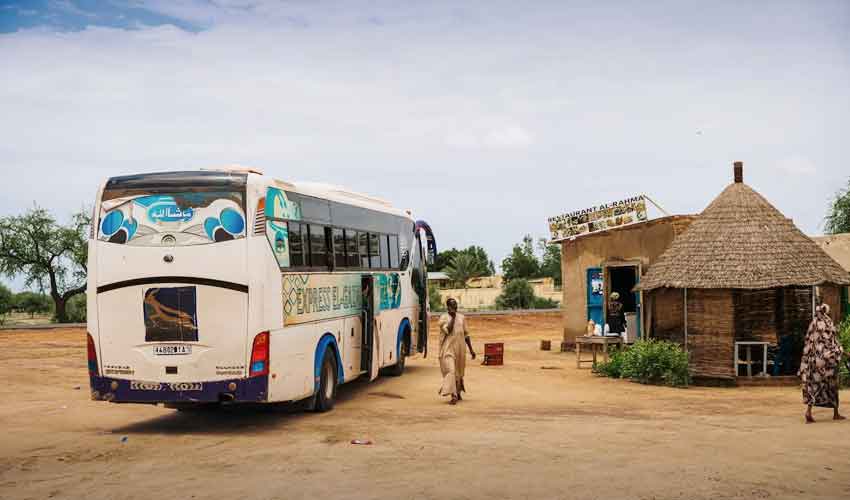
At least 42 people have been killed and 10 others injured in eastern Chad after a dispute over a water well spiraled into violent clashes between rival ethnic groups, officials said.
The fighting broke out in Wadi Fira province near the Sudanese border, where authorities say the situation has now been brought under control after military intervention.
Officials said the clashes began on Saturday in the sub-prefecture of Guereda in Wadi Fira province.
What started as a dispute between two families over a water point quickly expanded into a cycle of reprisal attacks between rival ethnic groups.
The violence spread across a wide area, with several villages reportedly burned down during the clashes.
42 killed and 10 injured in Wadi Fira
Deputy Prime Minister Limane Mahamat said during a visit to the village of Igote in Wadi Fira that 42 people were killed and 10 others wounded. The injured were evacuated to the provincial health center for treatment.
Mahamat said the cycle of revenge attacks had spread over a large area, prompting the army to intervene.
Chadian authorities said a government delegation led by Deputy Prime Minister Limane Mahamat was sent to the affected area on Sunday. Several ministers, senior local officials and the military’s chief of staff were also dispatched to the scene.
“The situation is under control and remains so,” Mahamat, who is also in charge of Territorial Administration and Decentralization, said on state broadcaster.
He said the military’s swift response helped contain the clashes.
The deputy prime minister announced the launch of a customary mediation process in the village. He also said judicial proceedings would begin to determine criminal responsibility for the violence.
Authorities said they were taking steps to prevent further escalation in the border region.
Long-running farmer-herder tensions
Deadly communal clashes are common in Chad, where disputes between farmers and nomadic herders have continued for years. Such conflicts are often triggered by competition over water, farmland and grazing land.
Ethnic tensions have also played a major role in recurring violence across parts of the central African country.
The arrival of refugees fleeing the civil war in neighboring Sudan has further increased tensions over resources and security in eastern Chad.
On Sunday, Mahamat said the government was taking all necessary measures to prevent the conflict in Sudan from destabilizing Chad’s border areas.
Eastern Chad has been particularly vulnerable because of its proximity to Sudan and its history of local resource disputes.
Hundreds killed in recent communal violence
Communal clashes in Chad have killed hundreds of people in recent years. In November, 33 people were killed in a separate dispute over a well in Dibebe, in the southwest of the country.
According to the International Crisis Group, about 1,000 people were killed and 2,000 injured in around 100 clashes between 2021 and 2024.
Amnesty International said last year it had documented seven episodes of herder-farmer violence between 2022 and 2024, resulting in 98 deaths. The rights group said the clashes were driven by climate change and other factors.
Amnesty also said authorities had failed to adequately protect the population despite repeated violence.
The group warned that delayed responses by security forces and a lack of accountability for perpetrators were “fuelling a sense of impunity and marginalisation within communities.”






.gif)

.jpg)