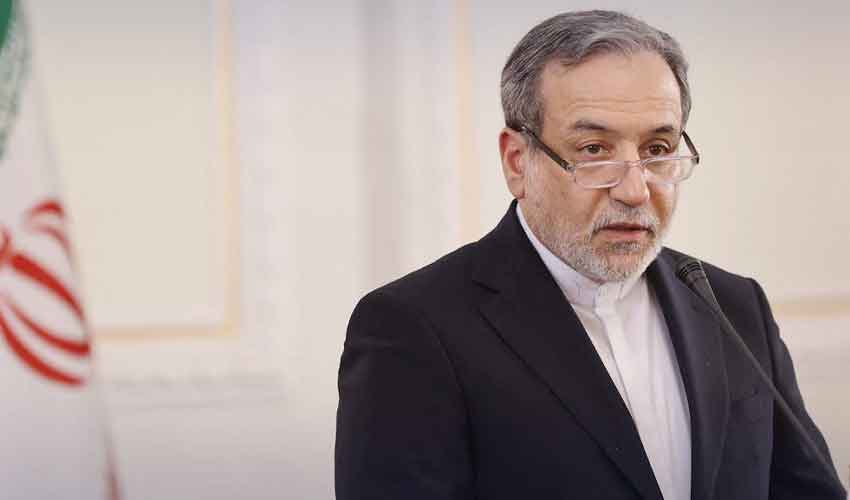
Iran’s Foreign Minister Abbas Araghchi has indicated that negotiations with the United States are unlikely to resume, citing what he described as a “very bitter experience” following recent military strikes on Iran.
Speaking in an interview with PBS News, Araghchi said Tehran no longer sees talks with Washington as a viable option after attacks on Iranian nuclear facilities during ongoing negotiations.
Araghchi dismissed the possibility of renewed diplomatic engagement with Washington.
“But I don't think the question of talking with Americans or negotiation with Americans once again would be on the table,” he said.
He pointed to the 12-day war last June, when Israeli and US forces targeted Iranian nuclear facilities while negotiations between Tehran and Washington were underway.
According to the Iranian foreign minister, the experience deeply damaged trust between the two countries.
Nuclear talks collapsed despite progress
Araghchi referred to the latest round of nuclear negotiations held in Geneva in late February, which were mediated by Oman. He said both sides had described the discussions as serious and constructive.
“But again, after three rounds of negotiation, and after the American team in the negotiation said itself that we made big progress, still, they decided to attack us,” he said.
Because of this, Araghchi said Tehran does not believe negotiations with the United States will return to the agenda.
Araghchi was also asked whether Iran’s newly appointed supreme leader Mojtaba Khamenei might consider negotiations or a ceasefire with the United States. He said it was still too early for the new leader to make any comments on such matters.
“We are all waiting for his speeches and comments, which would come later on,” Araghchi said.
Mojtaba Khamenei was named supreme leader after his father, Ayatollah Ali Khamenei, was killed in Israeli strikes that targeted his office in Tehran, ending his 36-year rule.
The Iranian minister described Mojtaba’s appointment as a message of “continuity and some sort of stability at the same time.”
Trump criticises selection of Mojtaba Khamenei
US President Donald Trump has strongly criticized the appointment. Before the announcement, Trump had already dismissed the younger Khamenei as an “unacceptable” candidate and said he would prefer a leader who could bring “harmony and peace” to Iran.
In an interview with NBC, Trump said Mojtaba’s selection was “a big mistake.”
Trump had previously suggested he wanted to have a role in choosing Iran’s next leader and later told CBS News that he had someone else in mind, though he did not provide details.
The US administration has given different explanations for the ongoing war. Trump demanded Iran’s “unconditional surrender” as military strikes continued last week.
White House Press Secretary Karoline Leavitt said the demand would be satisfied when Trump determines that Iran “no longer poses a threat to the United States of America.”
Trump earlier justified the bombing of three Iranian nuclear sites in June by claiming Tehran “rejected every opportunity to renounce their nuclear ambitions.”
Iran blames US, Israel for oil disruptions
The war has also triggered disruptions in oil production and shipping routes across the Middle East. Gasoline prices in the United States have surged, with average pump prices reaching $3.48 per gallon, a nearly 17% increase since the first US-Israeli strikes against Iran on February 28.
During the interview, Araghchi rejected claims that Iran is intentionally restricting global oil supplies.
“This is not our fault. This is not our plan,” he said.
Strait of Hormuz tensions raise energy concerns
Araghchi argued that oil production and transportation have slowed due to military attacks.
“The transportation of oil has been slowed down or stopped not because of us, because of the attacks and aggression made by Israelis and Americans against us,” he said.
He added that the strikes have made the entire region insecure. “This is why the tankers, the ships are scared to pass through the Strait of Hormuz.”
The Strait of Hormuz is one of the world’s most critical shipping routes for global energy supplies and lies partly along Iran’s coastline.
Araghchi insisted that Iran has not closed the strait and is not preventing navigation there.
Regional attacks acts of self-defense
Iran has launched strikes on multiple oil facilities in Gulf nations, including Saudi Arabia and Kuwait, escalating tensions across the region. However, Araghchi defended the attacks as legitimate acts of self-defense.
“We are facing an act of aggression, which is absolutely illegal, and what we are doing is the act of self-defense, which is legal and legitimate,” he said.
Iran warns war could spread
The Iranian foreign minister said Tehran had already warned countries in the region about the consequences of US military action.
“If the US attack us, since we cannot reach American soil, we have to attack their bases in the region, their facilities, their installations, their assets,” he said.
Such actions, he warned, would inevitably expand the conflict. “As a result, the war would be spread into the whole region.”
Araghchi stressed that Iran does not consider itself responsible for such escalation. “This is the consequence of the US aggression against us,” he said. “We are not responsible for that.”