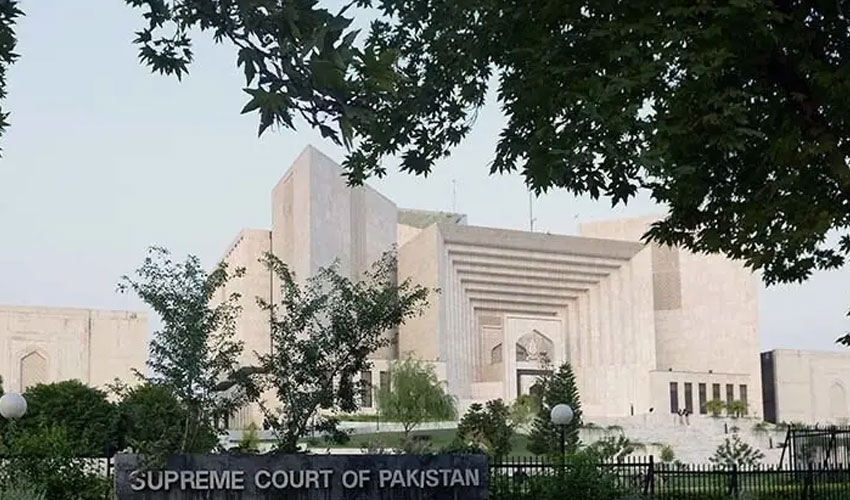
The Supreme Court has ruled that blocking a citizen’s identity card to enforce court decisions is illegal.
Justice Munib Akhtar emphasized that an identity card is a basic necessity, not a luxury, and depriving someone of it undermines the right to life.
The three-page verdict, authored by Justice Muneeb Akhtar, nullifies a previous decision by the Sindh High Court that had allowed blocking a citizen’s identity card for non-payment of a court-ordered amount.
The Supreme Court clarified that no court has the authority to block someone’s identity card without explicit legal provision. The ruling specifically referenced Section 51 of the Civil Code, stating there is no scope for such enforcement under the law.
Background of case
In 2016, the trial court had issued a payment order against the applicant. When the applicant failed to pay the amount, the court directed the blocking of their identity card. The Sindh High Court later upheld this decision on appeal.
The Supreme Court, however, has now overturned this approach, stressing that depriving citizens of their identity cards is equivalent to taking away their fundamental right to life.
Key highlights from verdict
-
Blocking identity cards as a tool to enforce court orders is illegal.
-
Identity cards are recognized as a basic necessity of life, not a luxury.
-
No court can block an identity card without a clear order backed by law.
-
The decision directly nullifies the Sindh High Court ruling in this case.
The verdict also raised questions about whether similar enforcement measures, such as disconnecting electricity or water services for non-payment, could be challenged in the future.




.jpg)