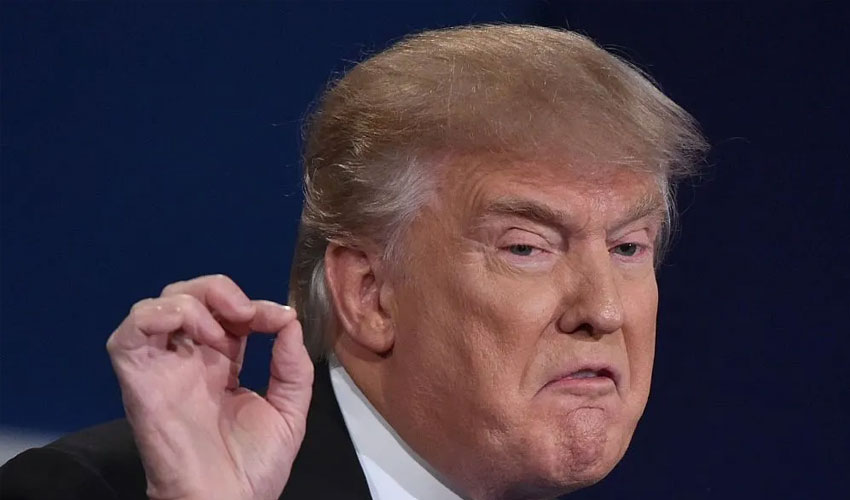
US President Donald Trump has sharply criticised the Supreme Court of the United States after it struck down his emergency tariff powers.
Despite the 6–3 ruling, Trump has pledged to maintain and even expand tariffs using alternative legal avenues.
On Friday, the Supreme Court ruled 6–3 against Trump’s use of the International Emergency Economic Powers Act (IEEPA) to impose global tariffs without congressional approval.
The majority — comprising three liberal justices and three conservatives — emphasised that Congress alone holds the authority to levy tariffs in peacetime.
The ruling effectively ended Trump’s ability to use IEEPA as a legal basis for imposing broad import taxes.
Trump calls ruling a “disgrace”
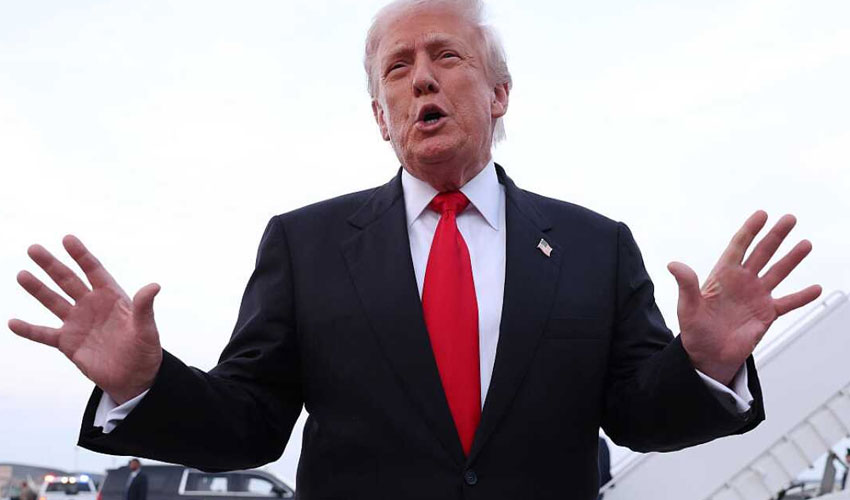
Speaking at a Friday news conference, Trump denounced the court’s decision as a “disgrace.”
He accused the high court of being “swayed by foreign interests” and criticised both liberal justices and conservative members who sided with the majority, calling them “unpatriotic and disloyal” to the Constitution.
However, Trump insisted he remained undeterred, asserting: “I have the right to do tariffs, and I’ve always had the right to do tariffs.”
Turning to trade expansion act
Instead of IEEPA, Trump said he would rely on the Trade Expansion Act to continue his tariff agenda.
Under this law, he plans to impose a 10 percent global tariff for 150 days, replacing some of the duties struck down by the court.
The new tariff is expected to take effect within about three days and would apply in addition to existing sectoral tariffs on steel, aluminium, auto parts, and other goods.
Trump also noted that investigations into unfair trade practices could provide grounds to further expand his tariff campaign.
“We’re going straight ahead with 10 percent, straight across the board, which was the absolute right to do,” he said.
Impact on tariff revenue
The court’s decision represents a significant setback to Trump’s economic strategy.
According to estimates from Oxford Economics, the blocked tariffs were projected to generate nearly $3.6 trillion in revenue between 2026 and 2035.
Bernard Yaros, lead US economist at Oxford Economics, said the ruling immediately reduced the effective tariff rate from 12.7 percent to 8.3 percent.
Still, Trump argued that using the Trade Expansion Act and other statutory authorities could ultimately result in even higher tariff revenue over time.
Experts warn of ongoing uncertainty
Analysts caution that implementing tariffs under alternative laws may prove more complicated.
Rachel Ziemba, senior fellow at the Center for a New American Security, told Al Jazeera that the ruling makes it harder to announce and implement tariffs quickly.
“The administration is trying to patch together a set of measures that will maintain tariff revenue and some leverage. But it is a time of uncertainty,” she said.
Kimberly Clausing of the Peterson Institute for International Economics added that the president’s “tariff cudgel is diminished.”
She noted that while the process may become less unpredictable, businesses and governments should still expect continued economic pressure.
Over the past year, Trump has used tariffs as both a revenue tool and a foreign policy instrument.
For example, he imposed a 25 percent tariff on India over its purchase of Russian oil.
With IEEPA now off the table, experts suggest Trump may rely more heavily on other economic tools such as sanctions — and potentially military leverage — to advance US trade and foreign policy goals.
Ziemba warned that an “escalate to de-escalate” strategy carries long-term costs and could further strain relations with both allies and adversaries.



.jpg)