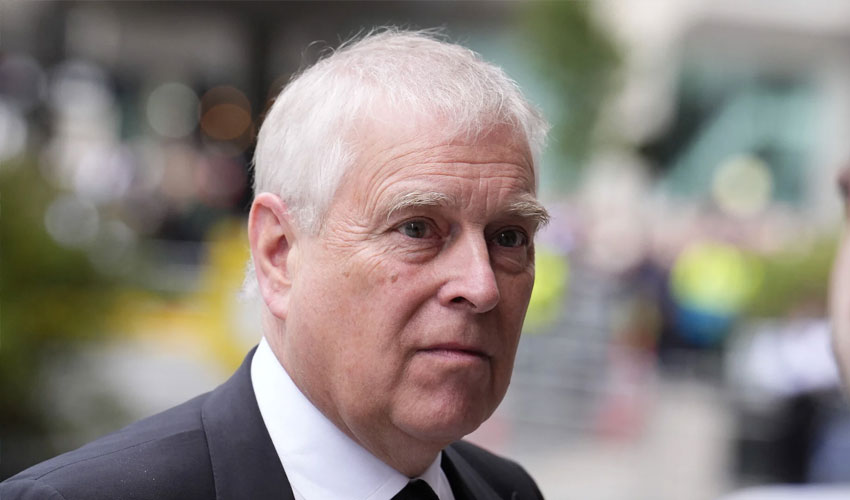
The UK government is reportedly exploring legislation to remove Prince Andrew from the line of succession, a move that would prevent the King’s brother from ever ascending the throne.
Defence Minister Luke Pollard described the proposal as the “right thing to do,” even as police continue their investigation into alleged misconduct.
Background
Prince Andrew, eighth in line to the throne, had his royal titles, including “prince,” stripped last October amid scrutiny over his ties to convicted paedophile Jeffrey Epstein.
On Thursday, Andrew was arrested on suspicion of misconduct in public office but was released under investigation after 11 hours. He has consistently denied wrongdoing.
Pollard told BBC Radio 4’s Any Questions programme that the government had been coordinating with Buckingham Palace on legislation to ensure Andrew could not be “a heartbeat away from the throne.”
Govt and parliamentary response
Some MPs, including members of the Liberal Democrats and SNP, have voiced support for the potential legislation.
Labour MPs have expressed mixed views; while some see it as unnecessary given Andrew’s remote chance of succession, others back the move to safeguard the monarchy’s reputation.
Sir Ed Davey, Liberal Democrat leader, emphasized that police should continue their work independently but acknowledged Parliament would need to act to prevent Andrew from becoming King.
SNP Westminster leader Stephen Flynn confirmed the party would support removal if legislative action is required.
Legal and commonwealth implications
Removing Andrew from the line of succession would require an act of Parliament, approval from MPs and peers, and royal assent from King Charles III.
Additionally, legislation would need backing from the 14 Commonwealth realms where Charles III is head of state, including Canada, Australia, New Zealand, and Jamaica.
Historically, the last act altering succession was the Succession to the Crown Act 2013, which restored rights to those previously excluded for marrying Catholics.
The last removal from succession occurred in 1936 after Edward VIII’s abdication.
Impact on roles and public duties
The legislation would also strip Andrew of his role as a counsellor of state, which allows royals to act on behalf of the monarch in certain situations.
Andrew had already stepped back from public duties in 2019 following backlash over his BBC Newsnight interview discussing his relationship with Epstein.
Conservative Party leader Kemi Badenoch stressed the importance of allowing the police investigation to proceed without interference from public or political pressure.






.gif)

.jpg)