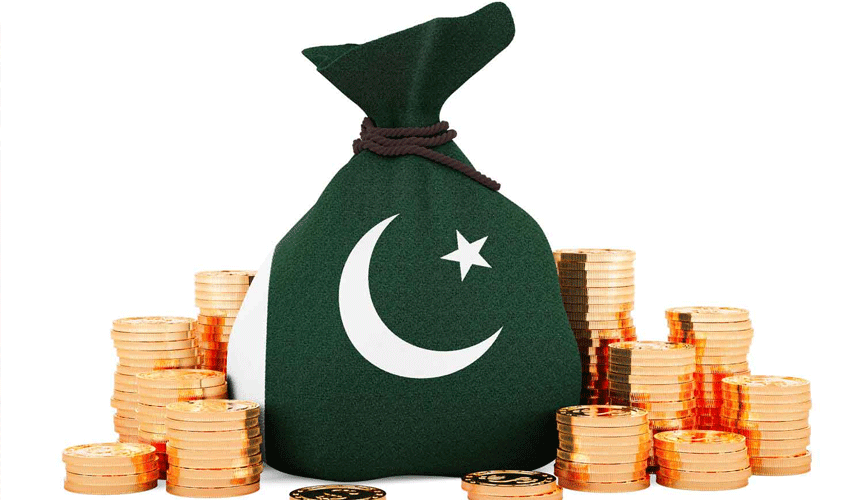
Pakistan secured more than $22 billion in external funding during the last fiscal year, including close to $2 billion from the International Monetary Fund (IMF), according to documents released by the Economic Affairs Division (EAD).
Despite the substantial inflows, the country fell short of its official external financing target by over $7.2 billion, raising concerns over growing dependence on short-term instruments and rollovers to bridge the external financing gap.
The government had set a target of $19.35 billion in foreign loans and grants for the fiscal year 2024–25. However, between July and June, Pakistan received a total of $12.13 billion in net inflows.
Of the total external support, $8 billion constituted rollovers from friendly nations including China, Saudi Arabia, and the United Arab Emirates. These rollovers helped Pakistan maintain foreign exchange reserves and avoid a balance of payments crisis.
Documents reviewed by SAMAA TV show that multilateral development institutions provided a cumulative $4.83 billion.
The Asian Development Bank (ADB) contributed $2.13 billion, while the World Bank extended $1.37 billion in support. The Islamic Development Bank (IsDB) offered a short-term loan of $552.3 million and an additional $186.3 million for development financing.
The International Bank for Reconstruction and Development (IBRD), a lending arm of the World Bank Group, disbursed $392.3 million during the year.
Pakistan also raised $4.29 billion through commercial loans, while investment in the Naya Pakistan Certificates—a government-backed diaspora savings initiative—amounted to $1.91 billion.
Bilateral lenders, including China, Saudi Arabia, France, Japan, the United States, Kuwait, and South Korea, disbursed around $600 million collectively. Saudi Arabia contributed $200 million specifically for petroleum and crude oil imports, helping cushion the impact of rising global energy prices on Pakistan's economy.


.jpg)

.jpg)