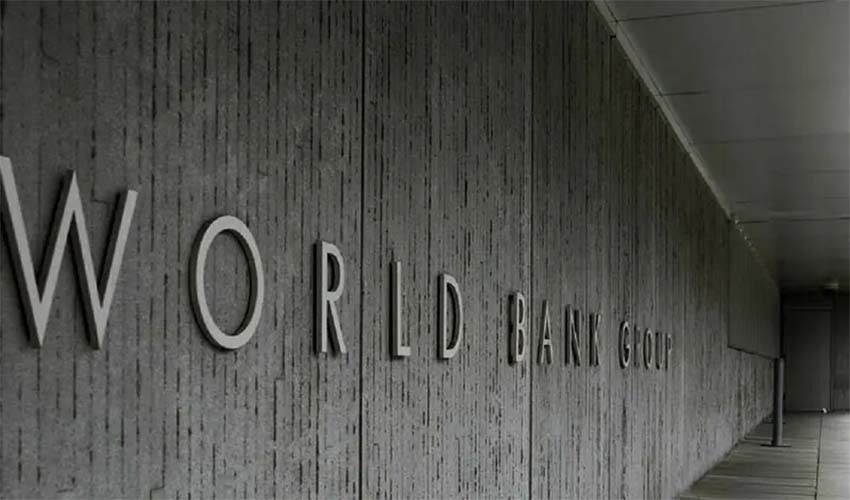
A new report by the World Bank has warned that major gaps remain between laws promoting gender equality and their enforcement, with no country currently guaranteeing all the legal rights needed for women’s full participation in the economy.
Released Tuesday, the annual study found that although many governments have introduced legislation to strengthen women’s economic rights, weak enforcement mechanisms and institutional limitations continue to undermine meaningful progress.
The report highlighted a stark disparity between formal legal protections and their implementation. On a global index measuring women’s economic equality, countries averaged a score of 67 out of 100 for legal rights. However, the score dropped to 53 when enforcement was assessed, and further declined to 47 when evaluating the effectiveness of supporting policies, institutions and legal systems.
According to the findings, fewer than five percent of women worldwide live in economies that approach full legal equality, and no economy has yet secured the complete set of legal protections required for women’s full economic participation.
Even in countries with modern legal frameworks, women frequently encounter restrictions on employment opportunities and business ownership. The report described these limitations as particularly counterproductive at a time when many nations face slow economic growth and aging populations.
Regions including Sub-Saharan Africa, South Asia, and the Middle East and North Africa were identified as having some of the largest legal and enforcement barriers to women’s workforce participation, despite rising numbers of young women entering labour markets.
The study evaluated women’s economic opportunities across ten key areas: safety, mobility, employment, pay, marriage, parenthood, childcare, entrepreneurship, asset ownership and pensions. Globally, childcare access and personal safety emerged as the weakest areas.
Drawing on data from 190 economies as of October 1, 2025, the report incorporated input from more than 2,600 legal experts, academics, civil society representatives and public officials.
Despite persistent challenges, the World Bank noted signs of progress. Between October 2023 and October 2025, 68 economies introduced 113 legal reforms aimed at expanding women’s economic opportunities. Among the countries leading these efforts were Egypt, Madagascar, Somalia, Oman, Jordan and Kyrgyzstan.