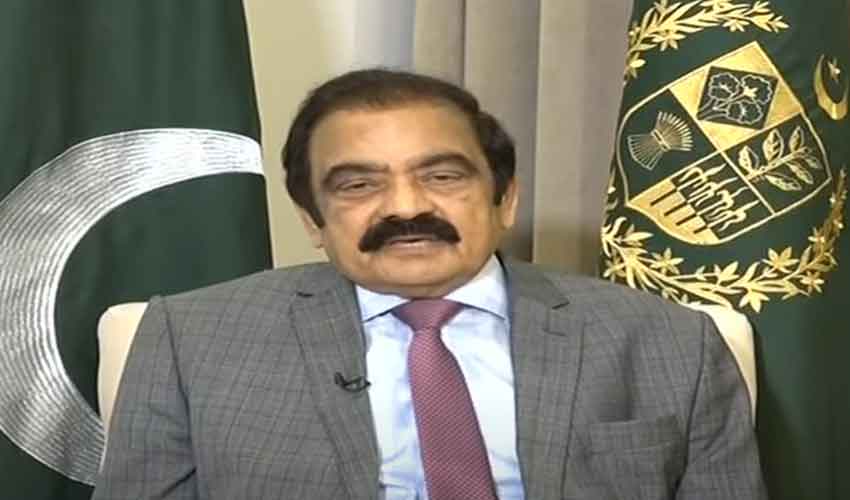
Adviser to the Prime Minister on Political Affairs Rana Sanaullah has said that the recent show of national unity during the time of military conflict with India could pave the way for transformational progress if applied to domestic issues such as the economy.
Speaking on 'Red Line with Talat Hussain' on Samaa TV, Rana Sanaullah said, “If the nation continues to move forward together like this, what could not be achieved in 76 years can be accomplished in just two.”
He credited Pakistan’s recent military victory with restoring the nation’s global image. “Our win has raised Pakistan’s prestige. Today, our passport commands respect, and friendly countries are expressing happiness over Pakistan’s strength,” he stated.
He emphasized that the solidarity displayed after the Pahalgam incident had inspired hope for deeper cooperation from Pakistan’s international allies. “The unity of the people and institutions will change this country’s trajectory,” Sanaullah asserted.
However, he questioned why the same level of unity could not be seen in resolving the country’s economic challenges. “If we can come together in times of war, why not for the economy?” he asked, noting that the government has been working on a “charter of economy” for over a year and has started seeing success.
Sanaullah said Prime Minister Shehbaz Sharif has also taken the initiative to address critical national issues, including water resource management. “The prime minister even directed us to talk with the PTI. If they refuse to sit at the table, the nation is watching,” he warned, calling for consensus on key national matters.
Turning to regional security, Rana Sanaullah accused India of being directly involved in terrorist activities in Khyber Pakhtunkhwa and Balochistan. “As long as India continues its terror activities, there will be consequences,” he said, affirming that Pakistan is taking intelligence-based actions and working to dismantle terrorist networks.
He concluded by stressing that the only way forward is national consensus and coordinated efforts to tackle both economic and security challenges.




.jpg)