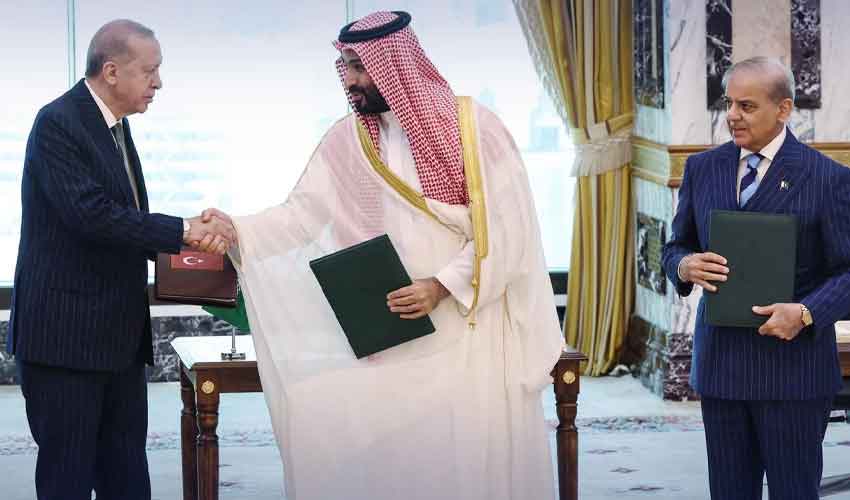
In a significant move to reshape regional security, Turkey, Saudi Arabia, and Pakistan have outlined the operational framework of their newly signed Makkah Joint Defense Agreement.
Announced by the Turkish Ministry of National Defense during a weekly press briefing in Ankara, the historic accord formalises a high-level military and strategic partnership between the three allied powers.
At the core of the agreement is a commitment to place security ties between the three nations on a more institutionalized and sustainable footing.
To oversee coordination at the highest level, the pact establishes dedicated political and military mechanisms. These strategic bodies will bring together key defense leadership, including defense ministers, foreign ministers, chiefs of general staff and armed forces commanders.
Also Read: Makkah agreement is for regional peace, not aggression: PM Shehbaz
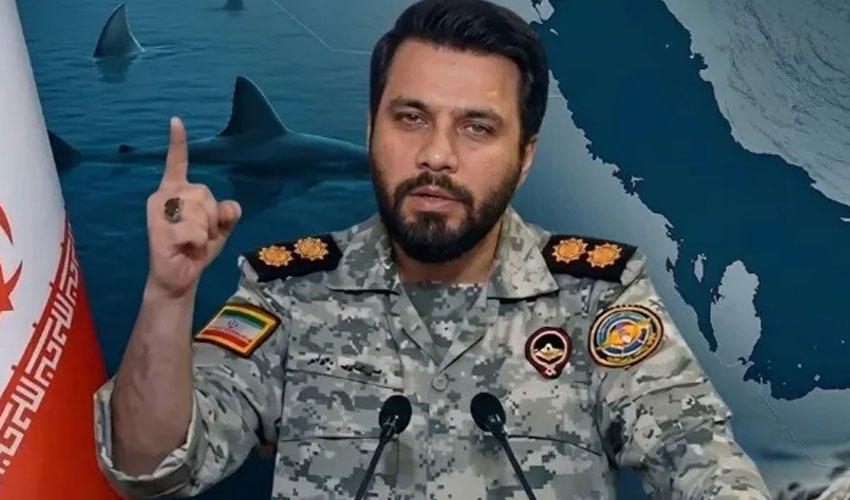
According to ministry spokesperson Rear Admiral Zeki Akturk, this institutional framework ensures that decision-making and operational planning remain unified across all three governments.
Defensive nature, mutual security clause
Signed on August 7, the agreement features a collective defense clause stipulating that an armed attack against any single member will be treated as an attack on all three -- a mechanism echoing NATO's Article 5.
Despite this strong deterrence framework, the Turkish Defense Ministry emphasized that the treaty is purely defensive in nature. Spokesperson Akturk clarified that the agreement does not identify any specific country as a common enemy or adversary, but rather aims to strengthen regional peace, boost stability, and enhance joint crisis-management capabilities.
Escalating military exercises across forces
Military cooperation under the Makkah accord will develop in phased stages, beginning with command-post and field exercises before expanding to full-scale maneuvers.
These joint military exercises will involve land, naval, and air forces; air defense systems; and unmanned and autonomous systems
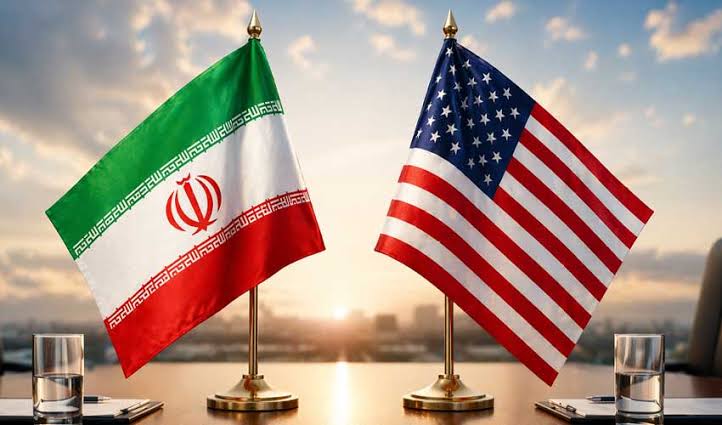
Also Read: Iran says Pakistan-Saudi-Türkiye defence pact not a threat
The primary goal of these exercises is to identify operational shortcomings before potential crises arise, integrate real-world lessons into training doctrines, and continuously build joint operational capability.
Defense industry innovation, AI, joint production
Beyond dynamic military exercises, the agreement establishes a comprehensive framework for defense industry collaboration. Rather than relying solely on simple product and system procurement, the three nations are committing to long-term industrial partnerships.
Key operational priorities under the pact include:
- Joint Development and Production: Co-developing high-tech defense systems.
- Technology Sharing: Transferring technical know-how across national defense sectors.
- Logistics & Maintenance: Setting up sustainable, long-term maintenance frameworks.
- Next-Gen Capabilities: Prioritizing artificial intelligence, electronic warfare, and autonomous unmanned systems.
Regional context, expansion potential, global alliances
The pact comes at a critical juncture as regional security concerns grow across West Asia. Alarmed by broader regional escalation, including Iranian missile strikes threatening Gulf oil infrastructure, the three US allies acted to solidify their collective security umbrella.
Turkey, which maintains NATO's second-largest army, stressed that the agreement is not an alternative or rival to NATO. Instead, it is designed to complement international security architectures.
Also Read: Defence pact aims to strengthen regional peace, security: Erdogan
The ministry also noted that the agreement is open to expansion once necessary procedures and consensus are finalised, mentioning Egypt as a potential future candidate.
In parallel with the announcement, Turkey confirmed its ongoing participation in Jeddah-based international discussions aimed at protecting commercial Red Sea shipping lanes.