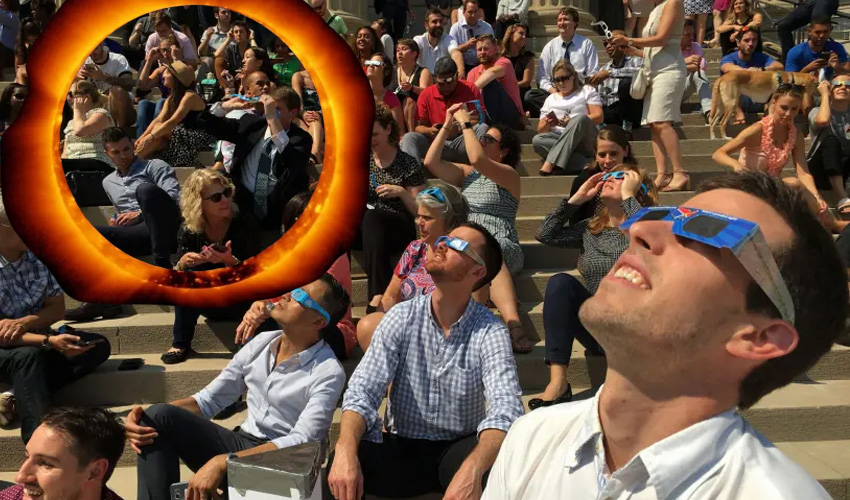
A total solar eclipse occurs on Wednesday, August 12, 2026. The Moon’s umbral shadow sweeps a narrow path of totality across the Northern Hemisphere, while a much wider region experiences a partial eclipse.
Maximum totality lasts up to about two minutes 18 seconds near the point of greatest eclipse around 17:47 UTC.
The path begins in far northern Siberia/Russia (near the Arctic, mid-day local time in a remote area), crosses the Arctic Ocean, eastern Greenland, western and northern Iceland (including Reykjavík and western coastal areas), the North Atlantic, northern Spain (from the Atlantic coast through to the Mediterranean), the Balearic Islands (including Palma de Mallorca), and a tiny extreme northeastern corner of Portugal.
Key land areas and locations with approximate local times:
- Northern Russia/Arctic: Totality in remote northern areas (mid-day); short duration in many spots.
- Greenland (eastern/northeastern, remote): Late afternoon/early evening. Example: Station Nord — partial begins ~16:20 UTC, brief totality around 17:18 UTC.
- Iceland (western and northern parts, including Reykjavík area): Late afternoon.
- Northern Spain (path crosses from northwest to east, including parts of Galicia, Asturias, Cantabria, Basque Country, Castile and León, La Rioja, Aragón, Valencia region, and Balearics): Late evening, shortly before sunset.
- Northeastern Portugal (tiny area, e.g., near Guadramil/Rio de Onor): Very brief totality (~17 seconds) in the evening, ending near sunset. Most of Portugal sees only a partial eclipse.
Overall eclipse window (global): Partial phases roughly 15:34–19:58 UTC; totality phase of the umbra roughly 16:58–18:34 UTC. Exact local times and durations depend on precise location—use interactive maps (e.g., from NASA, timeanddate, or ExoAtlas) for your spot.
In many western European and North African locations, the eclipse ends at or after sunset (a “sunset eclipse”).
Key notes
- This is the first total solar eclipse visible from mainland Europe since 1999 (and the first in Spain since 1905 in a similar path; first in Iceland since 1954).
- Safety: Never look at the partial phases without certified solar filters/eclipse glasses. Only during the brief totality (if you are in the path) is it safe to view with the naked eye. Use indirect methods (pinhole projection) as a backup.
- Weather and viewing: Clear skies are not guaranteed; the Sun is relatively low in Spain/Portugal (dramatic but horizon-dependent). Remote Arctic/Greenland sites have access challenges.
- For precise local predictions, interactive tools, or live coverage, check NASA (science.nasa.gov/eclipses), timeanddate.com, or similar eclipse resources. NASA planned live streaming.