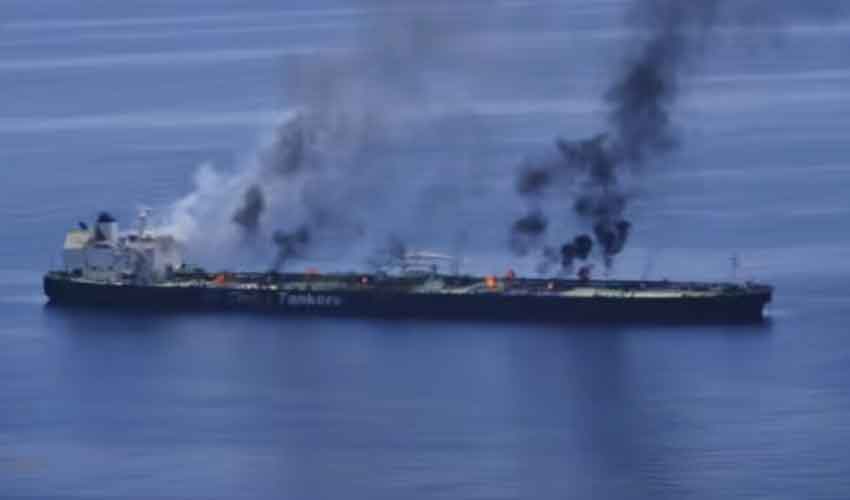
The International Monetary Fund (IMF) has lowered its global growth forecast for 2026 to 3%, citing the lingering impact of the energy shock triggered by the US-Israel war on Iran, while warning that renewed military escalation has increased uncertainty for the global economy.
In its latest World Economic Outlook update released on Wednesday, the IMF projected the global economy to expand by 3% in 2026, down from its 3.1% forecast issued in April.
The fund said growth is expected to recover to 3.4% in 2027, slightly below the average global growth rate of 3.5% recorded during 2024 and 2025.
According to the IMF, the slowdown reflects the lingering effects of higher energy prices caused by the conflict in the Middle East, although increased investment driven by artificial intelligence is expected to partly offset the impact.
Inflation to remain elevated
The IMF forecasts global inflation will rise to 4.7% in 2026, compared with 4.1% in 2025, before easing to 3.9% in 2027.
Petya Koeva Brooks, deputy director of the IMF's Research Department, said the global outlook was being shaped by two opposing forces.
"The global outlook is being shaped by two powerful forces pulling in opposite directions: the lingering effects of the energy shock from the war in the Middle East and a technology-driven investment boom," she said.
She added that recent military developments highlighted the uncertainty surrounding the global outlook.
Hormuz assumptions
The IMF's projections assume that shipping through the Strait of Hormuz will begin returning to normal by mid-July, with conditions fully stabilising by March next year.
The strategic waterway, which previously handled about 20% of global oil and liquefied natural gas trade, remains heavily disrupted due to ongoing security concerns.
According to maritime intelligence platform Kpler, only 41 verified vessel transits passed through the strait on Tuesday, compared with around 130 daily crossings before the conflict.
Oil prices rise again
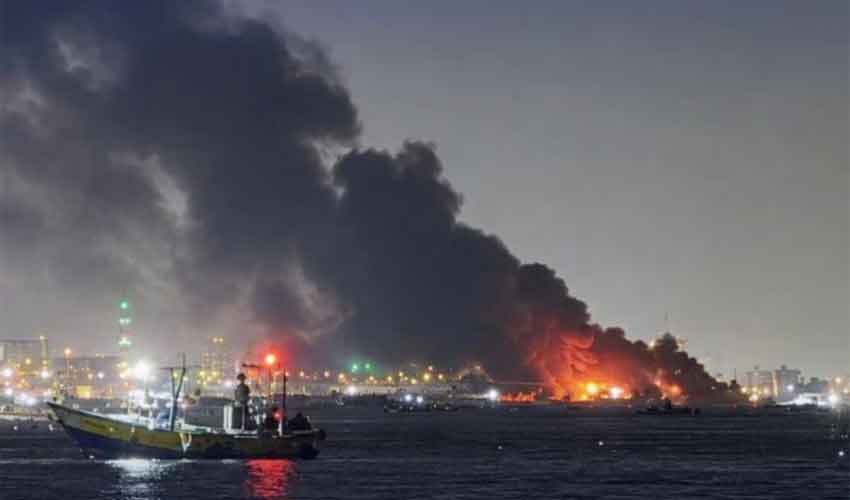
Oil prices climbed sharply after the United States resumed military strikes on Iran and President Donald Trump declared the US-Iran ceasefire effectively "over."
Brent crude briefly rose more than 7%, topping $79 per barrel, before settling around $78.76 for September delivery.
Analysts said renewed fighting had revived geopolitical risk premiums in global energy markets.
US leads advanced economies
Despite the downgrade, the IMF expects the United States to remain the fastest-growing major advanced economy in 2026.
The fund forecasts:
- United States: 2.3%
- Eurozone: 0.9%
- United Kingdom: 1%
- Canada: 1.1%
- Japan: 0.6%
Among emerging economies, China is projected to grow 4.6% in 2026.